4 Steps for Building High Performing B2B Website Lead Gen Funnels
Websites are powerful lead generators for B2B brands. Here are a few simple strategies to make any B2B website a sales pipeline growth engine.
 6 Min Read

Sales conversations at B2B companies probably go something like this:
CEO, to VP of Sales: "Get more business."
VP of Sales, to VP of Marketing: "Get me more leads."
VP of Marketing, to website managers: "Drive more conversions from our website."
In business-to-business (B2B) marketing, a company website is the inflection point where marketing and sales efforts lead to new customer acquisition. To be effective and successful, B2B websites must perform more and different work than typical business-to-consumer (B2C) websites.
The stakes are higher, too. For the C-Suite and sales executives at a B2B company, one potential new customer visiting the website and then leaving immediately, rather than filling and submitting a form, can mean the difference between hitting sales goals or looking for a new job.
So how do B2B marketers avoid the pitfalls? Successful B2B websites must look good, of course––but more importantly, they must do the heavy lifting and generate B2B leads that the sales team can engage at different stages of the sales funnel.
That all starts with a solid digital strategy, which should be developed long before designing the first wireframe or developing any lines of code. Success is then measured within the series of "mini-sales" that the website supports at different stages along the B2B customer journey, ending with a closed deal.
4 Pillars of B2B Website Sales Funnels
You must devote considerable thought to these four pillars of a robust B2B website funnel:
- Know the audience(s) - Close "mini-sales" throughout the buyer journey.
- Articulate the value proposition - Deliver solutions to their specific problems.
- Understand the B2B sales timeline - Successful conversion comes in days or weeks.
- Define key performance indicators (KPIs) - Measure goals aligned with your business success metrics.
1. Know the Audience: Close 'Mini-Sales' with Targeted B2B Personas
Most B2B websites cater to vastly different people (personas) in the sales journey. There may be three or four unique people. You can't ignore any of them.

Well-defined B2B personas help focus your messaging
Your website must address the interests and needs of each persona in a language that appeals to them. The goal is to treat each step in the B2B sales funnel as a series of mini-sales, all leading to the final closing of the deal.
Completing these mini-sales requires website architecture that different personas can easily navigate. A digital marketing and web development agency offers the expertise to build a winning B2B website.
Great B2B websites can engage targeted personas in a variety of ways:
- Persona self-selection, such as homepage copy that says “How we help Person X, Person Y, and Person Z.”
- Keeping website copy succinct and high-level while offering downloads of data-heavy case studies for more technical/engineering personas
- “Why Us?” pages that articulate the value proposition of the B2B company
- Data visualization that clearly presents technical information
- Calls to action and web forms that are A-B tested to learn what generates more valuable conversions
2. Articulate the Value Proposition: You're Delivering B2B Solutions
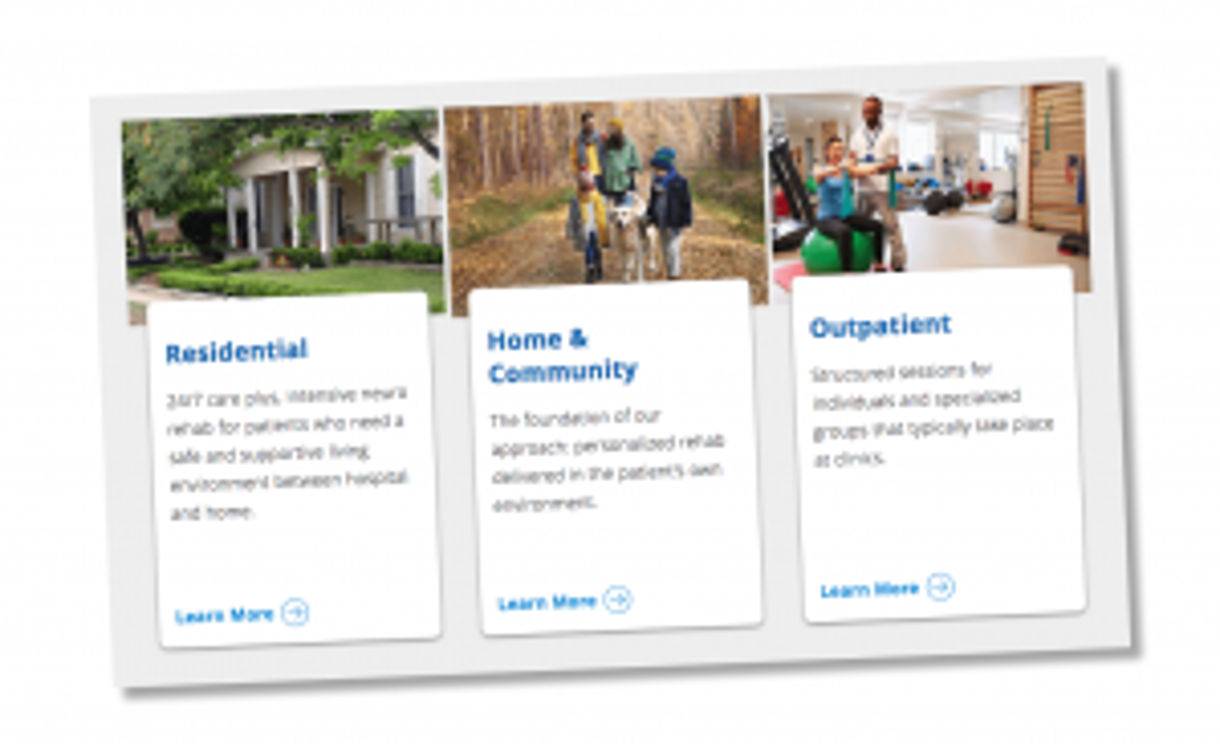
Web content gateways serve targeted B2B audiences
After identifying the stakeholders in the buying cycle, you must provide ample information that appeals to the distinct goals and needs of each person. Enticing B2B personas is less about selling sizzle, and more about selling a prime cut of meat.
That's the value proposition that B2B websites must offer and deliver.
For this reason, B2B websites often need to focus more on education instead of urgency or price, which are more often used as selling points on B2C websites.
The goal of B2B website funnels is to complete mini-sales, or to "convert" B2B prospects at each stage. B2B landing pages must inform and educate potential customers as quickly and briefly as possible. Copy and content should efficiently lead them to the next stage of your sales funnel.
Secondary pages may feature product specifications detailing compatibility, support, and regulations; they might have case studies and testimonials to validate successful deployment and promote customer satisfaction; or they might include industry certifications and quality standards that help elevate credibility.
Read More: 5 Ways B2B Companies can Generate Leads Through Organic Search
3. Understand the B2B Sales Timeline: Success Equals Days, Weeks or Longer

B2B sales cycles need more time
The importance of patience can't be overstated. Remember you are courting numerous players in the sales journey. Understanding the sales timeline is key to setting realistic expectations.
For many B2B campaigns, closing a significant sale does not happen quickly. The wheels often turn slowly in corporate decision-making, for a few reasons:
- Numerous stakeholders have their hands in the decision-making for B2B purchases, which extends the sales timeline.
- A sale may begin with a senior executive glancing at a website, or an entry-level employee assigned to identify possible suppliers, vendors, or partners.
- In between, middle managers may visit a website before submitting a B2B solution provider's "Contact Us" form on the website.
That's why the content on your B2B website must connect with each of these individuals at different stages of the B2B customer journey.
4. Define KPIs: Properly Measuring B2B Website Goals

Measure conversions at each funnel stage
There's no debating that a closed sale is THE key performance indicator (KPI) and ultimate goal of any B2B sales strategy, but smaller measures of success along the B2B buyer's journey can build towards that goal.
Conversions are a measure of any valuable actions taken by B2B website visitors. Examples may be submitting a "Contact Us" form, downloading an authoritative whitepaper, or tracking clicks on a mobile device that initiate phone calls resulting in a sales conversation.
These are all reliable indicators of buyer interest at different stages of your B2B website funnel.
Qualitative website metrics also provide a measure of your site's effectiveness. Consider tracking these numbers:
- Percentage of returning visitors over a set time
- Return visitors who converted
- Page views per session
- Bounce rate, meaning visitors who exited without visiting any other pages.
These metrics can help you determine how and whether visitors are engaging with your website and B2B content. For example, a high bounce rate may indicate that your messaging is not resonating with visitors.
Read More: Differences between B2B and B2C Web Design
Meet with B2B Lead Gen Experts
Here at DBS Interactive, we synthesize all of this information for our clients to form a digital B2B marketing strategy and develop a B2B website that leverages SEO and AI visibility optimization to make B2B brands more easily discoverable at the top of the sales funnel.
We also partner with B2B organizations to design and develop valuable and useful content that captures your buyer personas and converts them into qualified sales leads.
Contact us to learn how we can partner to develop a powerful web-based lead gen engine that drives your B2B business growth!
Read More: 8 Great Examples of B2B Web Design
Related Posts