Great Examples of Inbound B2B Lead Generation That Build a Predictable Pipeline
Modern B2B buyers self‑educate early. These examples show how inbound captures demand before sales enters the conversation.
 4 Min Read
Manufacturing buyers now complete most of their research long before speaking with a supplier, and that shift is changing how demand is created. Technical teams, procurement, and plant leaders expect to find credible answers online, compare vendors independently, and narrow shortlists without sales involvement.
Inbound lead generation has moved from a marketing preference to an operational requirement.
Companies that invest in searchable expertise and educational content capture early‑stage interest. Those relying on cold outreach are increasingly absent at the points where decisions begin.
Why Inbound B2B Lead Generation is Crucial Today

B2B buyer behavior has changed. Buyers now conduct extensive self-directed research before contacting a vendor. By the time a prospect speaks to sales, they may be as much as 73% through the buying journey. The website, not the sales rep, determines the first and most influential impression.
Inbound marketing fits this reality. Instead of interrupting buyers with unsolicited outreach, it attracts attention through relevant content and earns engagement by being useful.
Inbound channels like content and SEO also bring compounding returns. A blog post or webinar can continue generating traffic and leads long after publication, unlike cold calls or ads that stop producing once spend ends. Inbound is also more cost-efficient. On average, inbound leads cost 62% less than traditional outbound approaches, according to HubSpot.
Discuss how your buyers research and decide after receiving your free audit
Core Principles of Successful Inbound B2B Lead Generation
Effective inbound programs are intentional. They are designed around how modern B2B buyers research, evaluate, and make decisions, with each element guiding prospects from discovery through sales readiness.
Rather than relying on isolated tactics, robust inbound strategies are built on a set of principles that mold how content is created, how prospects are engaged, and how demand is captured in the long run.
 | Get Found When Buyers Start LookingBring prospects in when they begin searching for answers, before uncertainty slows decisions or pushes them toward competitors. High-intent search terms and content built on actual questions place your site where buyers are actively evaluating options and narrowing their focus. Well-structured blogs, guides, and videos give buyers the clarity they need and position your company as a credible option before sales is involved. |
 | Stay Relevant as Buyers Evaluate OptionsBuyers compare options, validate claims, and look for answers before engaging sales. Content that addresses actual problems and questions keeps your company in consideration during that process. Blog articles, whitepapers, webinars, and tools give buyers a reason to stay engaged and move forward with confidence. |
 | Make the Next Step Clear and EasyOnce interest is established, make conversion straightforward. Use purpose-built landing pages, clear calls to action, and intuitive website design. Fast load times and simple forms help turn visitors into leads without friction. |
 | Keep Buyers Engaged Until They Are ReadyNot every lead is ready to buy immediately. Without follow-up, interest fades or moves elsewhere. Email workflows, remarketing, and automation keep your company visible by delivering relevant content such as case studies, guides, or event invitations, helping buyers stay engaged as they near a decision. |
 | Give Sales Distinct Signals and Credible ProofSales teams need visibility into who is ready to engage. Engagement data pinpoints high-intent prospects, while case studies, testimonials, and performance metrics provide the proof buyers need to finalize their decision. |
Proven Examples of Inbound B2B Lead Generation
Inbound programs are most effective when strategy translates into consistent execution. The strongest examples apply core principles across channels and formats.
1. High-Intent Content and Educational Blogging
Search-optimized content answers your buyers' questions early and helps educate them throughout the buyer journey. Building content that forms topic clusters around key industry questions or pain points, with each piece targeting a specific search query used by qualified prospects, increases the chances of positioning your brand as the solution to these queries.
Why This Works
Relevant content appears when buyers are actively searching for solutions or insights. This brings prospects into your sales funnel early and builds trust through being useful. Over time, this organic traffic compounds as more of your content ranks in search and AI results, driving more qualified visitors to your site.
Topic clusters organize content around a central theme. A pillar page links to supporting articles, reinforcing coverage and signaling relevance to search engines. This structure improves rankings and ensures buyer questions are addressed in a cohesive, "fan-out" format.
How to Use This Strategy
- Develop content around your customers’ most common questions
- Research keywords buyers use at different stages of the journey
- Plan a content calendar focused on educational, non-promotional topics
- Build topic clusters with pillar pages and supporting articles
- Link related content internally to reinforce structure
Use content-based CTAs. For example, after a blog on improving supply chain efficiency, offer a deeper guide in exchange for an email address.
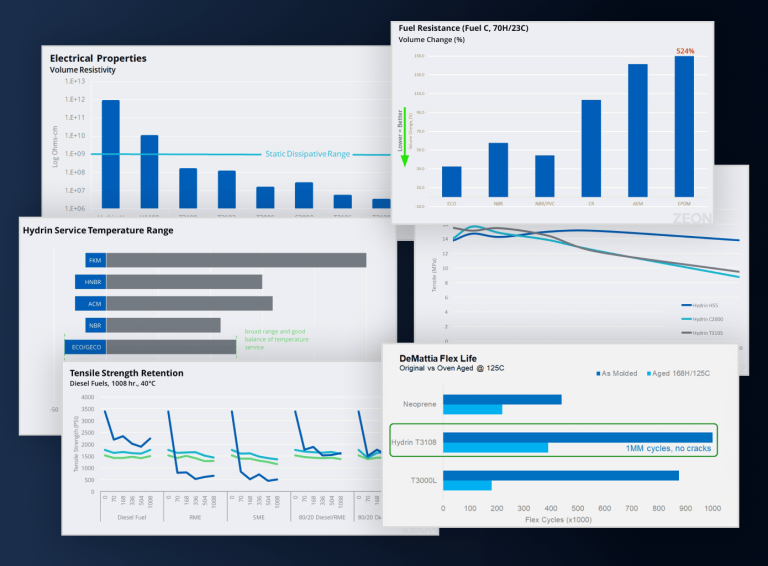
For Zeon SMI, which develops high-performance specialty polymers and chemical solutions, we translated high-intent SEO into a content system that shows how technical buyers evaluate materials.
The site structures product pages around optical films, TIMs, and electron beam resists, with performance data replacing marketing-heavy descriptions. Tables, charts, and application-specific metrics, including optical clarity, thermal behavior, and stability, are prominently surfaced so engineers can move from search to an informed comparison without friction.
Data-rich pages, supported by downloadable resources, demonstrate real-world performance. The result is a platform that attracts qualified traffic and converts it through depth, clarity, and credibility.
2. Gated Assets (Guides, Whitepapers, and Checklists)
Gated content gives buyers access to high-value resources in exchange for contact information. These assets include industry reports, whitepapers, calculators, checklists, and detailed guides designed to help buyers evaluate a specific problem.
Why This Works
Gated assets attract prospects with clear intent. Someone requesting a detailed guide or using a calculator is already evaluating a genuine need. These assets reach mid-funnel buyers who want depth, while allowing your team to qualify and continue the conversation.
Commonly Gated Content Assets
- Industry trend reports and research
- ROI calculators
- Deep-dive guides and whitepapers
- Templates and checklists
How to Use This Strategy
- Identify content that helps buyers make decisions or perform their role more effectively
- Invest in a well-developed asset, for example, original research, a detailed guide, or a calculator with personalized output
- Promote the asset across your site, email, social channels, and paid campaigns with a dedicated landing page and simple form
- Deliver the asset immediately after sign-up, followed by an organized email sequence that continues the conversation
Use the thank-you page or follow-up email to suggest an obvious next step for buyers ready to explore further.
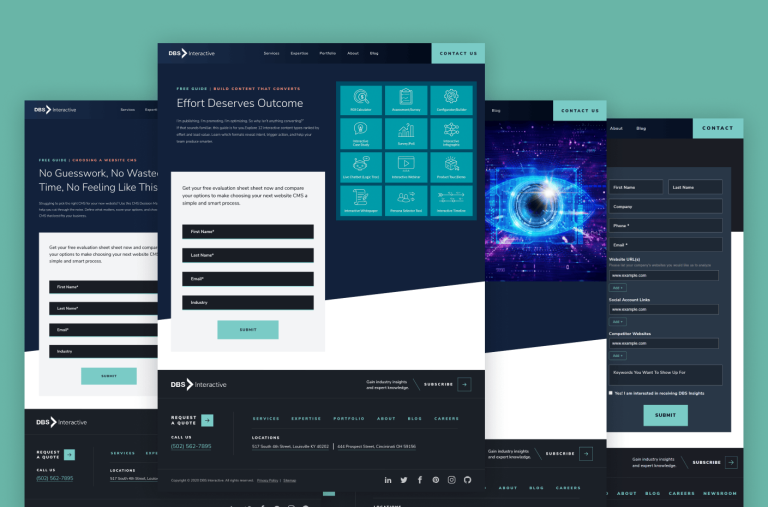
We design gated assets as conversion systems tied to buyer intent, not isolated downloads.
The Website Audit is a distinct example. It delivers a structured evaluation framework that helps prospects assess their digital performance, making the form-fill a logical next step driven by immediate, decision-ready value.
This approach extends to the Interactive Content Guide, Organic & AI Search Guide, and CMS Decision Matrix Guide.
Each simplifies complex decisions into usable frameworks, reinforcing authority while capturing demand and converting high-intent traffic into a measurable pipeline.
3. Webinars, Virtual Workshops, and Live Demos
Live events such as webinars, virtual workshops, and product demos offer interactive learning experiences. Sessions are usually free but require registration and often include expert-led presentations, Q&A, or guided demonstrations.
Why it works
Live interaction accelerates trust. Attendees can ask questions and get immediate answers, which builds confidence faster than static content. Registration signals interest, and engagement during the session helps identify which prospects are ready for follow-up.
Best practices
- Choose topics related to actual industry challenges
- Feature credible subject matter experts
- Encourage participation through polls, Q&A, or workshop-style segments
- Plan follow-up with recordings and additional resources
How to use it
- Make webinars or workshops a recurring part of your marketing calendar
- Promote them through email, LinkedIn, and partner channels with a simple registration process
- Focus on teaching instead of pitching, with next steps introduced naturally
- Record sessions and reuse them as gated, on-demand content
- Review attendee behavior, like questions asked or sessions attended, to identify high-intent leads

Live sessions create high-intent conversion points through direct interaction. Webinars, workshops, and demos show how capabilities work in practice, walking through processes, use cases, and actual scenarios while answering questions in real time.
This shifts prospects from passive learning to active evaluation. Attendees gain clarity on outcomes, while engagement during the session reveals which prospects are ready to move ahead.
4. Case Studies and Social Proof
Case studies document how customers achieved results using your product or service. They outline the initial challenge, the approach taken, and the outcomes achieved. Other forms of social proof include testimonials, reviews, client logos, and performance metrics.
Why it works
B2B buyers look for evidence before making decisions. Case studies show how solutions perform in situations and help buyers picture similar outcomes for their own organization. These assets often influence late-stage decisions and attract prospects searching for proven solutions.
What to include in a case study
- Before-and-after metrics that show results
- Customer quotes describing outcomes
- An established structure covering the challenge, approach, and results
- Visuals like charts or graphs to illustrate impact
How to use it
- Capture customer success stories regularly
- Work with sales and customer success teams to identify viable examples
- Publish case studies on your site and reference them in blogs, webinars, and sales conversions
- Organize case studies by industry or use case so prospects can quickly find relevant examples
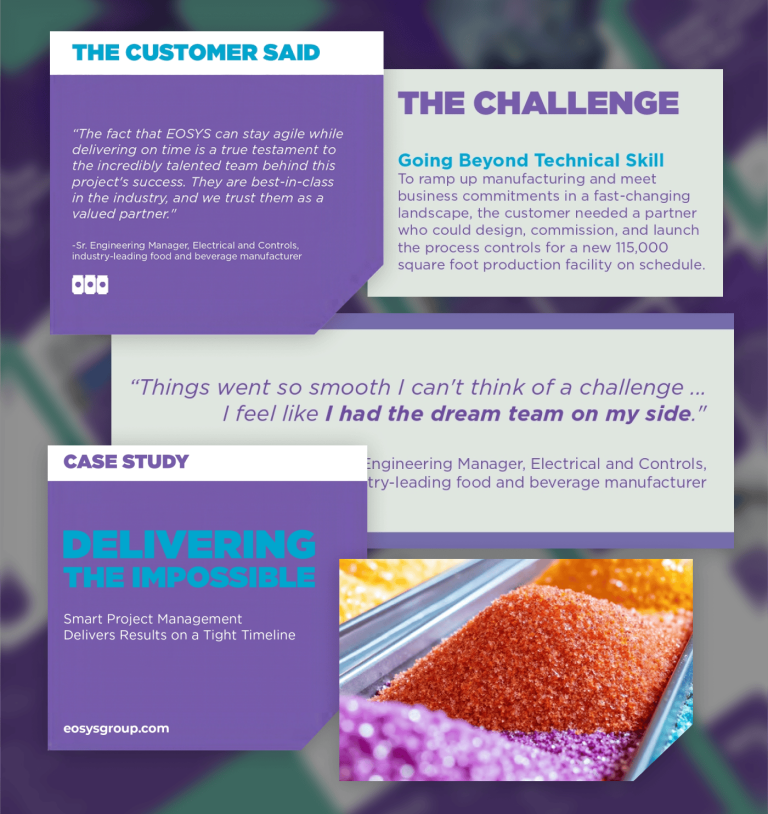
For EOSYS, an industrial automation and systems integration company, we built a dedicated case study section organized by industry application so prospects can quickly find relevant examples. This structure emphasizes the challenge, the approach, and the outcome, helping buyers evaluate fit and reduce risk.
The case studies turn EOSYS' capabilities into proof, showing how solutions perform in practice and what results they deliver.
5. Conversion-Optimized Landing Pages
Dedicated landing pages are built to turn inbound visitors into leads or customers. Unlike general website pages, each landing page centers on a single offer or action, with every element serving that purpose. In inbound lead generation, landing pages are used for actions like downloading a guide, registering for a webinar, starting a free trial, or requesting a demo.
Why it works
A well-designed landing page keeps attention on one outcome and presents only the information needed to prompt action. By removing distractions and presenting an evident value proposition, landing pages convert more effectively than sending traffic to a general page.
Key elements of a high-converting B2B landing page
- A concise headline that explains the offer
- Brief supporting copy or bullet points
- A single, prominent call to action
- Minimal form fields that collect only essential information
- Relevant social proof
- Mobile-friendly design with fast load times
How to use it
- Avoid sending inbound traffic to generic pages
- Create a dedicated landing page for each campaign or offer
- Match page messaging to the traffic source
- Remove unnecessary links that pull visitors away
- Include a visual or mockup that shows the offer
- Test headlines, button copy, and form length in the long run
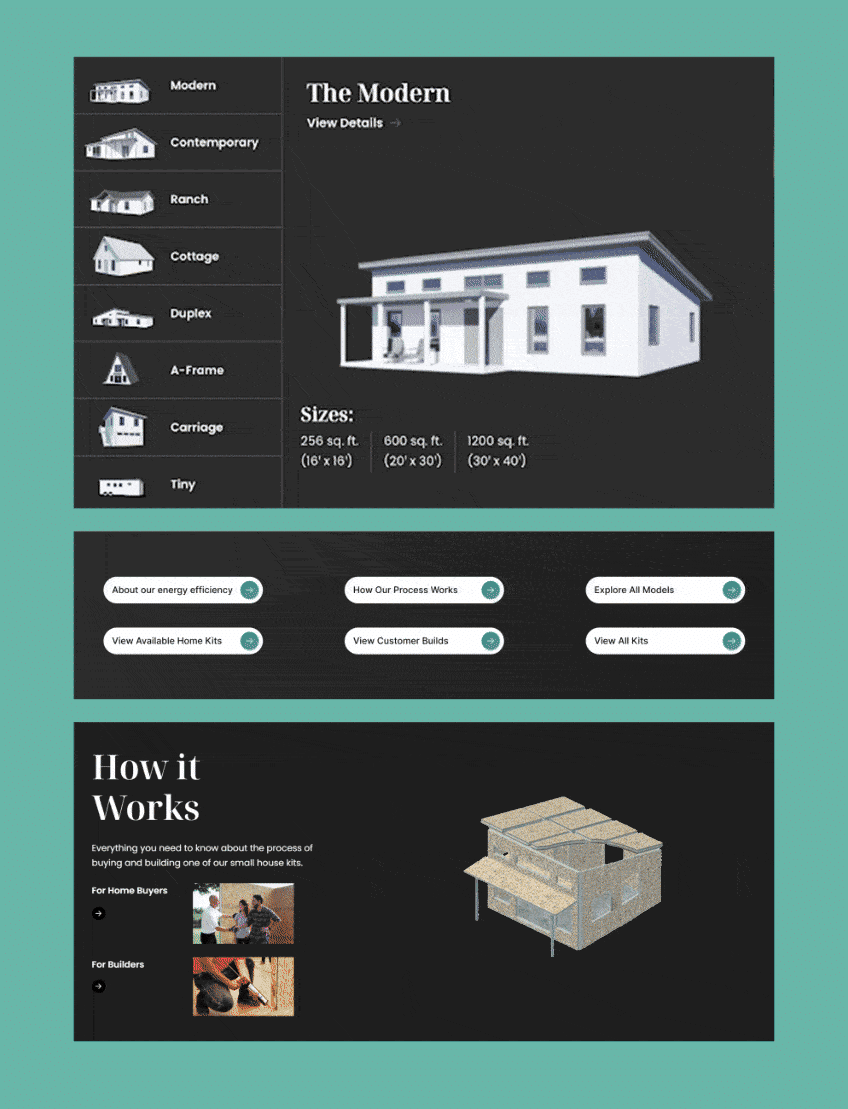
We converted passive browsing of DIY prefab kit homes into guided decision-making on the Mighty Small Homes website through conversion-focused landing pages, clear calls to action, and a prominent display of home models. This organization enhances lead capture by guiding users from initial exploration to next steps.
Each model click-through leads to a focused product page, reducing friction and moving users from interest to evaluation.
Additional Inbound Lead Generation Ideas
As inbound programs mature, opportunities emerge beyond foundational tactics. These additions work best when they build on existing traction rather than adding complexity too early. Each point below deepens engagement, improves qualification, or increases pipeline efficiency over time.
- Account-Based Content Hubs: Create targeted content hubs for specific accounts or industries. These pages gather relevant case studies, articles, and offers tailored to that segment’s challenges.
- Marketing Automation Workflows: Develop email workflows triggered by behavior, like page visits or asset downloads, to maintain relevance as interest develops.
- Lead Scoring and Signals: Introduce lead scoring to assess engagement levels and surface prospects most likely to convert.
- Interactive Tools: Use assessments, calculators, or configurators to exchange value while collecting meaningful data. These tools hold attention and encourage sharing.
Each approach can extend inbound performance. Start with one or two, measure impact, and expand based on results.
Building a Predictable B2B Pipeline Starts with Inbound
Begin with the strategies that match your audience and internal capabilities. Concentrate on early traction, then expand methodically. Over time, inbound efforts form a scalable system that contributes to a steady pipeline.
For teams unsure where to start or how to refine existing efforts, we work with manufacturers and B2B organizations to design inbound lead generation systems built for long-term performance.
Let’s discuss your goals
Launch an inbound program built for manufacturing and B2B.
Related Posts