5 Secrets to Unlocking Industrial Website Lead Generation by 3X or More
A practical look at how structure, navigation, proof, and backend systems turn an industrial website into a working part of the sales process.
 6 Min Read

Two B2B industrial companies invest in a website redesign.
One company launches a polished new site with updated branding, a sensible layout, and a modern interface, and yet sees little change in the volume of leads it generates.
The second company treats the website as a revenue system, restructuring navigation around buyer intent, embedding conversion paths into every page, connecting backend systems, and aligning content with how engineers and procurement teams actually search for information.
Within 12 months, the second company sees qualified lead volume rise by more than 2.4x, a result of their redesigned site's clearer navigation and stronger conversion points.
The difference comes down to approaching industrial website design with intent, structure, and execution.
This article breaks down five core approaches behind quantifiable outcomes of our own B2B website projects, along with supporting best practices that help web solutions deliver value in industrial environments.
“Website” vs. “Revenue System”
When we say “design” in reference to industrial websites, we’re not talking about aesthetics alone. Here at DBS Interactive, industrial website design is treated as a dual-layer system:
- Front-end (UX/UI): navigation, page structure, messaging, conversion flows
- Back-end (engineering): technical SEO, speed, CRM integration, analytics
The front-end guides the buyer. The back-end captures and routes demand. If those two layers aren’t aligned, the site becomes a better-looking bottleneck.
5 Secrets to Tripling B2B Lead Gen for Industrial Websites
Secret #1: Treat the Site Like a Sales Asset
Example: Kao Collins
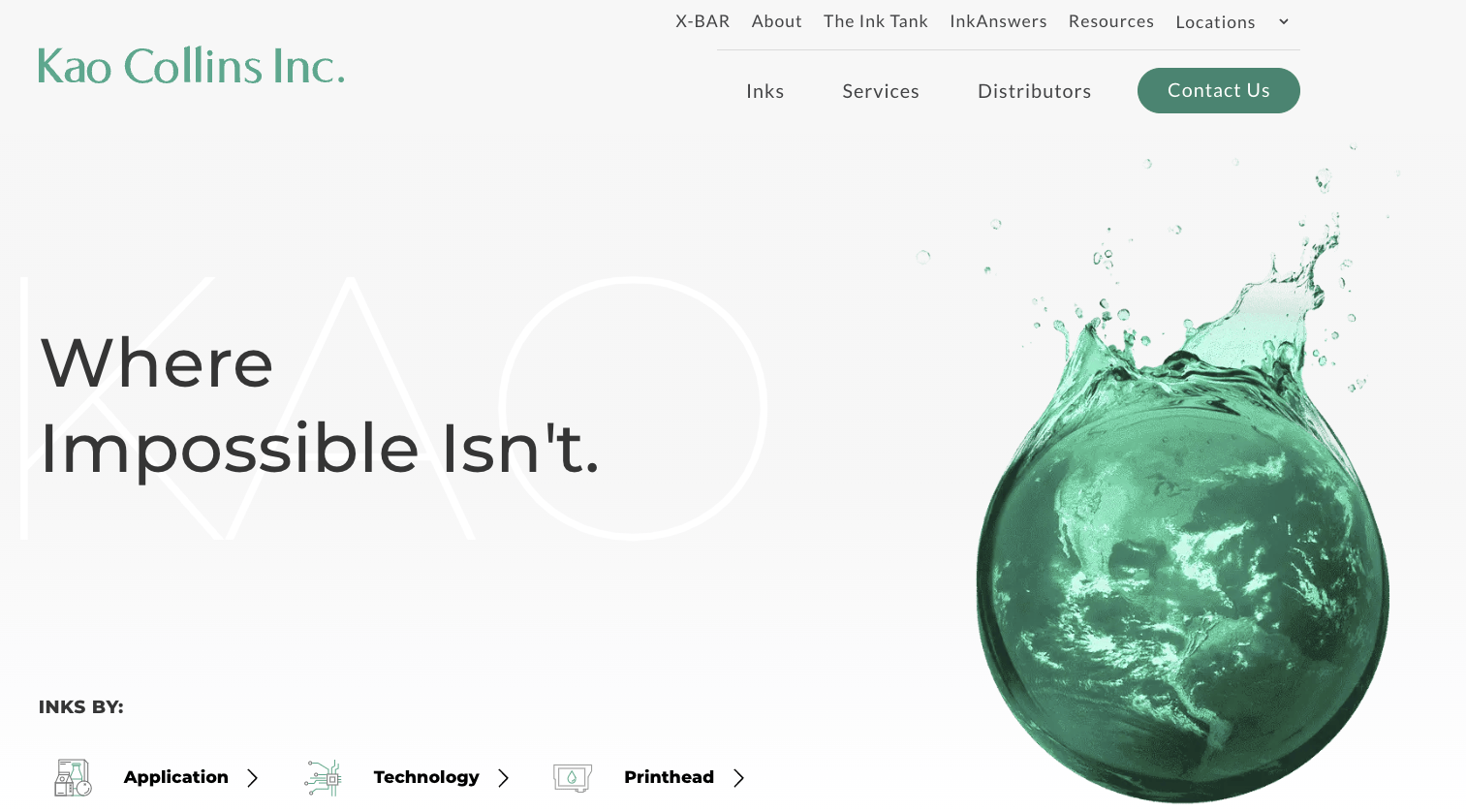
Most industrial websites present capabilities but don’t guide action.
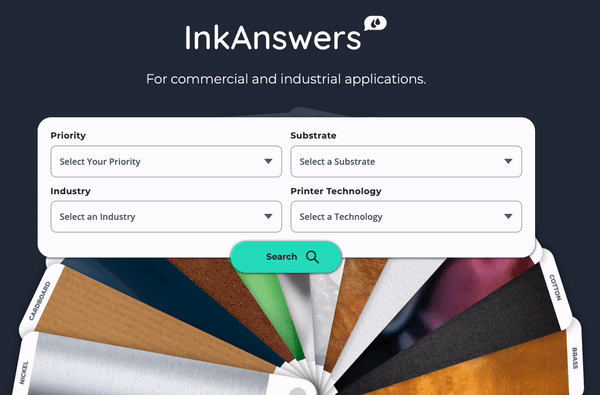
Kao Collins develops industrial inkjet solutions used across packaging, manufacturing, and product identification. The company works closely with engineering and production teams that need reliable, application‑specific performance.
The company increased conversion by turning technical content into explicit entry points.
Result pages within the site’s "Ink Answers" product and solutions search tool concentrate on specific applications and connect directly to next steps.
Across the site, pages were structured to move users forward.
- RFQ prompts built into product and application pages
- Messaging aligned with buyer problems, not internal language
- Multiple entry points, including samples, expert conversations, and feasibility checks
Result
- 12% increase in website leads (May-Oct 2024 versus Nov 2023-April 2024)
- 46% YoY increase in total lead score (2022 versus 2021)
Key takeaway
If a page doesn’t guide the next step to a conversion, it’s acting as a brochure.
Secret #2: Design Navigation Around the Buyer’s Journey
Example: EOSYS
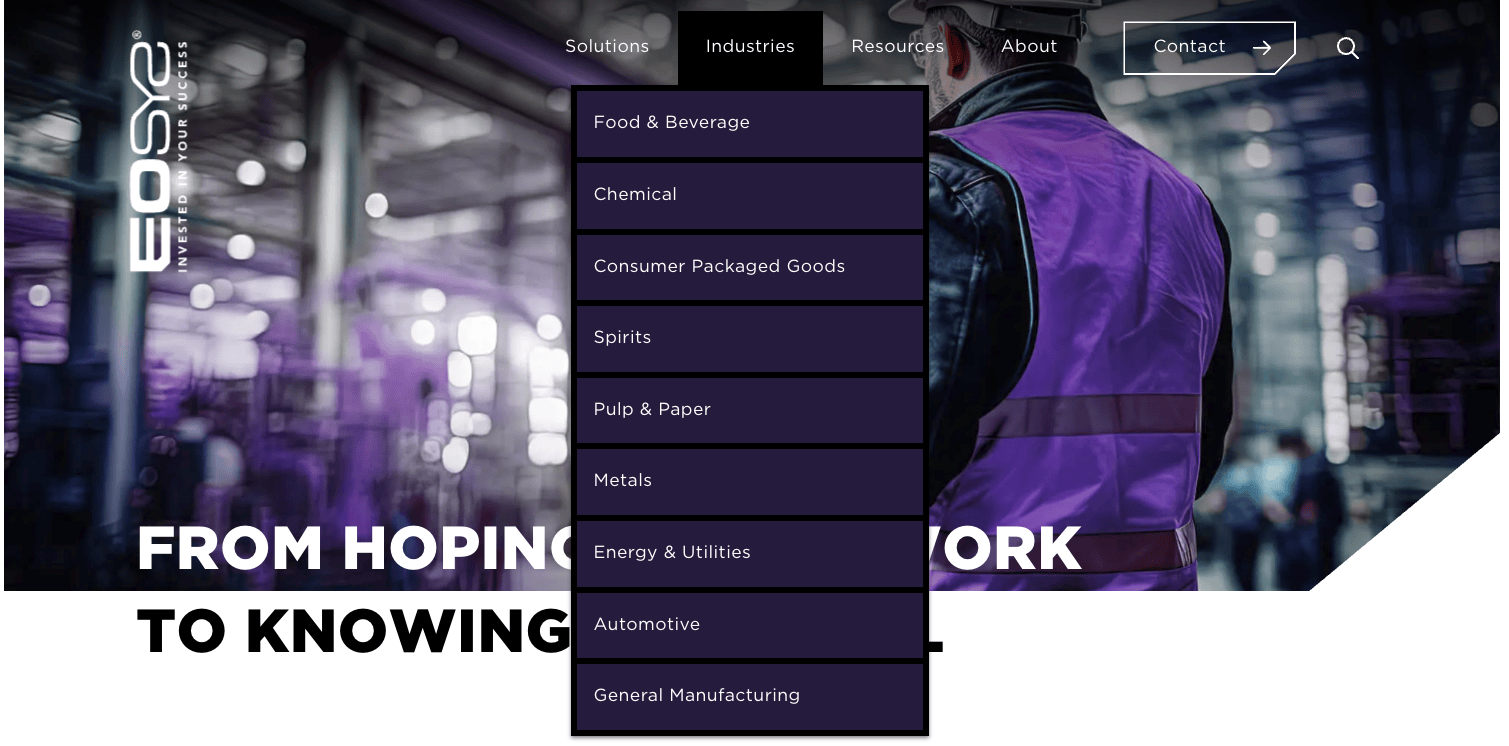
EOSYS is an industrial automation and system integration firm serving manufacturers with complex operations. Their buyers evaluate partners based on capability depth, industry experience, and proven execution.
Navigation either helps buyers move forward or slows them down.
The EOSYS site structures navigation around how prospects actually research.
- Solutions
- Industries
- Capabilities
- Resources
This created two clear paths
- Direct access for high-intent buyers
- Guided exploration for early-stage users
High-value sections such as industries and case studies are easy to find, reducing friction during evaluation.
Result
- 52% increase in raw lead submissions (Q1 2026 versus previous quarter)
- 188% increase in key events
- 22% increase in event count per active user
Key takeaway
Navigation determines whether a visitor moves ahead or leaves.
Secret #3: Turn Every Key Page into a Conversion Page
Example: Mighty Small Homes

Mighty Small Homes provides panelized building systems for single- and multi-family residential projects. Their customers need clear guidance, cost clarity, and practical planning support before committing to a build.
Relying on a single contact page limits demand capture.
The Mighty Small Homes site turned product and service pages into conversion points by layering calls to action and reducing friction.
- Primary CTAs built into core pages
- Secondary CTAs capturing earlier-stage interest (guides, planning tools)
- Short, contextual forms
Micro-conversions like planning guides, cost insights, and downloads
Result
- 27% increase in users triggering key events (2025 versus 2024)
- 31% increase in total key events
- 51% increase in lead acquisition
Key takeaway
Conversion shouldn’t depend on a single page. It should be built into the entire site.
Secret #4: Build Trust Through Proof and Technical Depth
Example: ZEON SMI
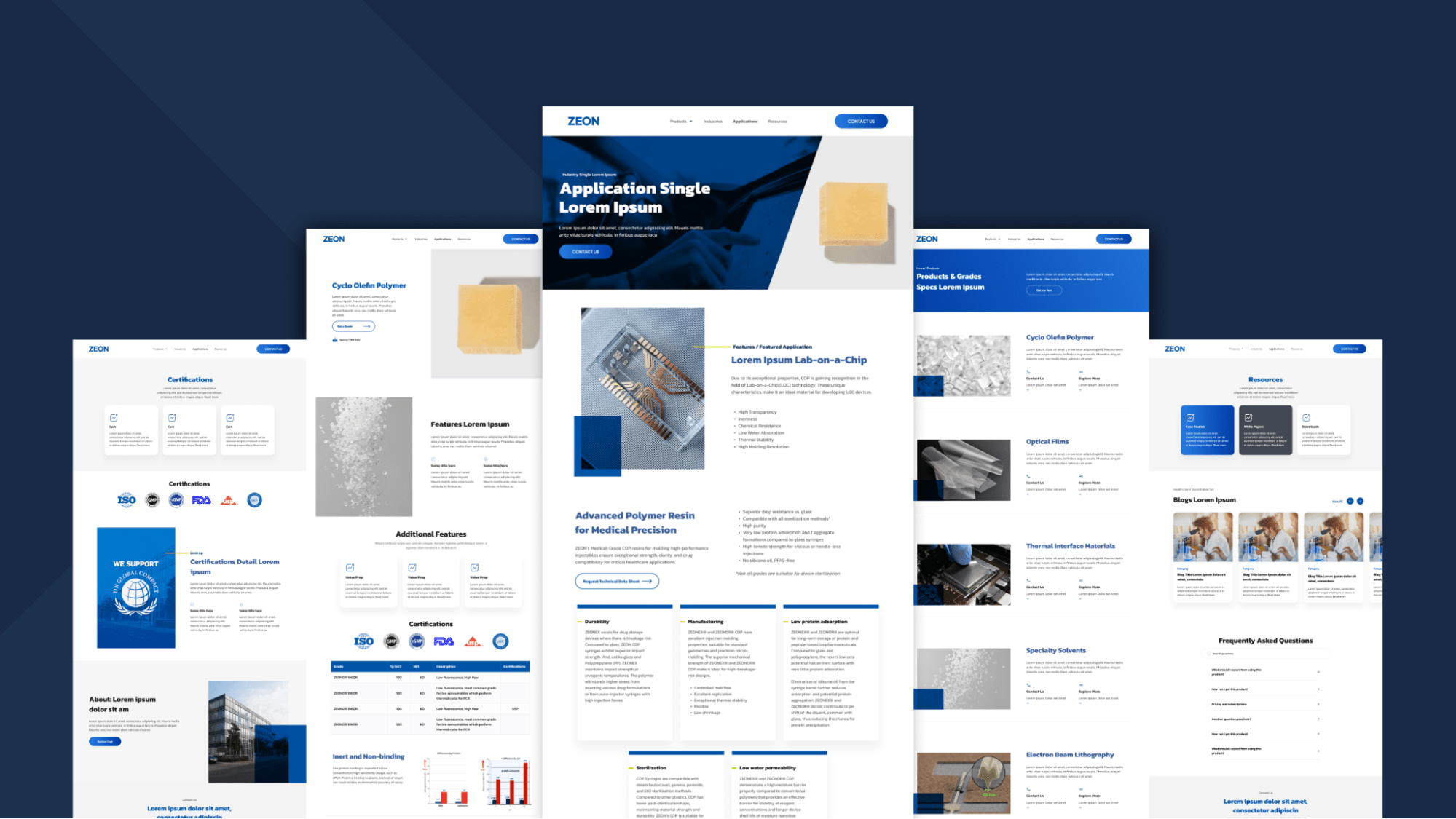
ZEON SMI supplies specialty materials used in demanding industrial and manufacturing applications. Their audience relies on technical detail, application proof, and clear capability boundaries to assess fit.
Industrial buyers don’t rely on claims. They look for proof, specificity, and technical detail before proceeding.
The site aids that by combining case studies with clear technical validation, helping buyers assess fit and reduce risk early.
Key elements
- Case studies concentrated on actual applications
- Technical content that answers engineering-level questions
- Clearly defined certifications and processes
Visitors quickly determine fit
- Capabilities
- Industries
- Project scope
Result
- 43% increase in lead acquisition (November versus October 2025)
- 108% increase in website leads (Q1 2026 versus previous quarter)
- 95% increase in key event counts
Key takeaway
Proof builds trust and filters out unqualified leads.
Secret #5: Engineer the Backend for Speed, SEO, and Follow-Through
Example: PMI2
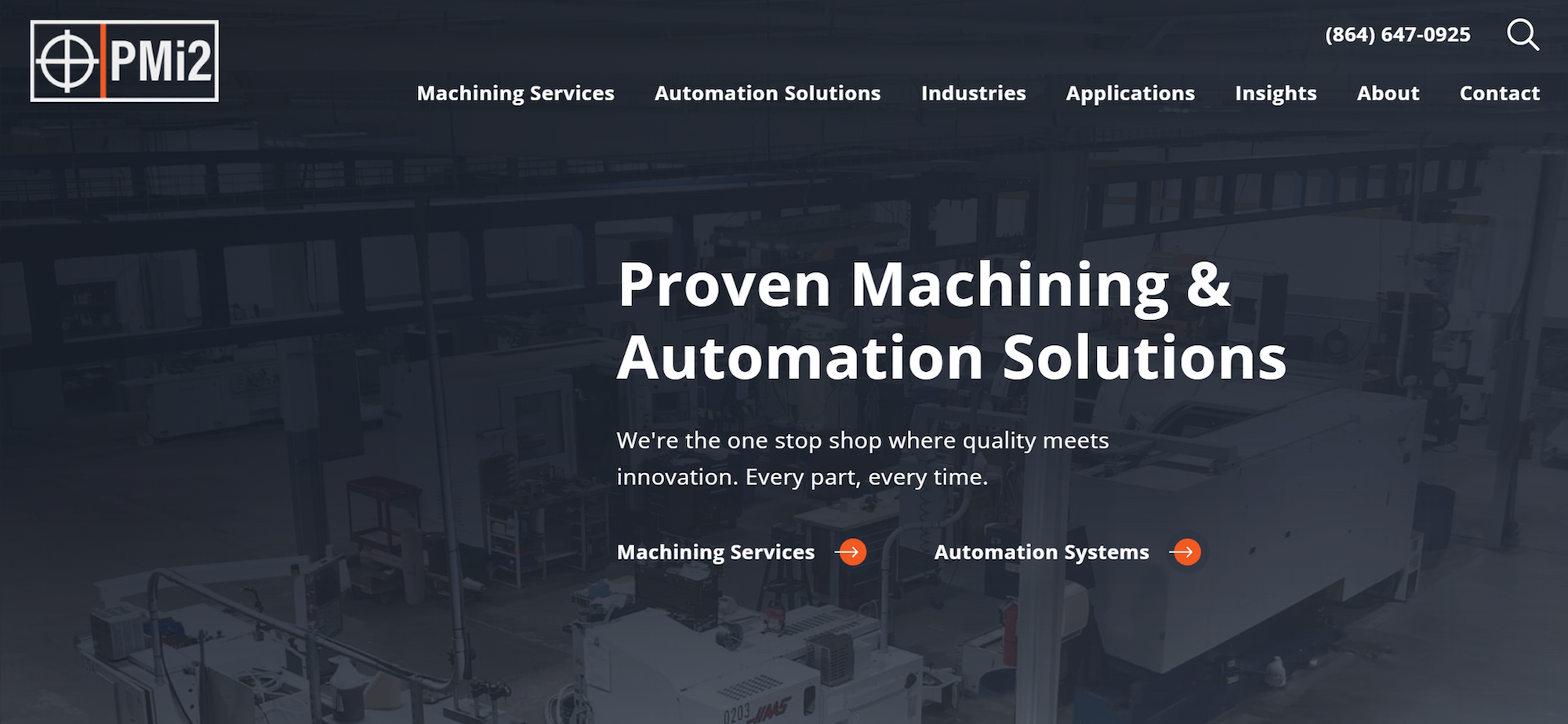
PMI2 delivers precision manufacturing, machining services and automation solutions for industries with strict quality and performance requirements. Their buyers expect accurate specifications, dependable lead times, and a clear understanding of process capability.
Backend systems determine whether your site effectively captures and processes demand.
The PMI2 site combines technical SEO, performance optimization, and integrated lead management to ensure opportunities aren’t lost after conversion.
Key elements
- Fast load times and mobile performance
- Technical SEO improvements for visibility
- CRM integration to capture and route leads
- Analytics to track and refine performance
Result
- 111% increase in lead acquisition (6 months)
- 34% increase in key events per active user
- 75% increase in total key events
Key takeaway
Without backend systems, leads slip through after conversion.
Best Practices That Multiply Results
Strong digital systems depend on the small decisions that shape how users move, evaluate, and act. The points below focus on the levers that consistently improve outcomes in complex B2B environments.
Page Architecture That Supports SEO and AI Visibility
The website should structure pages to match the target audience's search queries and AI prompt patterns so that the right users discover and land on the right content when using search engines like Google or generative AI platforms like ChatGPT (also known as Generative Engine Optimization, or "GEO").
Mobile-First, Speed-First Design
Mobile performance and speed affect how buyers engage and convert. Faster access enhances usability and reduces drop-off.
Approach the Product Catalog as a Lead Engine
A structured catalog helps users to move from browsing to evaluation, guiding them toward RFQs and engagement.
Lead Magnets and Content Hubs
Technical content attracts and converts qualified B2B prospects by offering practical value in exchange for contact information.
Process-Oriented UX that Supports Long Sales Cycles
The website's user experience should support buyer comparison, evaluation, and repeat visits across longer decision timelines.
Integrating CRMs and Lead Routing
Connecting systems to ensure website-generated leads are routed and followed up with quickly avoids wasting the site's revenue potential.
Data-Driven Iteration After Launch
Ongoing testing and analysis of website data should help marketers improve performance after launch and enable long-term pipeline growth.
How It All Fits Together
Secret | Core Focus | Complementary Practices | Example |
| Sales asset mindset | Conversion intent everywhere | Lead magnets, SEO | Kao Collins |
| Buyer journey navigation | UX aligned to research | SEO, long-cycle UX | EOSYS |
| Every page converts | Distributed conversion points | Catalog UX | Mighty Small Homes |
| Trust and proof | Technical validation | Content hubs | ZEON SMI |
| Backend engineering | SEO and integrations | CRM, analytics | PMI2 |
Bringing Your System Into Focus
Seen as a whole, the five elements reveal how a website functions as a demand system rather than a collection of pages. The practices reinforce that structure and keep the experience aligned with how real buyers move through evaluation.
Most industrial websites apply parts of this approach.
The ones that see sustained growth apply it consistently across the entire system.
If you’re finalizing goals or evaluating partners, tell our experts what’s not working
Industrial Website Performance FAQs
Industrial buyers need clear technical information, proof of capability, and a way to judge fit. The site has to support long evaluations and multiple decision makers, not quick purchases.
Conversion gains can show up quickly when pages are structured around clear next steps. Search visibility takes longer because it depends on crawl patterns, content depth, and technical stability.
Not always. Improving navigation, page structure, speed, and conversion paths can shift performance without rebuilding the entire site.
Treating the site as a branding exercise instead of a working part of the sales process. Without clear paths to evaluation, even a polished site won’t generate meaningful activity.
By movement and qualification. Key indicators include conversion rate, qualified lead volume, organic visibility, event activity, and contribution to pipeline.
A stable backend, accurate tracking, and regular adjustments. Industrial markets move slowly, but user behavior and search patterns change, and the system needs to adapt.
Related Posts