Freelance SEO vs. SEO Agency: Which Works Better for B2B Companies?
The answer depends less on budget and more on whether your current SEO operation is built to reinforce online credibility for your brand.
 13 Min Read
When SEO Runs in Isolation, It Stops Compounding
SEO performance at mid-market scale is a product of operational alignment, not isolated task execution. When technical infrastructure, analytics, content, and conversion pathways disconnect, activity continues. Results do not.
One Relationship Is One Point of Failure
Single-practitioner SEO consolidates institutional knowledge, implementation authority, and roadmap visibility into a single relationship. When that relationship ends, momentum does not slow. It stops.
You Cannot Optimize What You Cannot Trace
Without structured attribution and consistent reporting standards, marketing leaders cannot connect search activity to pipeline. Integrated agencies build this infrastructure as a foundation. Most freelance engagements inherit it as an afterthought.
The Structure Has to Fit the Business You Are Now
A 12-page regional website and a mid-market manufacturer with multiple verticals have fundamentally different SEO demands. The execution structure must scale with the business. When it does not, the structure gets blamed for what is actually a fit problem.
The Handoff Is the Bottleneck
Technical SEO recommendations stall when no governance framework connects strategy to development priorities. Agencies that embed SEO inside a cross-functional workflow reduce lag because the handoff already exists.
Infrastructure Beats Activity Every Time
Organizations that produce compounding SEO growth treat search visibility as a business infrastructure decision, not a marketing line item. That reframe changes what they expect from vendors and how they measure results. The gap between those organizations and the ones cycling through activity widens every quarter.
The freelance vs. agency question sounds like a staffing decision, but it isn’t. The real question is whether a company’s SEO model still matches the operational demands of the business it has become.
Both models work, and neither fits every situation. A skilled freelancer may be the right choice for an organization at one stage of growth. A full-service agency becomes the better fit when the complexity of the digital operation has outgrown what a single practitioner can reliably manage.
The distinction matters because organizations often stay with a model long after the fit has broken down. The cost appears in stalled rankings, unclear reporting, and a growing disconnect between SEO activity and business results.
Understanding which model fits starts with understanding what each one is built to do.
When Hiring a Freelance SEO Makes Sense
For some organizations, a freelancer is the better choice, not simply the cheaper one. The fit depends on the scope of the work, the company’s internal capabilities, and the complexity of its digital operation.
Freelancers Can Be the Right Fit for Smaller or Less Complex Organizations
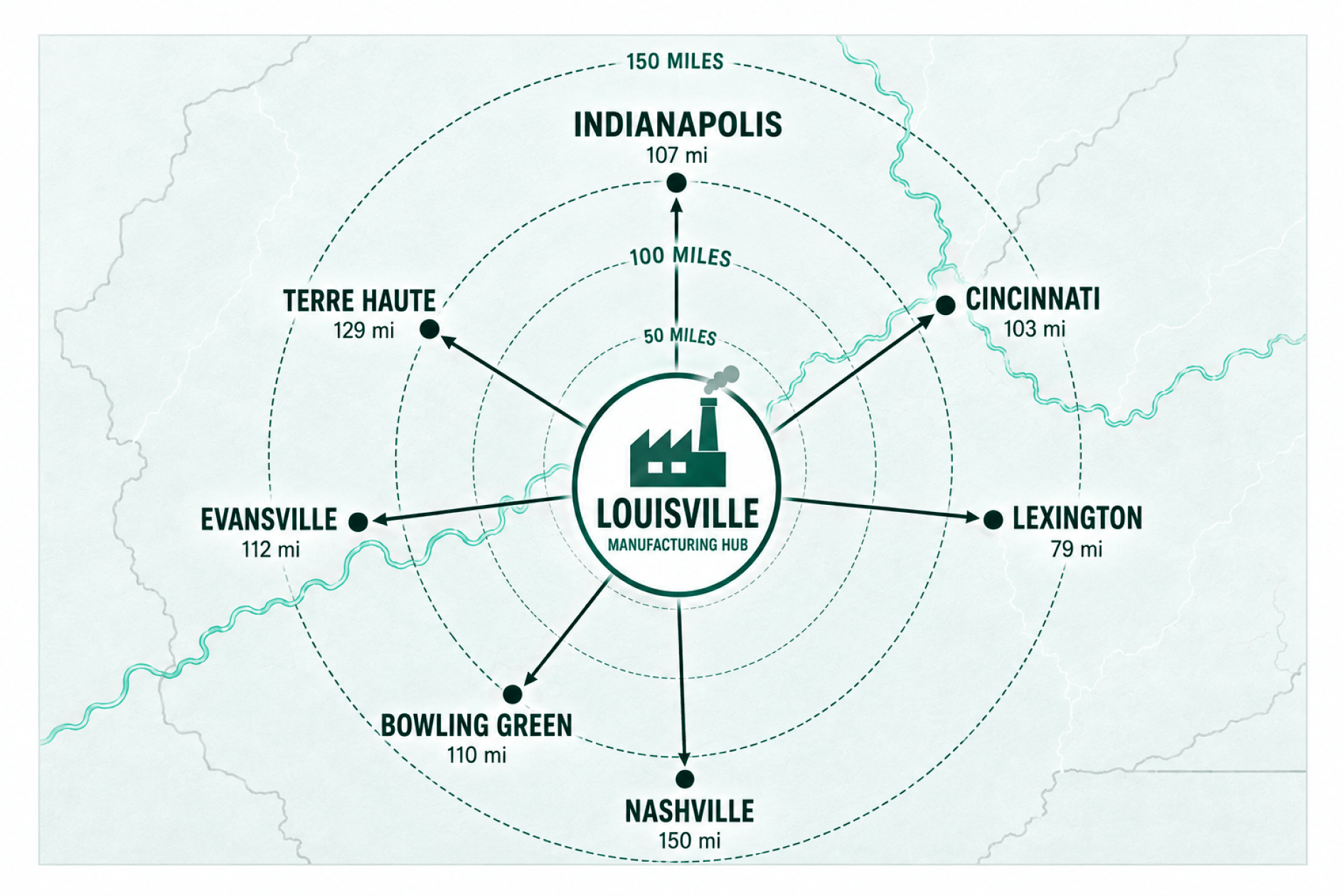
Companies with smaller websites, a defined geographic target, a narrow service offering, or a limited SEO scope are often better served by a freelancer. The overhead and process structure that make agencies effective at scale may be more than a smaller engagement requires.
A regional manufacturer with a 20-page website and a goal of ranking in three metro markets doesn’t need a cross-functional agency team. A skilled individual with focused expertise may be faster, more direct, and more cost-effective.
Organizations with strong internal systems can also use a freelancer effectively. A company with a capable in-house developer, a content team, and an analytics setup that produces reliable attribution data may only need an external practitioner to handle strategy and optimization. The internal team can manage implementation because the necessary infrastructure already exists.
Freelancers Often Bring Deep Tactical Expertise
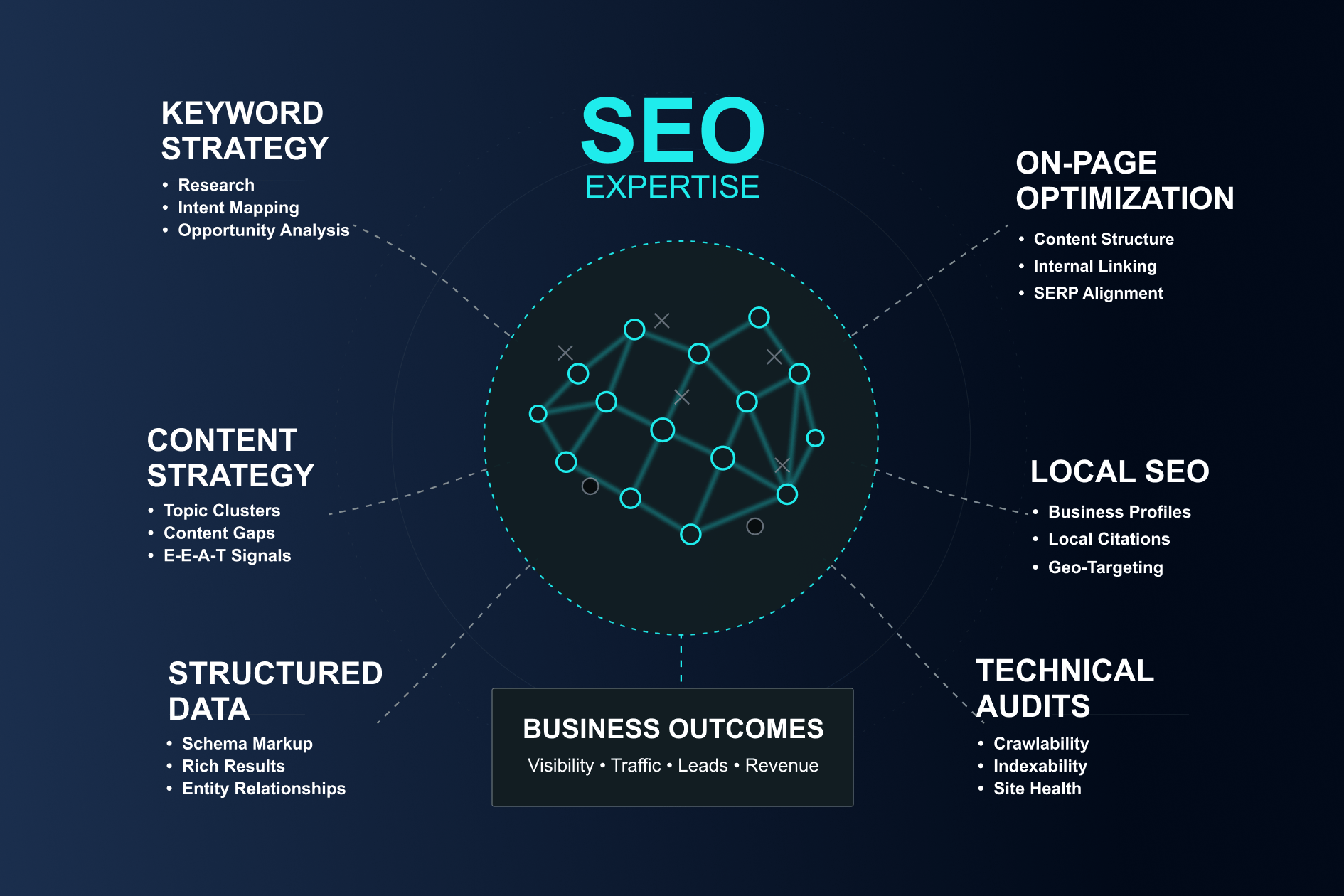
Many freelancers are highly experienced practitioners. Keyword strategy, technical audits, on-page optimization, content recommendations, local SEO, and structured data implementation are all areas where an individual specialist may bring deeper expertise than a generalist agency team.
A freelancer who has spent a decade focused on technical SEO for industrial manufacturers may carry more relevant domain knowledge than an agency strategist working across several unrelated sectors.
That expertise should not be minimized. The question isn’t whether the practitioner is skilled. The question is whether that expertise alone can deliver the outcomes the business needs at its current scale.
Direct Access and Faster Communication Have Genuine Value
Working directly with the person doing the work has operational value. Decisions can move faster, feedback loops are shorter, and there is no account management layer between the client and the practitioner.
For organizations that have dealt with agency handoff chains, where the senior strategist who sold the engagement disappears and a junior coordinator takes over, direct access is not just a preference. It’s a risk-management decision.
Skilled Freelancers Understand Their Limits
A reputable freelancer defines the scope clearly, communicates limitations honestly, and does not overpromise on outcomes they cannot control. They recognize when a technical challenge requires a developer, a content strategy requires editorial infrastructure, or an analytics problem requires additional expertise.
That transparency signals that the practitioner understands their own delivery model. Organizations evaluating freelancers should treat it as a positive indicator, not a weakness. The red flag isn’t a freelancer who acknowledges their limits. It’s one who doesn’t.
Where the Freelance Model Often Starts to Struggle
The transition from ’freelancer is the right choice’ to ’freelancer is the bottleneck’ is rarely dramatic. Rankings may initially rise, reporting looks reasonable, and the relationship feels productive. Then growth plateaus, and the organization spends months treating a structural problem as a performance problem.
SEO Becomes More Complex as Businesses Grow
Modern search performance depends on an increasingly interconnected set of disciplines. Technical website performance, content quality, user experience, content architecture, conversion optimization, and AI search visibility all contribute to the outcome.
Core Web Vitals, Google’s measures of loading performance, responsiveness, and visual stability, crawl efficiency, structured data, and analytics governance, also require specialized attention.
None of these disciplines operates entirely independently. A business with a 200-page website, multiple buyer personas, and complex technical content needs is operating a system, not a single channel. Managing that system through one execution point may work for a time, but its limitations may emerge slowly enough that organizations don’t recognize them until momentum has already been lost.
One Person Can Become the Bottleneck
When a business reaches mid-market scale, the SEO practitioner isn’t only doing SEO. They are managing strategic planning, implementation coordination, reporting, technical troubleshooting, and stakeholder communication simultaneously. Each function competes for time and attention, making tradeoffs unavoidable.
There’s also a continuity problem. When the freelancer's availability changes or the relationship ends, institutional knowledge and the strategic roadmap may reside with one person. Without rigorous documentation, the organization may have to reconstruct both. That reset is a cost that does not appear on an invoice.
SEO Activity Continues, but Results Stall
This is often the hardest problem to identify from inside the organization. Rankings may have risen, reports still arrive monthly, and the freelancer remains responsive. But the connection between SEO activity and the business pipeline starts to blur.
Traffic grows without converting. Organic visibility expands for search terms that do not match buyer intent. Leadership asks what the SEO program is producing, and the honest answer is harder to give than it should be.
This often isn’t a talent problem. It’s a structural limitation.
The model that worked at an earlier stage of digital maturity no longer fits the operation's complexity. Recognizing that shift is the starting point for making a different decision.
What Changes With an SEO Agency
The meaningful difference between a freelancer and an agency isn’t headcount alone. It’s operational architecture. When an agency functions as an integrated system rather than a collection of siloed services, it changes how SEO operates inside an organization, not merely who performs the work.
The Difference Is Operational, Not Personal
The case for an agency is not that freelancers are less capable or less committed. It’s that agencies can distribute responsibility across systems and disciplines in ways a single practitioner cannot.
A well-structured agency brings technical developers, UX designers, data analysts, content strategists, and SEO practitioners into a shared operating framework. That distribution of expertise and accountability is the structural advantage, not the individual talent of any one team member.
Agencies Bring Cross-Functional Coordination
In an integrated agency, a developer is already part of the workflow when an SEO audit identifies a technical issue. The editor and strategist work from the same brief when content needs to align with search intent. When analytics shows that organic traffic is not converting, UX and conversion specialists can examine the pathway without the client having to assemble another team.
Because the handoff structure already exists, technical recommendations can move from diagnosis to implementation without months of separate coordination. Every delay extends the period in which the underlying issue continues to affect performance.
SEO Starts Functioning as Part of a Growth System
When SEO operates within a broader digital framework, the roadmap can account for dependencies across the website, report on activity to outcomes, and keep priorities aligned with business objectives.
An SEO program connected to CRM data, sales-cycle insight, and content governance can relate organic visibility to lead quality and pipeline movement. The aim is not simply to attract more traffic. It’s to attract visitors whose intent matches the conversion pathways built for them.
Integrated SEO programs can also play a more direct role throughout the sales cycle. Content organized around search intent can answer buyer questions and objections at every stage, not just drive top-of-funnel traffic. SEO then operates as part of the broader commercial system instead of an isolated acquisition channel.
The Best Agencies Operate as Integrated Systems, Not Service Silos
Not every agency solves the fragmentation problem. Some recreate it internally, with SEO, development, content, paid media, and UX operating as separate departments with different priorities and reporting lines. That structure produces many of the same coordination failures as a fragmented vendor model, only with agency-level overhead.
The operational differentiator is integration, not size. An agency that manages SEO, technical development, analytics, and UX through a unified workflow offers a fundamentally different operating model from one that simply lists all those services.
Organizations evaluating agencies should ask how those functions communicate, who owns the roadmap, and what happens when an SEO recommendation requires development resources.
Freelance SEO vs. SEO Agency: A Practical Comparison
The table below outlines the key operational differences between the two models. Use it to identify which profile best fits the current state of the business, and to ask better questions of any vendor under consideration.
| Capability Area | Freelancer Model | Integrated Agency Model |
| Best organizational fit | Defined scope, lower complexity, or focused geography | Growing or operationally complex organizations |
| Communication structure | Direct and flexible | Structured across functions |
| Technical depth | Depends on the practitioner's expertise and professional network | Distributed across specialists |
| Scalability | May become bandwidth-limited as the scope expands | Designed for multidisciplinary coordination |
| Reporting | Led by the practitioner, depth varies by scope | Standardized across workstreams |
| Implementation continuity | Typically dependent on one person | Shared systems and processes |
| Development coordination | May require internal teams or separate external resources | Built into the shared workflow when included in scope |
| Strategic roadmapping | Varies by practitioner and engagement scope | Coordinated with wider digital and business priorities |
| AI and AEO readiness | Depends on specialization and access to implementation resources | Coordinates technical, content, and analytics requirements |
| Continuity risk | Knowledge may be concentrated in one person | Knowledge is distributed across the team and its systems |
| Client relationship | Project or retainer centered on the practitioner | Ongoing program with shared ownership |
A mid-market company with a 300-page website, multiple buyer personas, and a pipeline growth mandate will usually need more operational capacity than a single freelancer can provide, unless internal teams already supply the development, content, analytics, and implementation resources.
Signs a Business May Have Outgrown the Freelance Model
The following patterns may indicate that a mid-market SEO program has outgrown the operational capacity of the freelance model. They aren’t a verdict on the practitioner. They are signals that the structure itself may have become the constraint.
Because these problems often appear tactical in isolation, organizations may continue applying the same approach even after the operating model no longer fits the business.
3 Signals the Structure Has Become the Constraint
Rankings Rise. | Audits Sit. | Leadership Can't Explain |
None of these patterns automatically means the freelancer has failed. They may mean the organization has outgrown a model that was appropriate at an earlier stage. That distinction matters when deciding what should come next.
Why This Matters More Under Current Search Conditions
Search visibility now extends across traditional organic results, rich search features, AI-generated summaries, and search-enabled answer tools. Keyword targeting and content volume alone can’t address that range.
Technical accessibility, content quality, information architecture, user experience, and measurement need to work together. Organizations running coordinated digital programs are better positioned to adapt than those managing each function separately.
AI Visibility Builds on SEO FoundationsTraditional SEO remains the foundation for AI visibility. AI systems still need to discover, interpret, and trust accessible, well-structured content. Technical SEO, information architecture, internal linking, content quality, and structured data continue to shape visibility as discovery expands beyond traditional rankings. | |
SEO Visibility
| AI Visibility
|
Business Value
| Business Value
|
What You Compete For→ The click | What You Compete For→ A place in the answer |
Visibility Now Extends Beyond Traditional Rankings
Google's AI Overviews and search-enabled tools like ChatGPT and Perplexity can surface synthesized answers with links to sources, changing the path buyers take to reach a website.
A company may rank prominently for a target keyword and still be absent from an AI-generated answer. Traditional rankings remain valuable, but they no longer represent every place a company may be discovered.
That doesn’t mean appearing in AI-generated search requires a separate technical checklist.
Google states that AI Overviews and AI Mode require no special optimization or schema beyond its established SEO requirements.
The practical work still includes crawlability, useful and accessible content, internal linking, page experience, and structured data that accurately reflects the visible page where relevant.
Answer engine optimization (AEO) is commonly used to describe efforts to make content easier for AI-driven search and answer systems to find, understand, and potentially cite.
It overlaps heavily with traditional SEO and may require coordination across content, development, analytics, and UX. It isn’t a guaranteed route to inclusion in an AI-generated response.
Coordinated Infrastructure Extends the Value of SEO Work
- Technical fixes, content architecture, and analytics become more valuable when they are coordinated.
- A crawlability fix allows search engines to access more content. Internal linking gives priority pages more context.
- Reliable analytics show whether those changes are attracting qualified demand.
Each function supplies information or capacity that the others can use.
A fragmented execution model can still produce gains, but those gains often remain isolated when no shared roadmap connects them. Organizations building search authority treat SEO as an infrastructure program, not a collection of unrelated channel tasks.
The Real Decision Is About Operational Fit
Choose the model that matches where the business is now and what it needs to accomplish during its next stage of growth. That answer will change as the organization, website, and SEO program become more complex.
When a Freelancer Makes Sense
- Website is manageable in size and complexity
- Internal team can implement recommendations
- Leadership needs targeted technical expertise
- Budget is limited relative to the opportunity
When an Agency Makes Sense
- Multiple departments influence SEO success
- Technical complexity continues to increase
- Organic growth has plateaued despite ongoing efforts
- Reporting must support strategic business decisions
- Success depends on coordinated development, UX, analytics, and content
- SEO must contribute directly to qualified leads and pipeline growth
Typical Examples
A regional industrial company with 25 service pages and a defined geographic market often fits the freelancer model. So does a manufacturing distributor with a 50-page website, an experienced internal developer, and a specific technical SEO project.
An agency becomes a better fit when a manufacturer manages hundreds of products or services, multiple stakeholders, ongoing content production, and expects SEO to drive measurable business growth rather than isolated rankings.
Mid-market B2B companies often reach this transition after capturing the early tactical gains. Continued growth depends on coordinating technical SEO, content strategy, analytics, user experience, and conversion optimization.
Neither answer is permanent. A company that fits the freelancer profile today may benefit from an agency as its digital operation expands. The right choice should be revisited as the business, website, and search strategy evolve.
The Goal Is Not More SEO Activity. It’s Clarity and Momentum.
The freelance vs. agency question is only the starting frame. The answer comes from determining which operational model fits the company’s current stage, the complexity of its digital system, and the outcomes it expects from search.
Freelancers are not a lesser option. They are the right option for a specific organizational profile, and a skilled practitioner working within the right scope can outperform a fragmented agency relationship.
The ceiling is structural. When the complexity of the operation exceeds what a single execution point can handle, the model becomes the constraint, regardless of the individual's ability.
Many organizations struggling with SEO haven’t failed at search optimization. They have outgrown how they were running it without reconsidering the model. The answer is not more activity. It’s a closer fit between how the business operates and how its SEO program is run.
If an SEO program feels active but its direction remains unclear, the operating model may no longer align with the business's complexity.
DBS Interactive works with mid-market B2B companies to connect technical infrastructure, search visibility, analytics, UX, and content to measurable business outcomes. Contact Us
Questions Worth Asking Before the Next SEO Decision
Neither is categorically better. A skilled freelancer may be the right choice for an organization with a focused scope, lower digital complexity, and mature internal systems.
An integrated agency is more likely to fit when SEO spans several departments, technical complexity is increasing, and the business needs to connect search visibility with qualified leads and pipeline movement. The decision is about operational fit, not individual quality.
Common signals include technical recommendations remaining unresolved, rankings rising without a corresponding increase in qualified leads, and leadership being unable to explain what the SEO roadmap is building toward.
These patterns may indicate that the execution structure has become the constraint, not the practitioner's ability.
Several problems can cause organic traffic to grow without generating qualified leads. The website may be ranking for terms that don’t match buyer intent, reaching the wrong audience, sending visitors through weak conversion pathways, or measuring traffic without connecting it to pipeline data.
When SEO operates separately from content strategy, conversion architecture, and analytics, visibility can rise without producing a meaningful commercial result.
An integrated agency connects SEO strategy with technical development, UX, analytics, and content through a shared operating framework.
Technical recommendations can move faster when the implementation resources are already part of the workflow. Reporting can connect search activity with lead quality and pipeline movement. A shared roadmap also keeps each discipline from operating independently.
Freelancers generally charge less than integrated agencies, but prices vary widely based on scope, specialization, market, and deliverables.
An agency engagement may cost more because it includes broader operational capacity across SEO, development, analytics, UX, and content. When comparing proposals, organizations should examine what each fee includes.
Answer engine optimization (AEO) is commonly used to describe work intended to make content easier for AI-driven search and answer systems to find, understand, and potentially cite.
It’s important because buyers may encounter synthesized answers from Google AI Overviews or search-enabled tools like ChatGPT before visiting a conventional search results page. However, AEO isn’t a separate shortcut or guaranteed path to citations. It largely overlaps with technical SEO, useful content, internal linking, page experience, and accurate structured data, where relevant.
Related Posts