
How Inbound Marketing Generates B2B Leads for Manufacturers
Modern buyers have moved beyond trade shows and cold calls, making inbound marketing the scalable path to attract, convert, and nurture qualified leads where they already research online.
 29 Min Read
- Traditional tactics stall growth: Trade shows, referrals, and cold calls no longer scale as buyers shift online.
- Unpredictable funnels: Static websites and cold lists create pressure on sales teams chasing low‑intent leads.
- Missed influence: Over half of industrial buyers decide before contacting suppliers, making early visibility critical.
- Inbound meets buyers where they are: Content, SEO, and automation provide self‑serve information that builds trust.
- Four inbound stages: Attract (SEO, blogs), Engage (CAD files, calculators), Convert (CTAs, lead scoring), Nurture (automation, drip campaigns).
- High cost, low yield: Trade shows and cold outreach consume time and money with minimal return on investment.
- Scalable digital reach: Published technical resources and tools engage hundreds of prospects without extra staff effort.
- Better sales alignment: Inbound systems capture context, qualify leads, and integrate with CRM for smarter follow‑up.
- Inbound outcomes: Shorter sales cycles, better‑qualified leads, measurable ROI, stronger sales support, and increased brand trust.
Inbound Marketing Aligns with Modern Industrial Buyers
Manufacturers excel at building quality products. However, generating leads to sell those products relies on visibility, education, and consistent digital efforts.
Many still rely on trade shows and referrals. As buyers shift online, these methods lose effectiveness. Inbound marketing lets prospects find you through expert content, search visibility, and automation.
Many companies still lean on trade shows, referrals, and cold calls to open new opportunities. These methods have been part of the industry for decades, but they have become less effective as buyers shift online.
Inbound marketing moves that effort into a system where prospects find you through useful content, search visibility, and automated nurturing.
When Your Sales Pipeline Depends on Yesterday’s Methods

Most manufacturers rely on methods that no longer scale. They continue to direct marketing budgets into trade shows, the website functions like a static brochure, and the pipeline relies on a handful of long-term accounts.
Sales teams then spend time chasing cold leads from purchased lists or inquiries with no real intent. This creates an unpredictable funnel and unnecessary pressure on sales.
High Cost, Low-Yield Tactics
Trade shows and cold outreach take time and money. Only a small percentage of cold calls lead to a meeting, which makes it a difficult way to build a dependable pipeline. These activities also require staff hours that could be used on qualified prospects.
Unresponsive RFQs
It is common to receive an RFQ from a new contact and then lose all communication. Teams invest hours into quoting, yet many prospects move on without a reply. This slows down sales cycles and pulls attention away from active buyers.
Marketing Viewed as a Cost Center
Traditional efforts are often difficult to directly connect to revenue. When leaders cannot see a clear ROI, budgets stall and digital assets fall behind. Websites lack educational content, lead capture tools are not updated, and CRM systems do not integrate with marketing.
The result is a system where strong products are hidden from the buyers searching for them. Inbound marketing changes this by helping manufacturers attract qualified visitors and nurture them through content, SEO, and automated follow-up. Start by assessing your website and content—identify one digital area where you can provide more value to prospective buyers this month.
If You Do Not Modernize, You Risk Falling Behind

Today’s industrial buying process has shifted online. Modern technical buyers typically complete most of their research before contacting suppliers. These changes in behavior shape how manufacturers get evaluated.
Today’s industrial buying process has shifted online. Modern technical buyers typically complete most of their research before contacting suppliers. These changes in behavior shape how manufacturers get evaluated.
Buyers Educate Themselves
Nearly 97% of B2B buyers review a supplier’s website before speaking with sales. They don’t skim one or two pages. On average, B2B buyers consume multiple resources during their research, according to this industry study on buyer behavior.
Late Engagement with Sales
By the time a prospect reaches out, they may already have a preferred direction. Many buyers are close to final decisions before speaking with a sales rep. If your company isn’t visible during their early research, you’re unlikely to make the shortlist.
Competitors Gaining Visibility
Many manufacturers prioritize SEO, technical content, and advanced digital tools. These firms secure visibility in search, provide instructional resources, and supply specification guidance that supports buyers’ early evaluations.
Missed Influence Means Missed Deals
Over half of industrial buyers finalize their decisions before initiating contact with suppliers. Lacking presence during early research eliminates any chance to influence buyer requirements or selection criteria.
Inbound Marketing Meets Buyers Where They Are
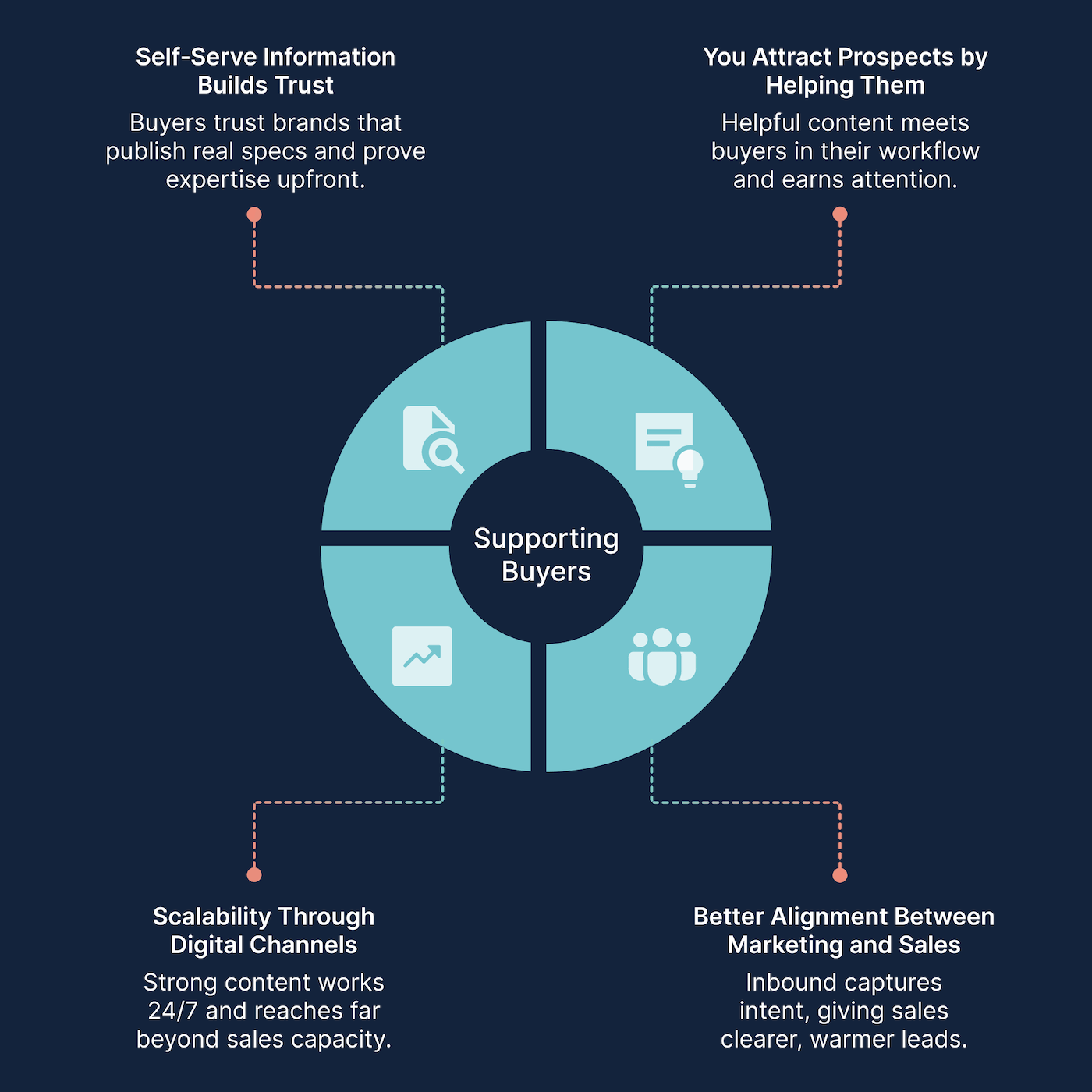
Inbound marketing provides buyers with the information they actively search for. Instead of relying on outbound pushes, inbound uses content, SEO, and automation to support technical buyers through their research.
Self-Serve Information Builds Trust
Engineers and procurement teams prefer independent research. They rely on datasheets, CAD models, case studies, and documentation before contacting a salesperson. Inbound marketing supports this behavior by offering technical information upfront. When you make expertise easy to access, buyers begin to trust your brand.
You Attract Prospects by Helping Them
Cold outreach often interrupts someone in the middle of their work. Inbound works differently. When a buyer finds a helpful post or tutorial while researching a problem, the interaction is on their terms and aligned with their workflow.
Scalability Through Digital Channels
A sales team’s outreach is limited by time and capacity. High-value content, once published, can reach hundreds or thousands of prospects at any hour without additional effort.
Better Alignment Between Marketing and Sales
Inbound systems capture prospects digitally and track their interests. Leads come in with more context, making it easier for sales teams to prioritize and follow up.
How Inbound Marketing Works for Manufacturers
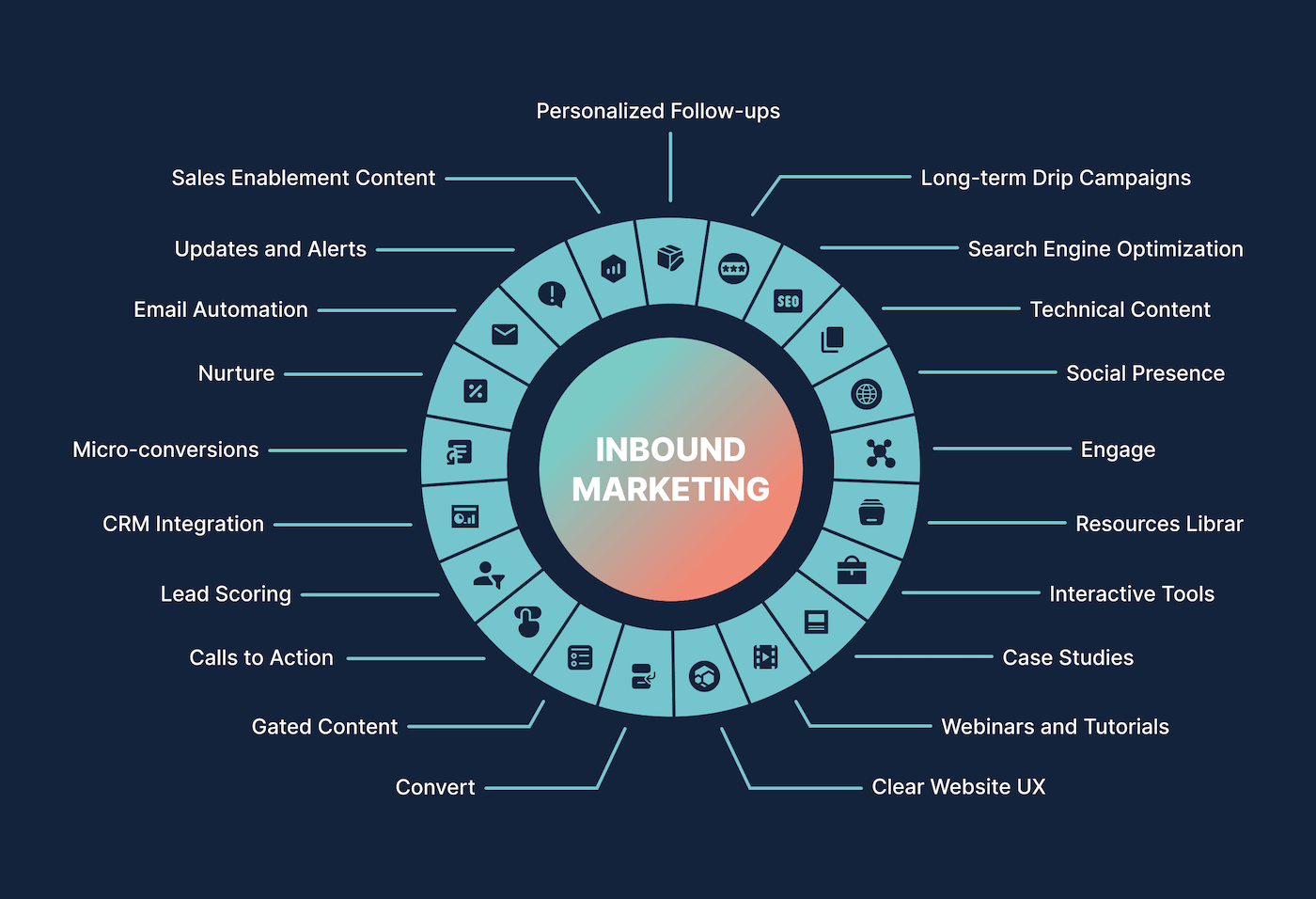
A successful inbound plan guides prospects through four stages. Each stage uses different tactics that match the buyer’s mindset and level of intent.
Attract
This stage focuses on making your company visible to the right technical audience.
Search Engine Optimization
Industrial buyers often begin with search. Your website needs to rank for the queries relevant to your niche. Keyword research, optimized pages, targeted landing pages, and consistent blog content help your company show up during early research.
Request a free audit. See a sample.
Technical Content
A blog or resources section allows you to publish educational articles, case studies, and industry insights. This builds visibility and gives buyers information they can review independently.
Industry Publications and Social Presence
Guest articles in engineering publications, participation in forums, and an active LinkedIn presence for subject matter experts extend your reach beyond your website.
Make each piece of content useful. If a post helps an engineer solve a problem or evaluate an option, you create early trust and repeat visits.
Engage
Once a prospect lands on your website, you need to hold their interest and give them useful detail. This stage focuses on resources and tools that help engineers and procurement teams evaluate your product.
Technical Resources Library
Provide downloadable CAD models, drawings, spec sheets, and datasheets. Engineers often prefer suppliers who offer CAD files because they speed up design work and support accurate specifications.
Interactive Tools and Calculators
ROI calculators, configurators, and selection guides help prospects apply your product to their own environment. These tools keep users engaged and create more informed inquiries.
Case Studies and Application Examples
Real-world examples show how your product works in context. Application notes, case studies, and demo videos help prospects relate your capabilities to their industry.
Webinars and Tutorials
Short technical webinars or tutorials allow multiple stakeholders to engage with your team and deepen their understanding.
Clear Website UX
Fast load time, logical navigation, and mobile-friendly design make it easier for prospects to find the resources they need.
When an engineer can quickly locate CAD models or a plant manager can find application examples for their sector, engagement increases without requiring direct outreach.
Convert
This stage focuses on turning engaged visitors into identified leads your sales team can work with. In inbound marketing, conversion usually happens when a visitor submits a form or signals interest in exchange for useful information.
Gated Content and Lead Magnets
Offer high-value resources such as white papers, design guides, e-books, or industry reports. Prospects are more willing to share their details when the resource helps them evaluate a solution.
Calls to Action and Landing Pages
Use clear CTAs throughout your site to guide visitors to conversion points. A CTA at the end of a technical blog post can direct readers to a focused landing page. That page should describe the offer and present a simple form to complete.
Lead Scoring for Industrial Companies
Lead scoring helps separate sales-ready contacts from early-stage researchers. Points are assigned based on attributes and behavior. For example, a director-level engineer or someone who downloads pricing information would rank higher than a casual reader.
CRM Integration
Once a lead is captured, your CRM should store the record, source, and activity history. This gives sales visibility into what the lead has reviewed and supports automated follow-up so nothing gets missed.
Micro-conversions for Complex Sales
Manufacturing sales cycles involve many steps. Track actions such as newsletter signups, quote requests, or “Contact Sales” clicks. Each signal shows an increase and should be routed to the appropriate team quickly.
Forms should collect enough information to qualify the lead without creating friction that discourages completion.
Nurture
Many leads will not be ready to buy immediately. Nurturing supports them with relevant information and helps guide long-cycle industrial decisions.
Email Automation Sequences
Workflows can deliver ongoing resources and keep your company top of mind after the initial conversion.
Lead Scoring Updates and Alerts
As leads engage with nurturing content, scores should adjust automatically. When someone crosses a threshold, sales can receive an alert and follow up with context.
Sales Enablement Content
Provide sales teams with resources they can use during evaluation. Examples include comparison sheets, ROI tools, and one-page documents that address common objections.
Personalized Follow-ups
Not all nurturing is automated. When activity spikes or a prospect spends time on high-intent pages, a timely personal email or message from sales can move the conversation forward.
Long-term Drip Campaigns
For buyers early in the cycle, schedule periodic touchpoints such as quarterly newsletters, product updates, or event invitations. This keeps the relationship active without pressure.
Segmenting leads by role, industry, or behavior ensures each group receives content that fits their needs and keeps engagement consistent.
Skills That Drive Inbound Success
Inbound marketing requires creative, technical, and analytical skills working together. Most manufacturers need a mix of roles or partners to run an inbound system effectively. The table outlines the functions involved and the capabilities they bring.
Role |
Critical Skills |
Why It Matters |
| Content Strategist | Technical storytelling, SEO, persona mapping | Turns specifications into clear content that attracts and converts buyers |
| Marketing Technologist | CRM integration, automation setup, attribution modeling | Connects marketing activity to revenue and builds scalable systems |
| UX Designer / Developer | Conversion optimization, responsive design | Improves the website experience so visitors can find information and convert |
| Analytics Lead | Dashboard setup, lead scoring, ROI tracking | Measures performance and guides ongoing optimization |
| Project Manager / Strategist | Workflow orchestration, stakeholder alignment | Keeps work coordinated and aligned with business goals |
Titles may differ across organizations, but these functions need coverage. An inbound program depends on coordination between strategy, content, design, technology, and sales alignment. Many manufacturers handle some of this and work with external partners for the rest. Agencies experienced in manufacturing can cover these roles when an internal team is not fully built out.
What Inbound Success Looks Like

When manufacturers adopt inbound marketing, measurable improvements appear across the buying process.
Shorter Sales Cycles
Buyers who have reviewed technical and resources progress more quickly once they speak with sales. They enter conversations with clearer requirements and fewer unanswered questions, which reduces time in early evaluation.
Better-qualified Leads
Inbound leads usually reflect higher intent because they have already engaged with multiple resources. Lead nurturing and qualification improve close rates and help sales teams focus on prospects that match target profiles.
Measurable ROI and Lower Cost Per Lead
Digital channels show how visitors move from content to lead to revenue. Performance data highlights which assets create the most opportunities and which channels deliver the most efficient cost per lead.
Stronger Support for Sales Teams
Sales teams gain context from contact records that show what a prospect viewed or downloaded. This helps them tailor conversations to the prospect’s needs and reduces reliance on cold outreach.
Increased Brand Trust and Visibility
Consistent technical content, search visibility, and participation in industry conversations position the company as a credible source. Prospects recognise the brand from earlier exposure to articles, tools, or webinars, which strengthens early evaluation.
Internal Shifts That Support Inbound Marketing

Adopting inbound marketing often requires internal changes in how the organization views marketing and how teams work together.
Marketing as a Revenue Driver
Management starts to review marketing metrics alongside sales metrics. Marketing receives targets, and inbound data helps show its impact on revenue.
The Website as a 24/7 Sales Resource
The website is treated as a core sales and marketing platform instead of a static brochure. Content is updated regularly, user behavior is monitored, and pages are optimized to improve results.
Alignment Between Sales and Marketing
Inbound requires close coordination between sales and marketing. Sales teams provide input on helpful content, and marketing shares insight on how leads interact with the website and materials.
Continuous Improvement and Learning
Inbound is iterative. As data comes in, teams refine tactics, adjust topics, and test improvements. This creates a culture of ongoing optimization rather than fixed annual plans.
Myths That Slow Inbound Adoption
Some misconceptions can make teams hesitant to adopt inbound marketing. The table below outlines common myths, why they persist, and the practical reality for manufacturers.
Myth |
Why It Persists |
The Reality |
| “Our buyers don’t use the internet to find suppliers.” | Legacy sales models and trade show culture | Most B2B buyers research online before contacting sales, including in industrial sectors. |
| “Inbound is just blogging.” | Oversimplified marketing advice | Inbound involves coordinated SEO, gated content, lead scoring, automation, and attribution. |
| “We don’t need marketing, our product speaks for itself.” | Engineering-led culture and reliance on referrals | Strong products still need visibility, clarity, and trust-building to convert buyers. |
| “Our sales team already handles lead gen.” | Siloed structures | Inbound pre-qualifies leads so sales can focus on active opportunities. |
| “Marketing can’t be measured like sales.” | Limited attribution tools | CRM and lead scoring systems make marketing’s revenue impact measurable. |
| “We tried content once, it didn’t work.” | One-off posts without a strategy | Inbound builds momentum over time through consistency and refinement. |
| “Our buyers only care about specs.” | Misreading the buyer journey | Specs matter, but buyers also look for proof, clarity, and subject-matter expertise. |
Discussing these myths internally helps teams align on expectations and reduces friction as inbound work progresses.
From Clicks to Contracts
One of the advantages of inbound marketing is the ability to measure impact through to revenue. In traditional manufacturing marketing, it was difficult to link activities directly to outcomes.
With inbound, tracked digital channels make attribution clearer.
These points outline how manufacturers can connect marketing activity to sales results.
Lead Source Attribution
Using your CRM, tag each inbound lead with its source and campaign. For example, a lead may come from organic search, a LinkedIn campaign, or a trade show booth scan. This allows later analysis of how many sales originated from each source and how those sources converted.
Close-the-loop Reporting
Work with sales so that closed deals are recorded in the CRM and linked to the original lead source. You can track how many leads, opportunities, and closed deals inbound activity produced. This also highlights differences in close rates or sales cycle length between inbound and other channels.
Lead Value Calculation
Lead value can be estimated using a simple formula that combines close rate and average deal size. It provides a benchmark for evaluating pipeline quality.
Lead Value = Close Rate × Average Deal Size
Cost Per Lead and Customer Acquisition Cost (CAC)
Tracking costs alongside results allows you to compute cost per lead by channel and overall CAC. Early inbound investment may raise the initial cost per lead, but performance often improves as content compounds and organic visibility grows.
Revenue Attribution Models
Companies with multi-step buyer journeys can use attribution models that assign partial credit to key interactions. For instance, a buyer may first find a blog post, later attend a webinar, and then speak with sales. Attribution models distribute credit across those touchpoints, so results are not tied only to the final interaction.
Dashboards and KPIs
A simple marketing dashboard helps stakeholders track website visitors, leads generated, MQLs, SQLs, and deals influenced by marketing. Showing conversion rates between stages makes performance easier to review.
What’s a lead worth?
Lead Value = Close Rate × Average Deal Size
Example: If 1 in 20 spec sheet downloads leads to a $100K deal, each lead is worth $5K.
You Don’t Have to Build Inbound Alone
Implementing inbound marketing can feel complex for companies early in their digital journey. Many manufacturers pair internal efforts with external support, much like they work with consultants for process improvement or technical projects.
Agencies experienced in manufacturing can help establish systems, content workflows, and analytics for teams that lack in-house capabilities for all functions.
Related Posts