5 Ways Web Design Increases Sales for SaaS Companies
Here's how a website with smarter UX and clearer messaging translates directly into business growth for SaaS brands.
 22 Min Read

- SaaS websites lose revenue fast when messaging is unclear or UX creates friction.
- Clear value communication within the first five seconds is one of the strongest conversion levers.
- UX that accelerates the “aha” moment directly improves trial‑to‑paid conversion rates.
- Optimized CTAs and structured page layouts reduce conversion leaks and increase demo signups.
- Visible social proof, like testimonials, logos, and metrics, reduces buying anxiety and speeds decisions.
- Page speed and Core Web Vitals have a measurable impact on SEO and SaaS conversions.
- Small UX improvements compound across activation, retention, CAC, and MRR.
- SaaS redesigns focused on clarity and flow often unlock major gains without increasing traffic.
- Most SaaS buyers skim, so concise messaging and scannable structure outperform dense content.
- A focused UX and performance audit can reveal clarity, flow, and technical gaps limiting growth.
Websites are often the primary sales engine for SaaS (Software as a Service) companies. This presents both opportunities and risks for SaaS marketers. If a SaaS website features a confusing user experience or unclear messaging, more prospects leave, and revenue suffers.
And once they leave, they're usually gone for good. Research shows that 88% of online users are less likely to return after a poor user experience.
With this in mind, the takeaway is simple: For SaaS companies, strategic web design isn’t just about appearance. Every lost visitor or abandoned trial increases customer acquisition costs and reduces monthly recurring revenue.
Why Web Design Matters More for SaaS Companies
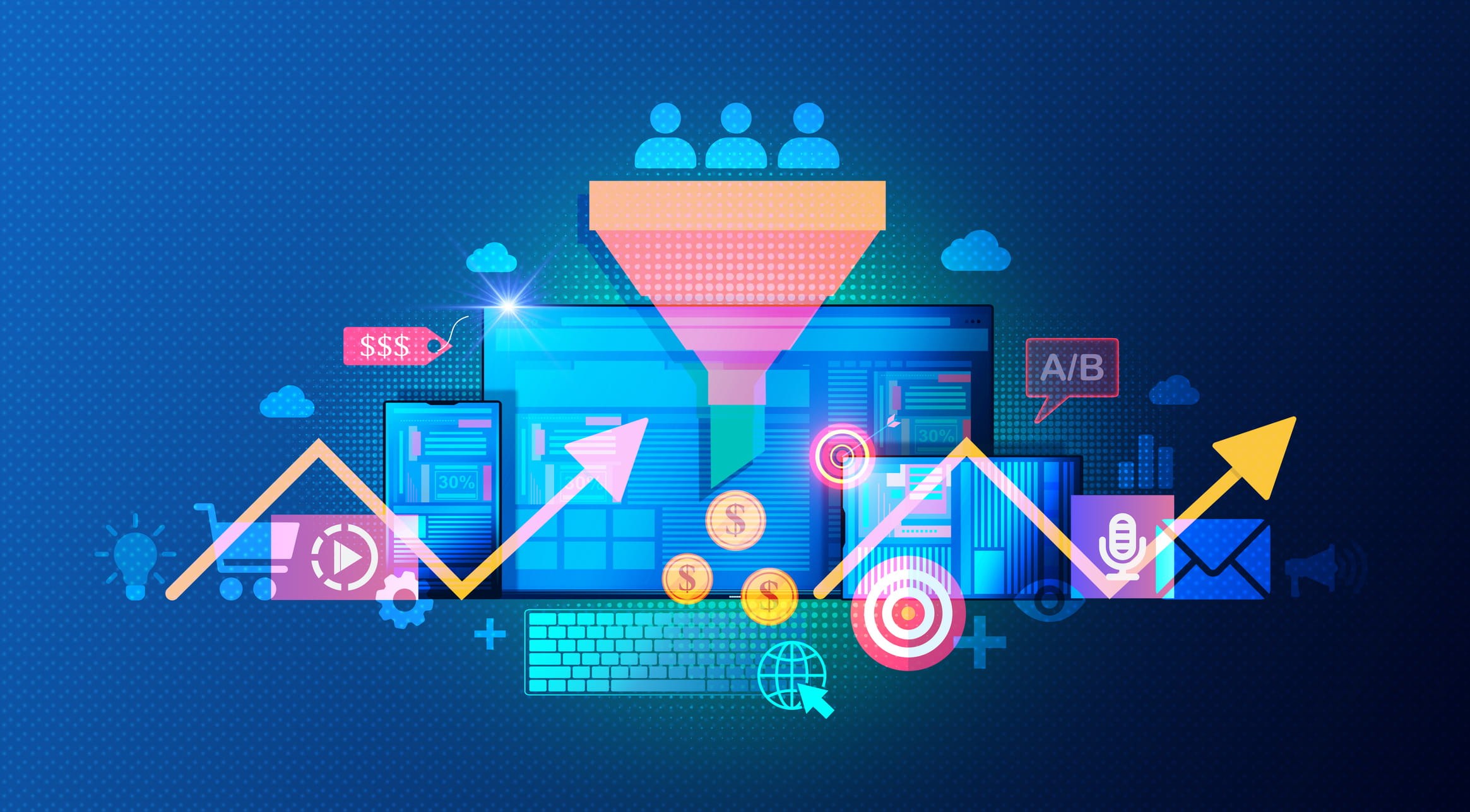
For SaaS companies, web design matters more because it defines the entire digital experience. It shapes how the site looks, how it works, how fast it responds, and how easily a buyer can move from curiosity to confidence.
Because the product lives online and buyers guide themselves, the website becomes the first proof of credibility. When that experience is strong, it builds trust and drives revenue.
Several factors make web design especially critical for SaaS.
- SaaS products are harder to grasp quickly. Because the product is intangible and often complex, the website must translate features into outcomes and reduce perceived risk early.
- The website often replaces a salesperson. Many SaaS buyers evaluate, sign up, and purchase online. The site must educate, qualify, and convert with minimal friction.
- Small UX issues create direct revenue loss. Unclear copy, confusing navigation, slow load times, or bloated forms increase bounce rates and reduce trial completion.
- Baseline conversion rates are typically lower in SaaS. SaaS landing pages often underperform cross-industry benchmarks, making optimization a competitive requirement.
- Design improvements compound across SaaS metrics. Better clarity and usability increase visitor-to-trial and trial-to-paid conversion, lowering CAC and growing MRR.
- Top performers win through execution. High-converting SaaS sites combine clear positioning, persuasive structure, and fast performance, often outperforming average conversion rates by wide margins.
5 Common Myths About SaaS Web Design
Several persistent misconceptions can lead SaaS teams astray when designing their websites:
| ✗ Myth: “Beautiful web design automatically increases SaaS sales.” | ✓ Reality: Visual appeal alone does not drive conversions. Design must align with clear UX principles and complement brand messaging. |
| ✗ Myth: “SaaS buyers read every page before converting.” | ✓ Reality: Most visitors skim. Studies show users typically read only 20–28% of page content, focusing on what appears immediately relevant. |
| ✗ Myth: “A single CTA is enough.” | ✓ Reality: SaaS buyers arrive with different levels of intent. Effective sites offer a primary CTA supported by secondary options. |
| ✗ Myth: “Fast websites only matter for SEO.” | ✓ Reality: Speed directly affects conversions. In B2B SaaS, pages that load in one second can convert several times higher than pages loading in five to ten seconds. |
| ✗ Myth: “Case studies don’t matter for SaaS.” | ✓ Reality: Customer stories and testimonials are among the strongest trust signals in SaaS, reducing buyer hesitation and uncertainty. |
The 5 Ways Web Design Increases Sales for SaaS Companies
When a SaaS website is built around clarity, speed, and buyer psychology, it doesn’t just look better—it converts better. The right design choices remove friction, highlight value, and guide prospects toward activation. These five areas represent the highest‑impact levers where the website's design directly influences trial signups, demo requests, and long‑term revenue.
1. Clear Messaging That Communicates Value in Seconds

Clarity is the first conversion lever. Before design, before features, before pricing, prospects need to grasp the value instantly.
When a SaaS company's value proposition lands within seconds, the rest of the website experience has a chance to work.
When it doesn’t, even the strongest SaaS solution won't keep visitors from turning away at the front door.
Clear messaging reduces early drop-offs. When visitors understand value quickly, they’re more likely to continue engaging or begin a trial.
|
Clear messaging ensures immediate understanding of
|
Components of Effective SaaS Messaging
|
2. UX Design That Shortens the Path to the “Aha!” Moment

In SaaS, reaching the “aha” moment, when users first experience the product’s core value, strongly influences conversion. UX design on the website and within onboarding flows plays a major role in how quickly users reach that point.
User activation is one of the strongest predictors of trial-to-paid conversion. If signup and onboarding flows are confusing or slow, users drop off before experiencing the value.
Shortening time-to-value improves conversion rates and reduces early churn. SaaS companies with strong activation metrics design every interaction to guide users toward the action that demonstrates value.
Web Design Techniques that Accelerate Time-to-Value
- Intuitive navigation and information architecture
- Interactive demos or guided tours
- Streamlined trial signup and onboarding flows
- Faster access to key features and resources
3. Conversion-Optimized CTAs and Layouts That Increase Trial and Demo Signups
Many SaaS websites suffer from "conversion leaks" that result in missed opportunities for closing a sale. Visitors may be interested, but layouts or calls to action don’t effectively capture intent.
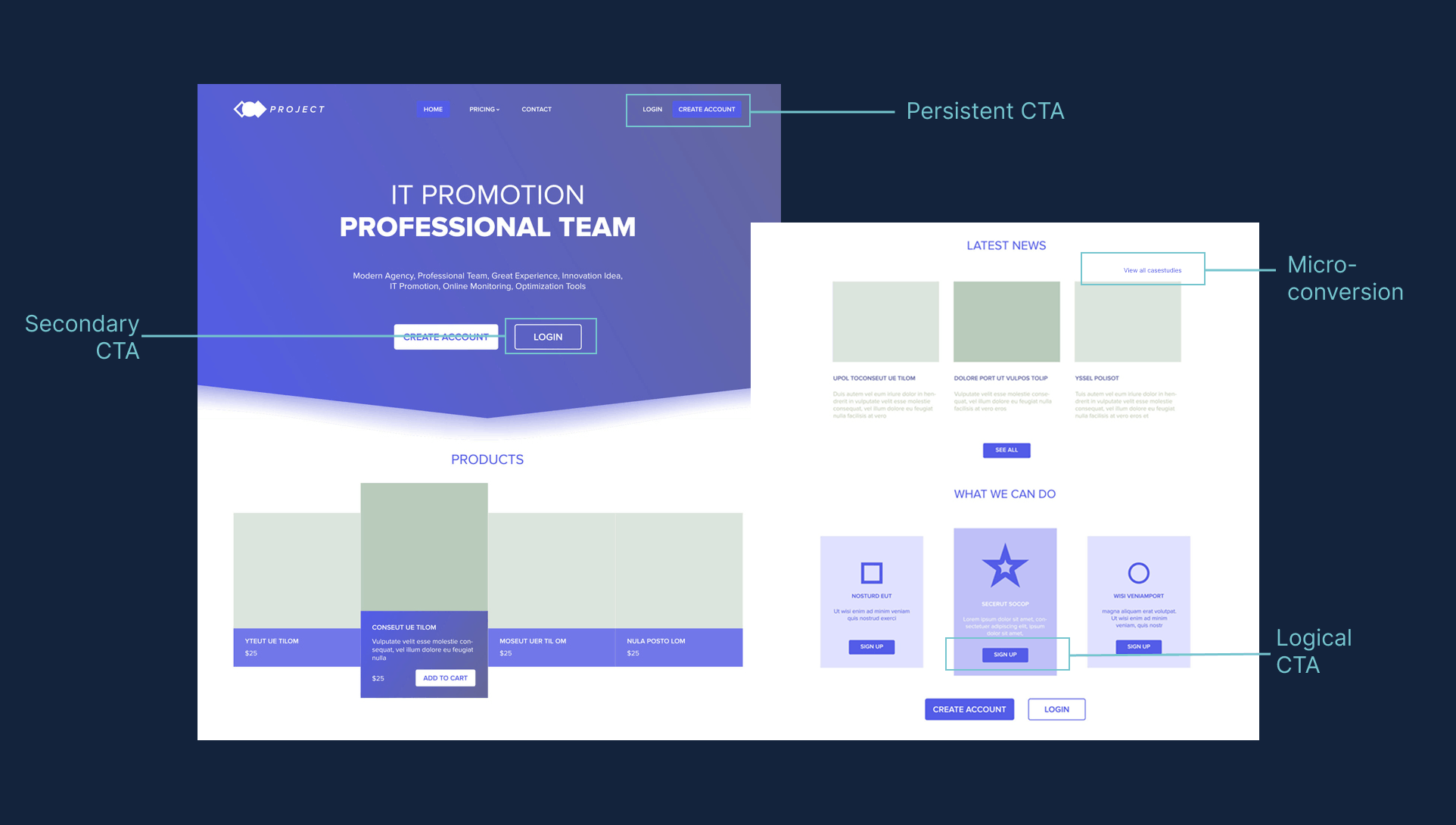
To increase sales, web design must make conversion paths obvious and easy to follow. This means optimizing CTA placement, design, and wording, and structuring page layouts that naturally guide visitors toward signing up.
Conversion-Focused Design Tactics
- Persistent primary CTAs that remain visible as users scroll
- Secondary CTAs that match different stages of buyer intent
- Logical page layouts that guide users through a clear progression, such as value proposition, benefits, social proof, objections, and a repeated CTA
- Micro-conversion pathways that encourage smaller actions before commitment
Every layout and CTA decision should reduce the distance between a visitor and the sign-up action. Clear CTAs placed at key moments, combined with uncluttered layouts, convert more traffic into trials and demos. This directly improves pipeline efficiency and lowers cost per lead.
4. Social Proof That Reduces Buying Anxiety and Builds Trust

Trust plays a major role in SaaS buying decisions.
Prospects may understand the product, but without proof that others have succeeded with it, hesitation remains.
Integrating social proof into web design directly addresses buyer uncertainty and improves conversion performance.
Effective forms of social proof
- Customer testimonials and reviews
- Logos of customers or recognizable users
- Industry badges and awards
- Case study highlights
- Quantified performance metrics
These elements reduce perceived risk, which is often the final barrier to conversion. Buyers want reassurance that similar companies have chosen the product and seen results.
Strong social proof can also shorten sales cycles and improve demo-to-close rates. When credibility is established early, sales conversations start further down the funnel. Websites should allocate visible space for trust signals near CTAs and decision points, where buyers are asking, “Will this really work for us?”
5. Technical Performance and Speed That Improve Conversion and SEO
A fast, technically sound website isn’t just a technical concern. It directly affects sales.
Page speed, mobile responsiveness, and Core Web Vitals influence both conversion rates and search visibility. Improving these areas delivers two benefits: higher conversion from existing traffic and better organic acquisition.
Key performance factors
- Faster page loads. Slow sites lose prospects quickly. SaaS buyers evaluating multiple tools rarely wait for pages to load.
- Mobile responsiveness. More than half of web traffic comes from mobile devices. Poor mobile experiences result in lost signups.
- SEO gains from technical quality. Google uses performance and UX signals as ranking factors. Stable, fast sites are more likely to rank for competitive SaaS keywords.
- Reliability of integrations. Forms, analytics, chat tools, and demo assets must function consistently. Broken experiences quietly bleed revenue.
Connecting Design Improvements to SaaS Metrics
Strong design sharpens how prospects understand the product and how efficiently the business captures demand. When the experience removes friction and clarifies value, every stage of the funnel performs better.
The downstream effect is simple: better UX turns existing traffic, interest, and usage into measurable revenue gains that stack over time. Each design improvement maps directly to core SaaS growth metrics.
- Trial sign-ups and demo requests. Clear messaging and strong CTAs increase the number of visitors who convert into trials or leads.
- Trial-to-paid conversion rate. UX that accelerates the aha moment improves activation and increases the percentage of users who convert to paid plans.
- Customer acquisition cost (CAC). Higher conversion rates mean more customers from the same traffic volume. Improved SEO further reduces blended CAC.
- Monthly recurring revenue (MRR) and lifetime value (LTV). Increased conversion rates and better early experiences improve long-term retention and revenue contribution.
These gains compound. Small UX and design improvements can create an outsized impact across revenue metrics.
Real-World Results: SaaS Website Redesign Benchmarks
When SaaS teams rebuild their websites around clarity, speed, and buyer psychology, the impact shows up fast. Redesigns that remove friction and sharpen the value story consistently unlock more pipeline from the same traffic.
The examples below illustrate how better messaging, structure, and UX translate into meaningful gains in lead quality, conversion rates, and engagement.
SaaS Company A (B2B Civic-Tech)A redesign focused on clearer messaging and modular layouts resulted in a 55.6% increase in marketing-qualified leads and a 161% increase in form submissions within three months, without additional traffic spend. | SaaS Company B (Cloud Software Provider)After simplified the homepage and emphasizing testimonials and CTAs, the company recorded a 21% increase in overall conversion rate within one month. | SaaS Company C (Enterprise SaaS)A redesign that clarified a complex product and introduced an interactive demo increased conversion on a key funnel by 135% and raised engagement by 245%. |
Priority Fix Checklist for Your SaaS Website
Small, targeted improvements often deliver the fastest lift in SaaS conversion performance. These fixes address the friction points that quietly erode trial signups and buyer confidence, making them the quickest path to measurable gains before a full redesign.
- Run a 5-second test on your homepage to confirm the value is immediately clear
- Simplify navigation and reduce competing CTAs
- Add visible social proof near decision points
- Optimize page speed and mobile performance
- Streamline trial sign-up and onboarding flows
- Conduct a first-time user walkthrough to identify friction
- Test the site on mobile devices regularly
Web Design as a Revenue Engine
For SaaS companies, the website is a primary revenue driver. Clear messaging, effective UX, visible proof, and strong performance improve conversion and reduce acquisition costs.
If your site is not delivering consistent trial signups and qualified leads, it may be time for a focused UX and performance review. A structured audit can identify gaps in clarity, flow, and technical execution and reveal opportunities to improve conversion efficiency.
Start with a free performance audit that compares your site to three competitors and identifies the clarity, flow, and technical gaps limiting your conversion rates.
FAQs
In SaaS, the website often serves as the entire sales funnel; it’s where prospects learn about the product, evaluate it, and sign up. A well-designed site is critical because it communicates value quickly, builds trust, and guides visitors to convert without a human sales rep.
Better design improves clarity and reduces friction. For example, a clearer headline can cut your bounce rate and get more people to click “Try Free.” An intuitive UX will get more trial users to experience the “aha moment,” increasing the trial-to-paid conversion rate.
The “aha moment” is when a user first realizes the core value of your product, that instant of “Oh, I get it, this is useful!” In SaaS apps, this could be after performing a key action.
Faster, well-optimized websites tend to rank higher on search engines like Google. This means you get more organic traffic as opposed to relying solely on paid ads. When more prospects find you through SEO at no cost, your overall customer acquisition cost drops.
Related Posts