Great Examples of the Best B2B SaaS Websites
Your SaaS website is now the first and most critical interaction your audiences have.
 6 Min Read
B2B buyers now self-educate through roughly 80% of their journey before contacting sales. In this environment, a website is more than a brochure. It functions as a primary sales channel. If it resembles a static page from a few years ago, it’s easy for prospects to overlook.
The average B2B SaaS website converts about 1% of visitors into leads.
High-performing sites exceed that benchmark, achieving conversion rates of 5-12% by treating the website as a revenue channel, rather than mere brochureware.
Many of these companies generate 40% to 60% of their pipeline at a lower cost per opportunity than traditional outbound programs.
As a result, CMOs increasingly view the website as a core growth driver in upcoming budget cycles. A small group of SaaS companies already demonstrates what modern, high-performing websites look like.
Their sites do more than inform. They guide, personalize, and support evaluation in real time.
The Best B2B SaaS Websites
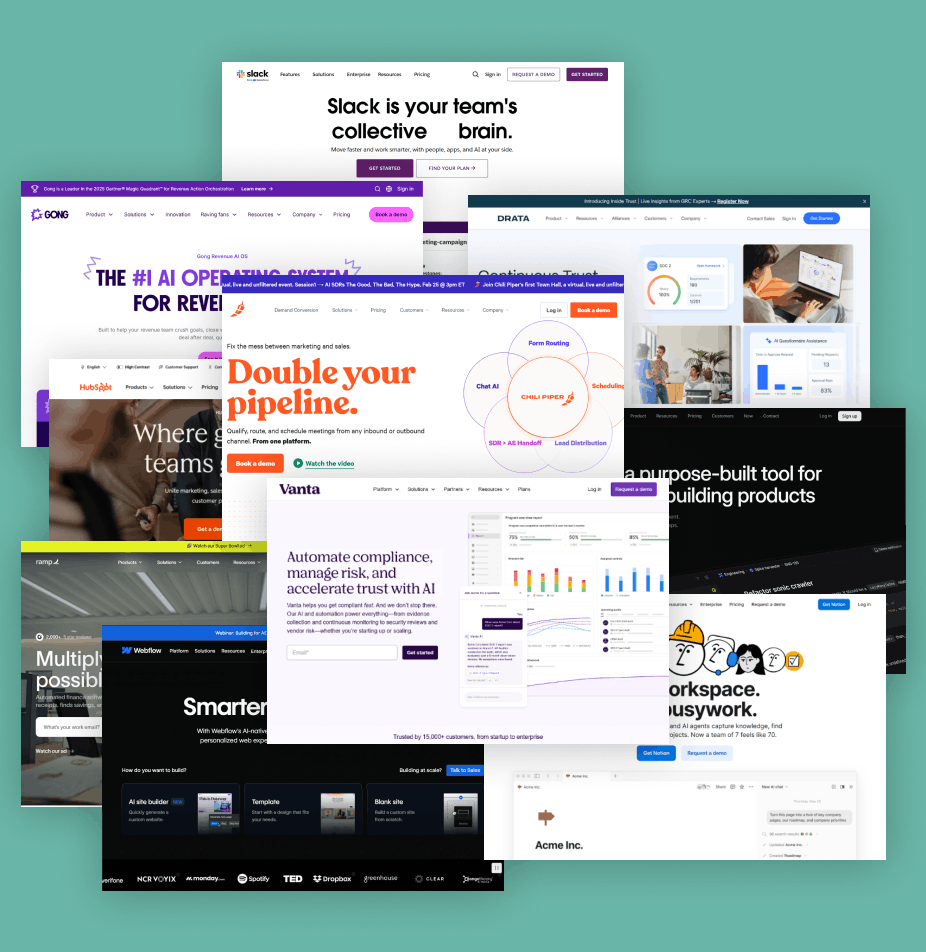
These 11 B2B SaaS websites show how digital experiences can help drive pipeline growth.
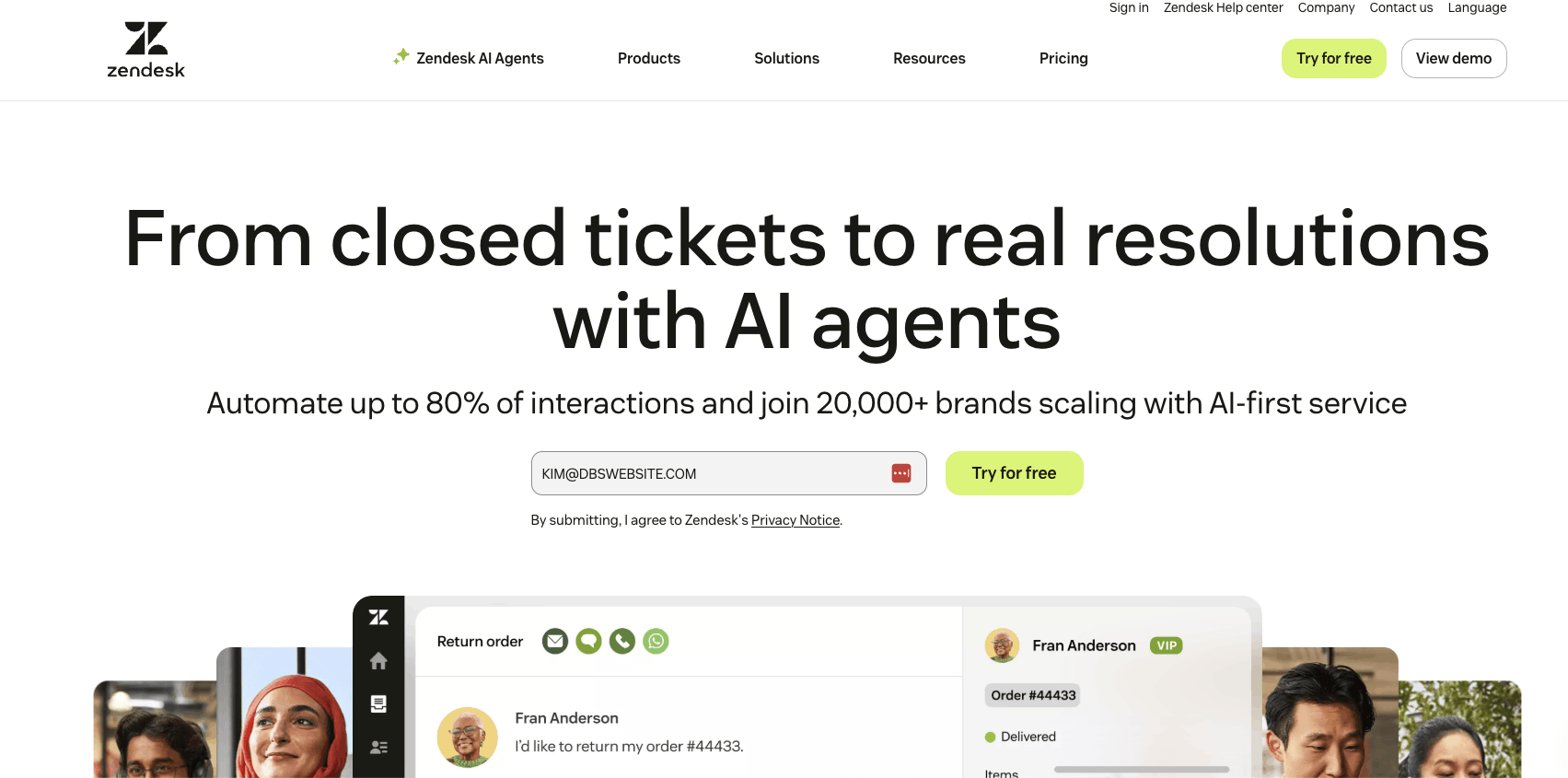
1. Zendesk: Stage-Aware Homepage Personalization
Zendesk’s homepage personalizes content based on buyer stage and intent. New visitors see high-level use cases and industry overviews. Returning users or identified leads see deeper resources and tailored solution paths. This dynamic content flow increases relevance and drives more qualified product interest at every visit.
CMS: Custom
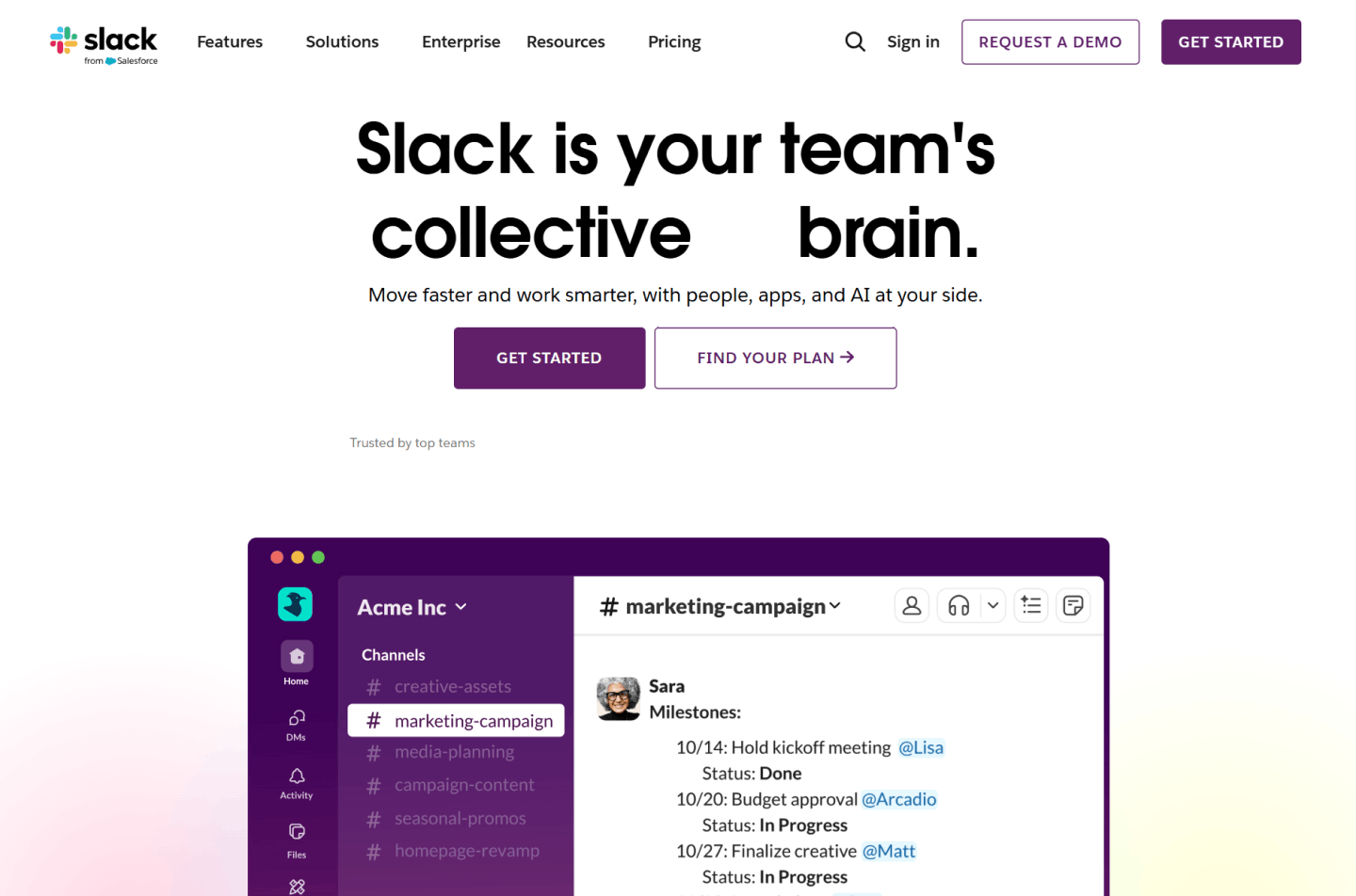
2. Slack: Interactive Product Preview
Slack’s homepage features an interactive workspace preview that lets visitors experience the product within seconds. This reflects the product‑led growth approach, where hands-on previews often outperform static pages in engagement.
CMS: Custom
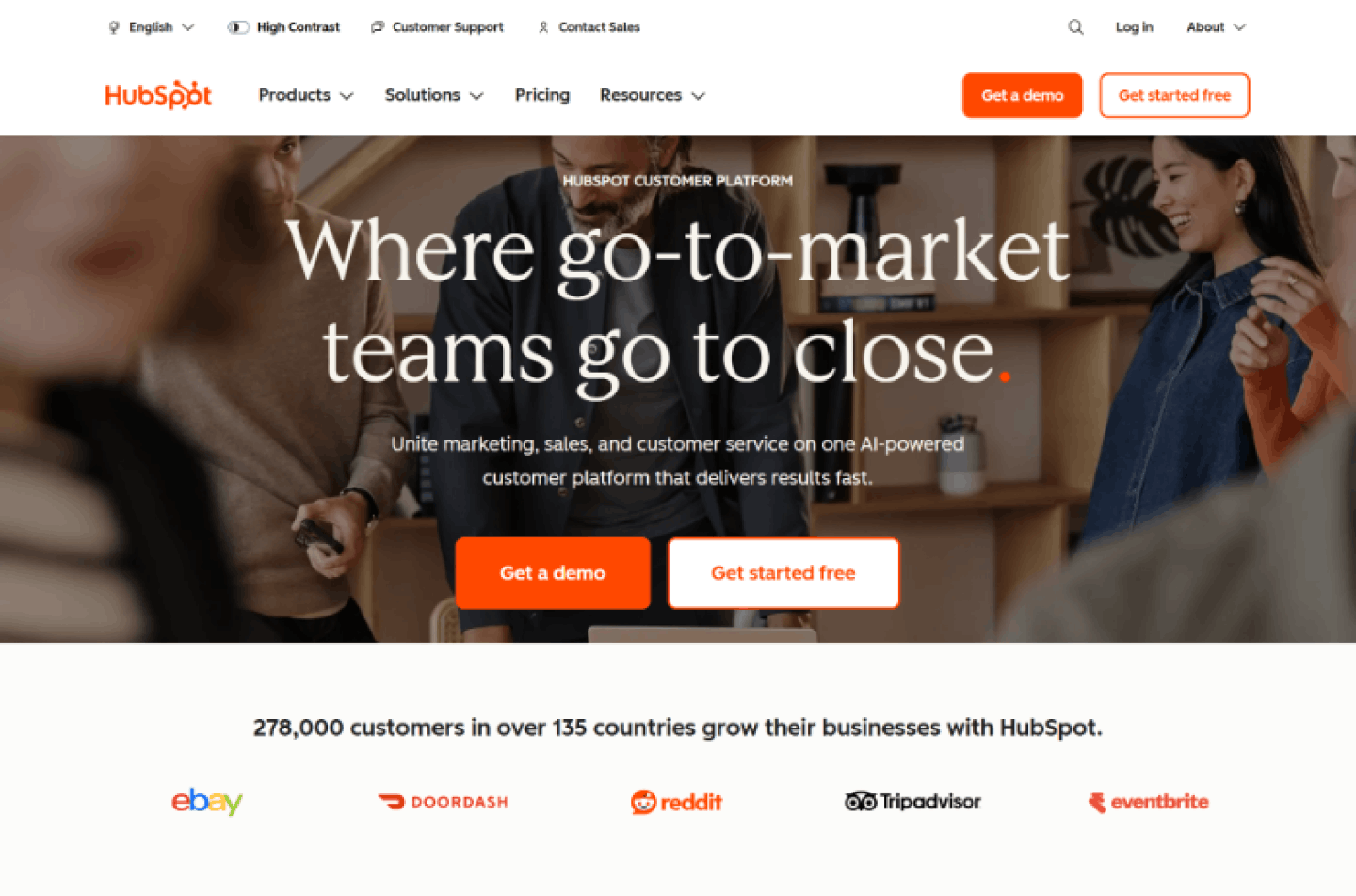
3. HubSpot: Stage-Aware Navigation
HubSpot’s navigation adapts based on visitor type, such as new visitors, leads, or existing customers. Menus and calls to action change to match user intent, helping visitors find relevant paths without friction.
CMS: HubSpot
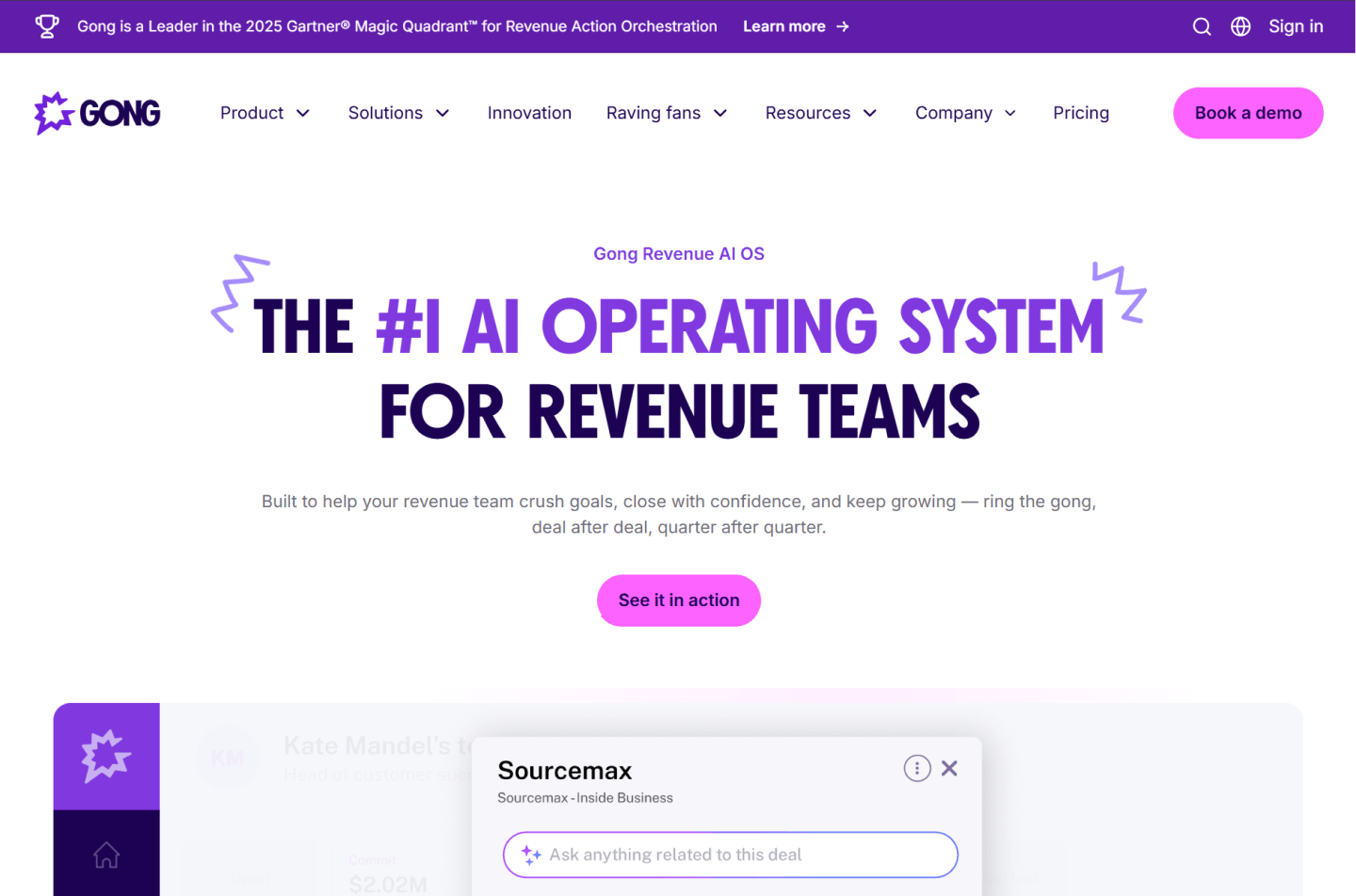
4. Gong.io: Personalized Benchmark Reports
Gong’s website offers visitors a personalized sales benchmark using their CRM data. Prospects can request a customized revenue benchmark that compares performance against peer companies. This approach builds credibility early and helps shorten evaluation cycles.
CMS: Custom
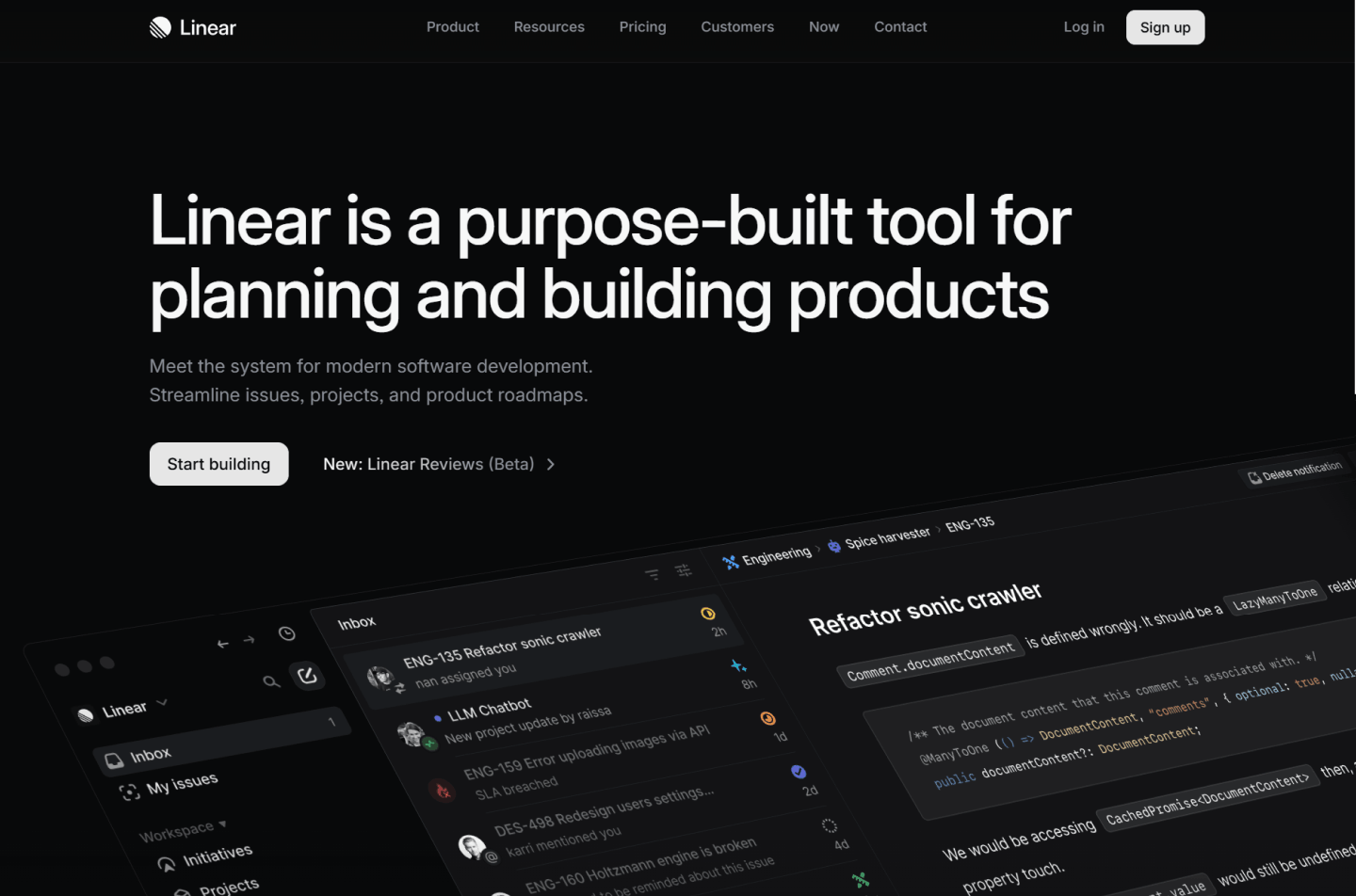
5. Linear.app: Live Demo Using Real Data
Linear allows technical users to view the product with their own data. The homepage demo can connect to GitHub and pre-load a project view based on an actual repository. This makes evaluation more relevant than a generic demo environment.
CMS: Sanity
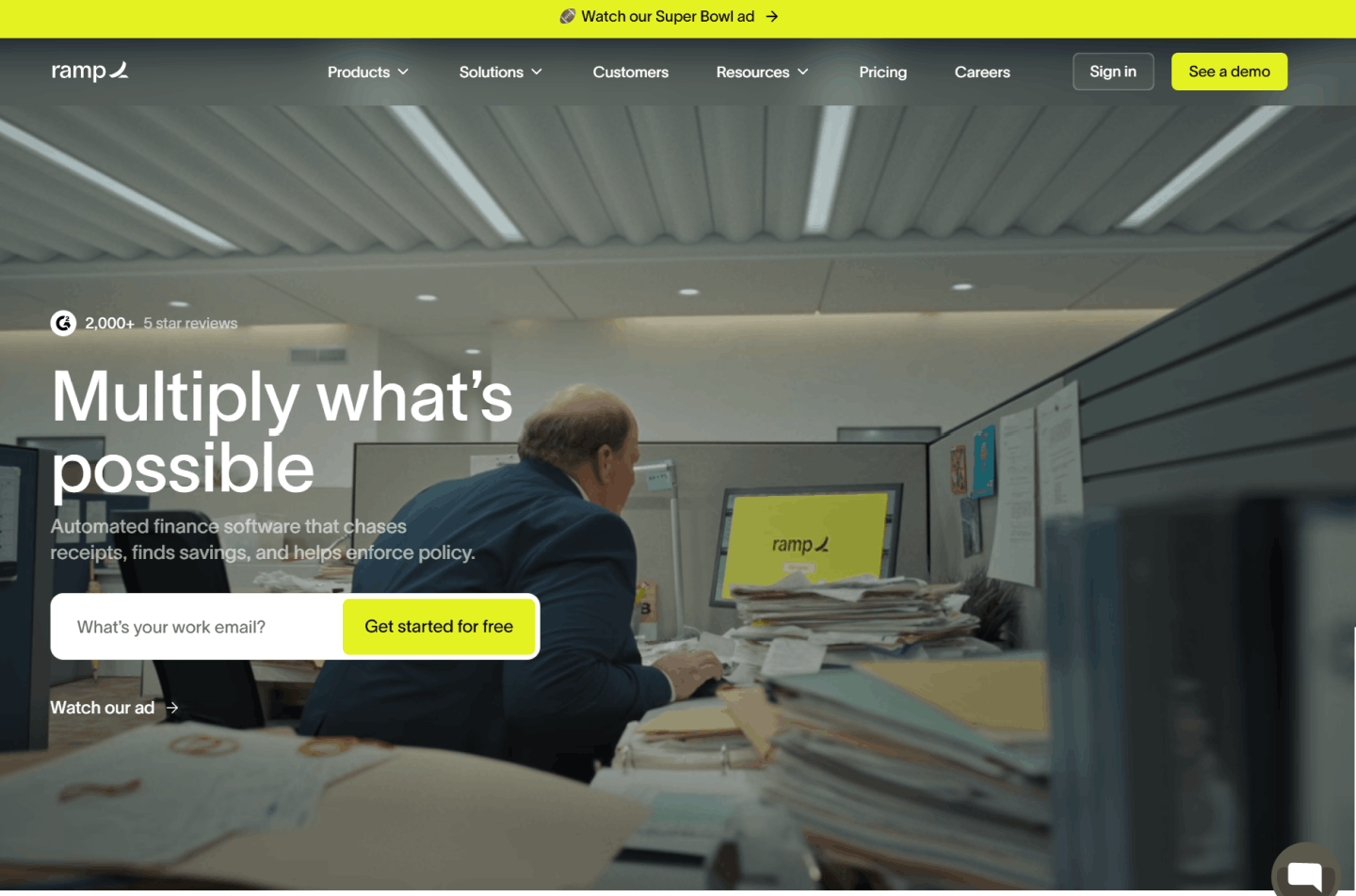
6. Ramp.com: Auto-Filled ROI Calculator
Ramp’s homepage features a savings calculator that prepopulates estimated company spend. Visitors immediately see projected savings without manual input, helping finance teams evaluate value early in the process.
CMS: Next.js
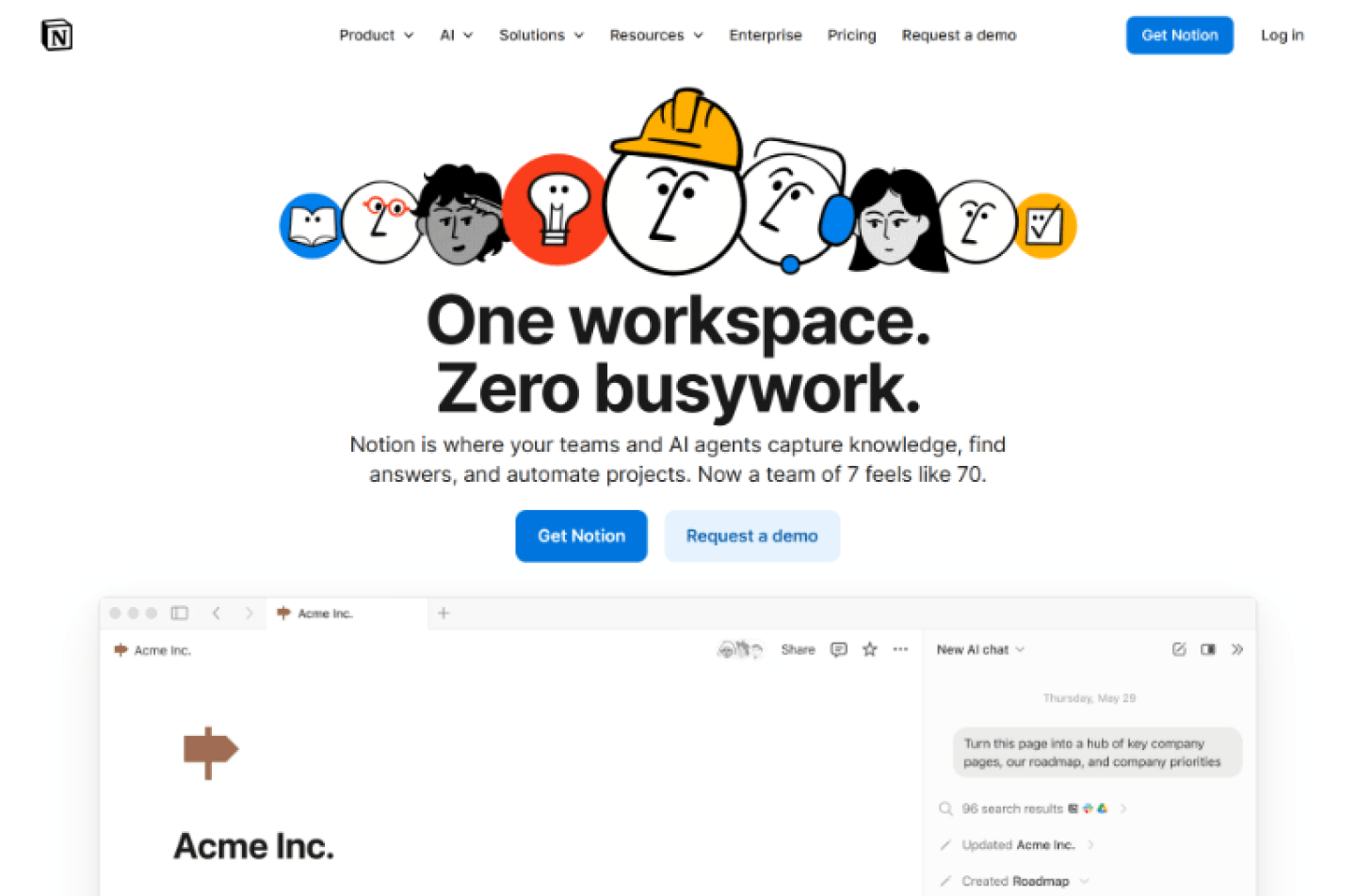
7. Notion.so: Adaptive Content by User Role
Notion’s website adjusts content based on visitor role and device. New users see simplified entry points, while experienced users see advanced features and integrations. This tailoring helps reduce friction for different audience segments.
CMS: Next.js
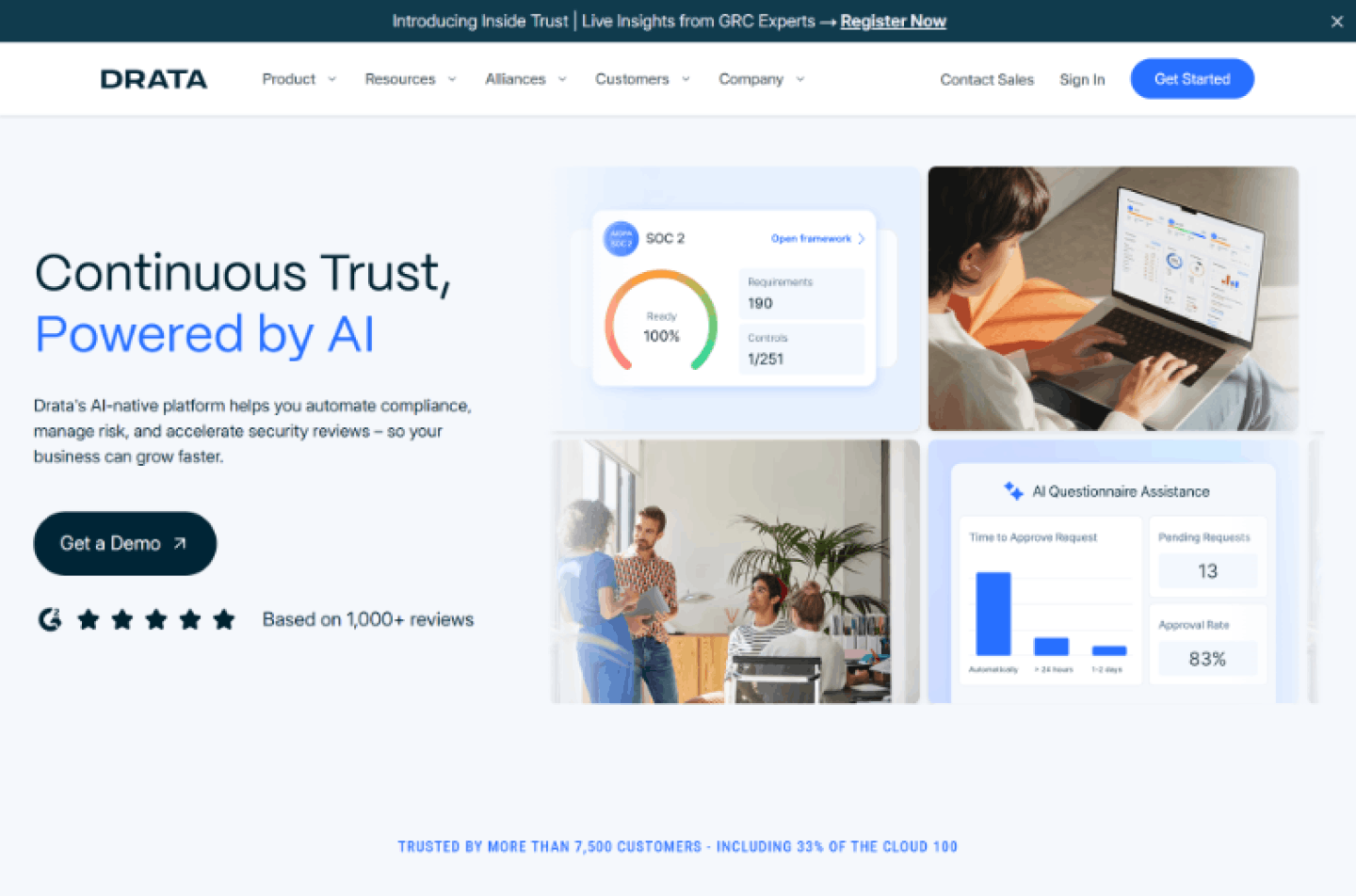
8. Drata: Industry-Specific Trust Signals
Drata’s homepage surfaces compliance information based on industry context. Healthcare visitors see healthcare-specific standards, while fintech visitors see relevant financial compliance frameworks. This helps address security concerns early.
CMS: Next.js
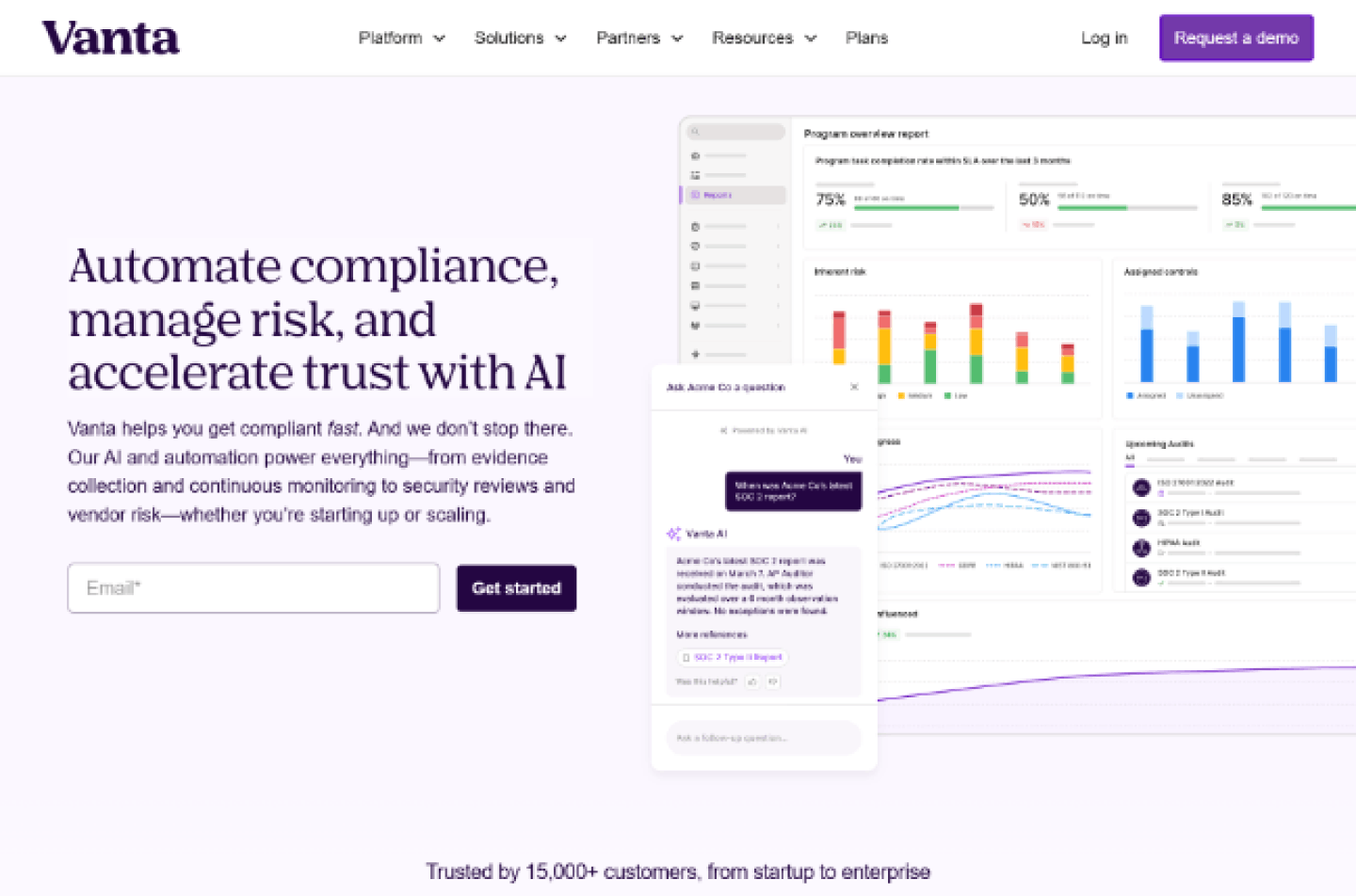
9. Vanta: Interactive Compliance Checklist
Vanta provides an interactive checklist that adapts to a visitor’s regulatory requirements. After answering a few questions, users see a tailored compliance path, clarifying how the product supports their needs.
CMS: Webflow
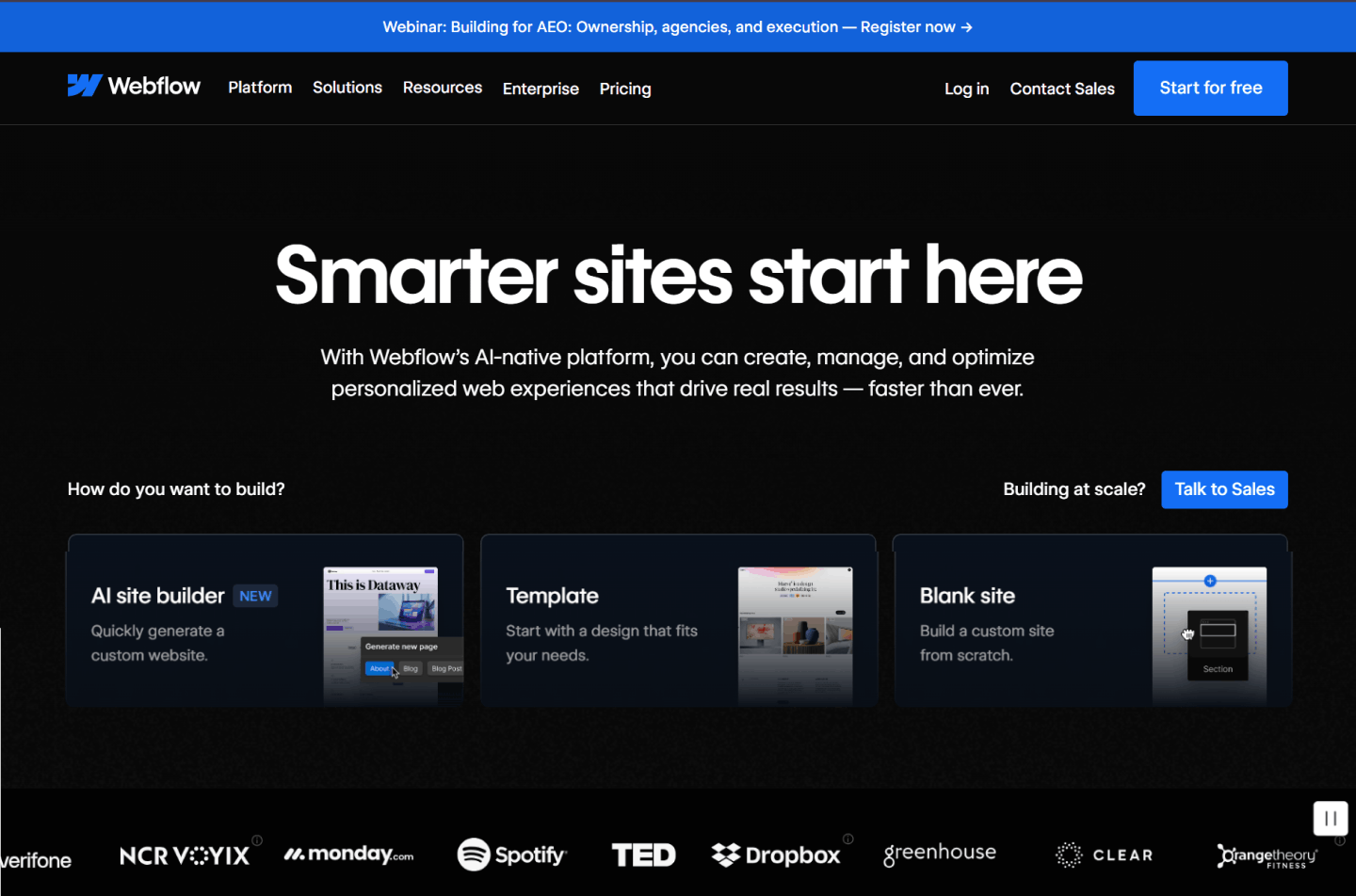
10. Webflow: Live Editor Preview
Webflow allows visitors to preview their own website inside a read-only editor. This lets users explore the product using familiar content, helping them understand functionality without committing to a full demo.
CMS: Webflow
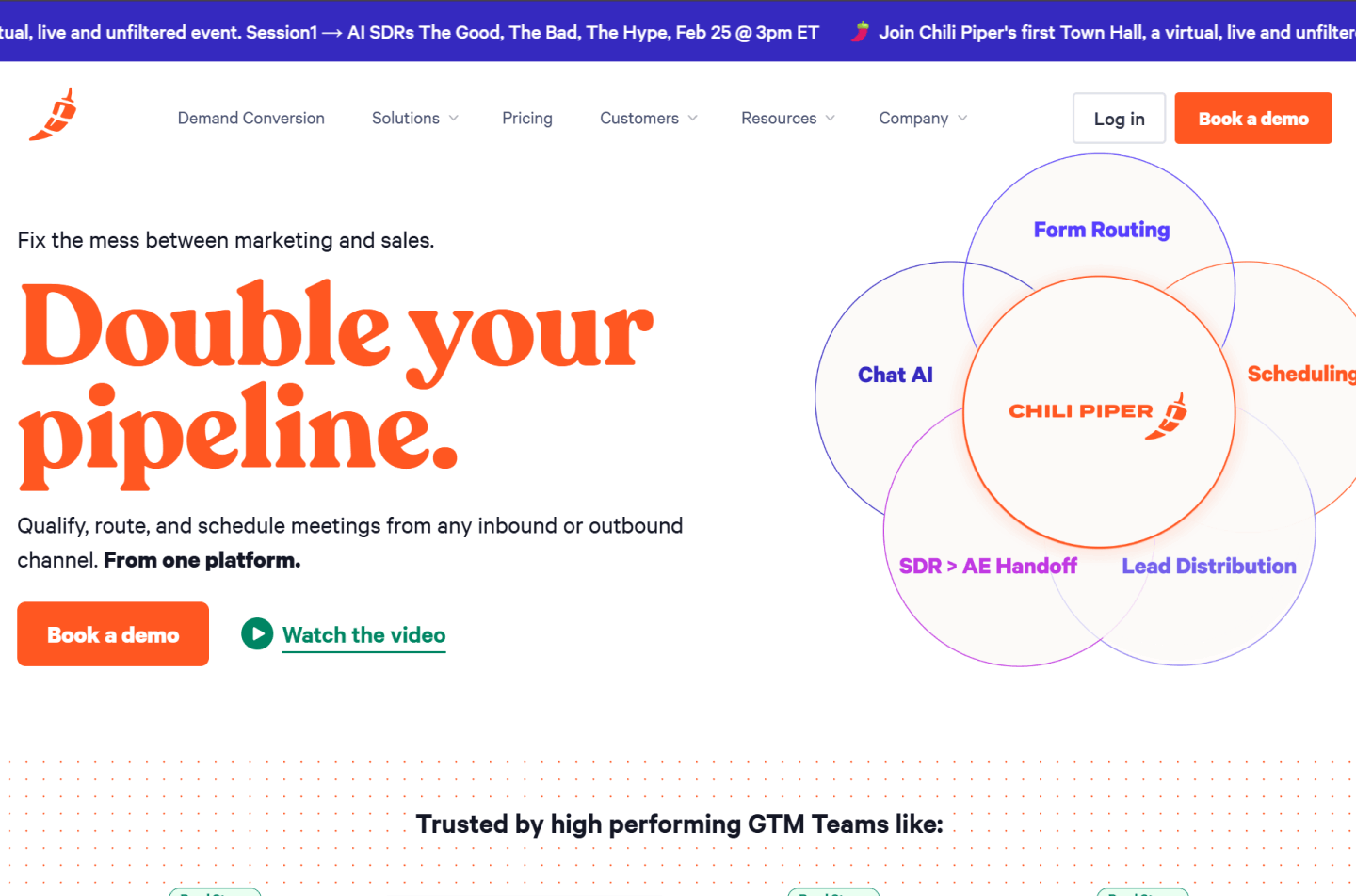
11. ChiliPiper: One-Click Meeting Booking
ChiliPiper embeds scheduling directly into the homepage. The system routes visitors to the appropriate sales representative and suggests available meeting times, reducing friction in the booking process.
CMS: Webflow
The 6 Shared Traits That Drive Pipeline
Despite selling different products, these 10 websites share six traits that help drive the pipeline. Treat this as a website checklist. How many of these boxes does your site tick?
-
Zero Generic Homepage: Nothing on these homepages is one-size-fits-all. Content and offers adapt for each visitor. Moving away from a generic, “same for everyone” page yields measurable gains. Top SaaS sites see 5 to 12% visitor-to-opportunity conversion, compared with under 1% on static sites.
-
Instant Value, No Gates: These sites provide value before asking for information. Whether it’s an ungated demo, a free tool, or a self-serve calculator, visitors can engage immediately. This hands-on access increases meeting bookings because prospects engage more when friction is low.
-
Account-Aware From the First Visit: High-performing B2B sites identify visitor context early. Headlines may reference an industry, or case studies may align to a segment. This account-aware experience allows the website to contribute 40% to 60% of qualified pipeline by converting target accounts that might otherwise remain anonymous.
-
Progressive Depth: These sites keep initial messaging simple and reveal deeper detail as interest grows. Homepages stay high level, while additional proof points, technical detail, or customer stories appear as users scroll or click. This approach increases time on site and serves casual visitors and serious evaluators without overwhelming either group.
-
Cross-Channel Memory: These sites retain context across channels. If a visitor clicks a LinkedIn ad tied to a specific pain point, the website reflects that message. If they later engage through email or chat, those channels align with what they’ve already seen. This connected experience improves consistency from first touch to sales conversation.
- Measured Like Ops, Not Vanity Metrics: Top teams run the website like a revenue channel. Performance is measured against pipeline contribution instead of page views or time on page. This operational mindset often reduces cost per opportunity compared with outbound programs by focusing on outcomes.
Move From Best Practice to a Pipeline That Performs
A high-performing B2B SaaS website delivers results. It gives buyers the information they need, removes friction, and supports evaluation with speed and relevance. The companies in this list treat the website as part of the revenue system.
Their sites answer concrete questions, reduce uncertainty, and move qualified buyers forward.
Most teams still run sites that sit idle. The companies above rebuilt the website as a working surface for evaluation, not a container for claims. That shift changes how buyers move, how pipeline forms, and how predictable the entire go-to-market motion becomes.
FAQs
Yes. Many companies at this stage already are. The tools are accessible and don’t require large budgets or teams. At this time, you typically have enough to test changes while staying flexible.
Initial lift often appears within 8 to 12 weeks of launch. Within 6 to 9 months, many teams attribute a significant share of qualified pipeline to the website. Results aren’t instant, but early data tends to surface within a quarter.
Expect roughly $120k to $350k in year 1. That may include a site rebuild, personalization tools, integrations, and optimization support. Returns depend on execution, but many teams recover investment through improved pipeline contribution.
When leads are qualified, sales teams do engage. Companies running these sites often see faster close rates and less resistance compared with outbound-sourced leads.
No. Most teams operate these sites with 1 or 2 marketing operations roles. After initial setup, ongoing effort focuses on iteration instead of daily management.
If timing allows, before the raise can strengthen the growth narrative. If resources are tight, plan to begin shortly after funding closes.
It doesn’t have to. Many highly personalized SaaS sites still rank well for core keywords when personalization is implemented with SEO considerations in mind.
They still receive a more relevant experience than a fully generic site. Personalization may default to broader signals like industry or location, ensuring every visitor sees contextual content.
Related Posts