How to Get Your Business in AI Search Results
The way audiences search and discover solutions is changing. Here's how to make sure your brand shows up in AI platforms.
 17 Min Read
Show Up or Get Left Out
Showing up in AI search results isn’t pay-to-play. You can’t buy credibility. It doesn’t care a lick about your budget. What it cares about is your value.
You must earn your rightful place in AI answer platforms, the new front door for B2B buyers.
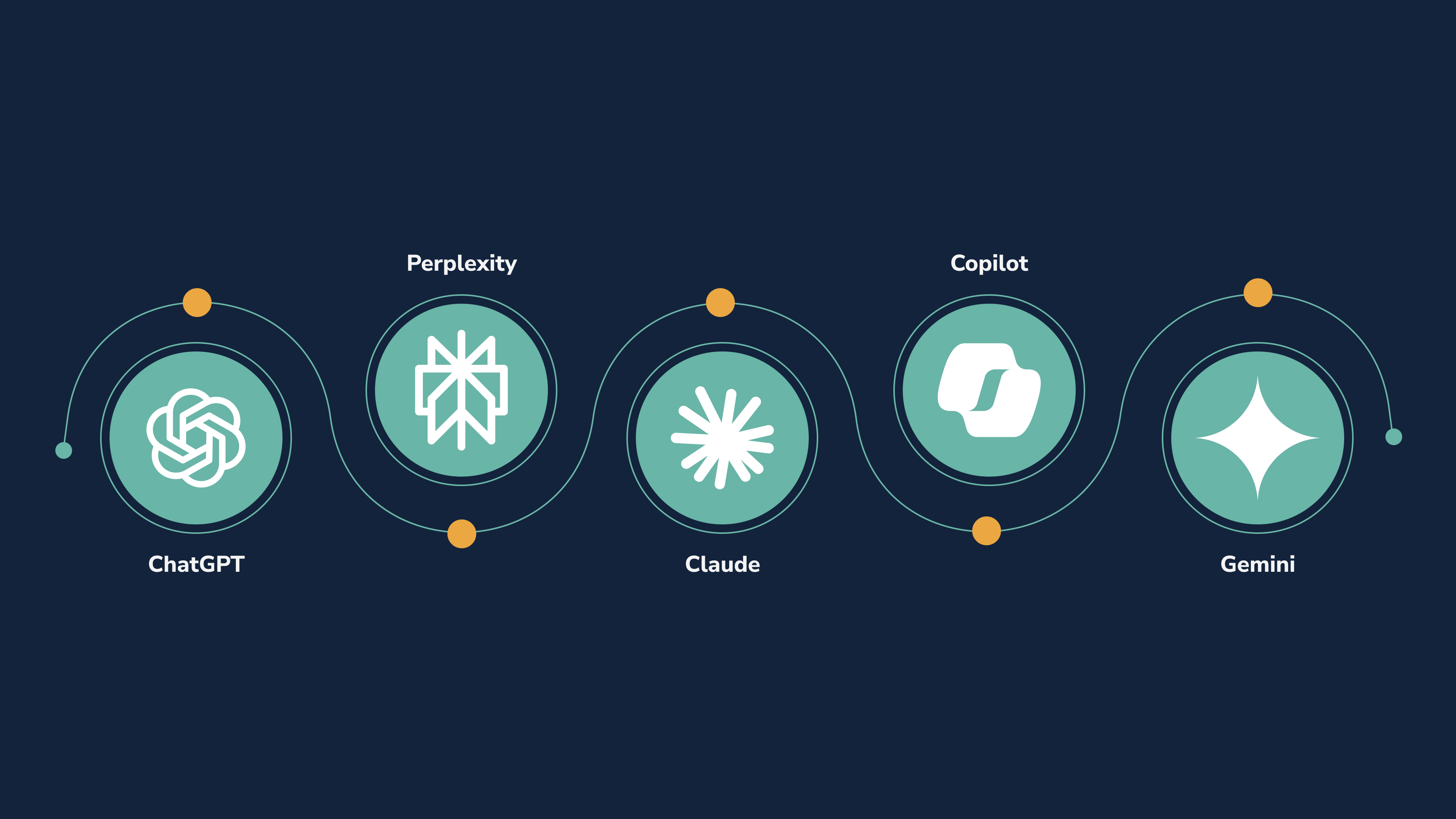
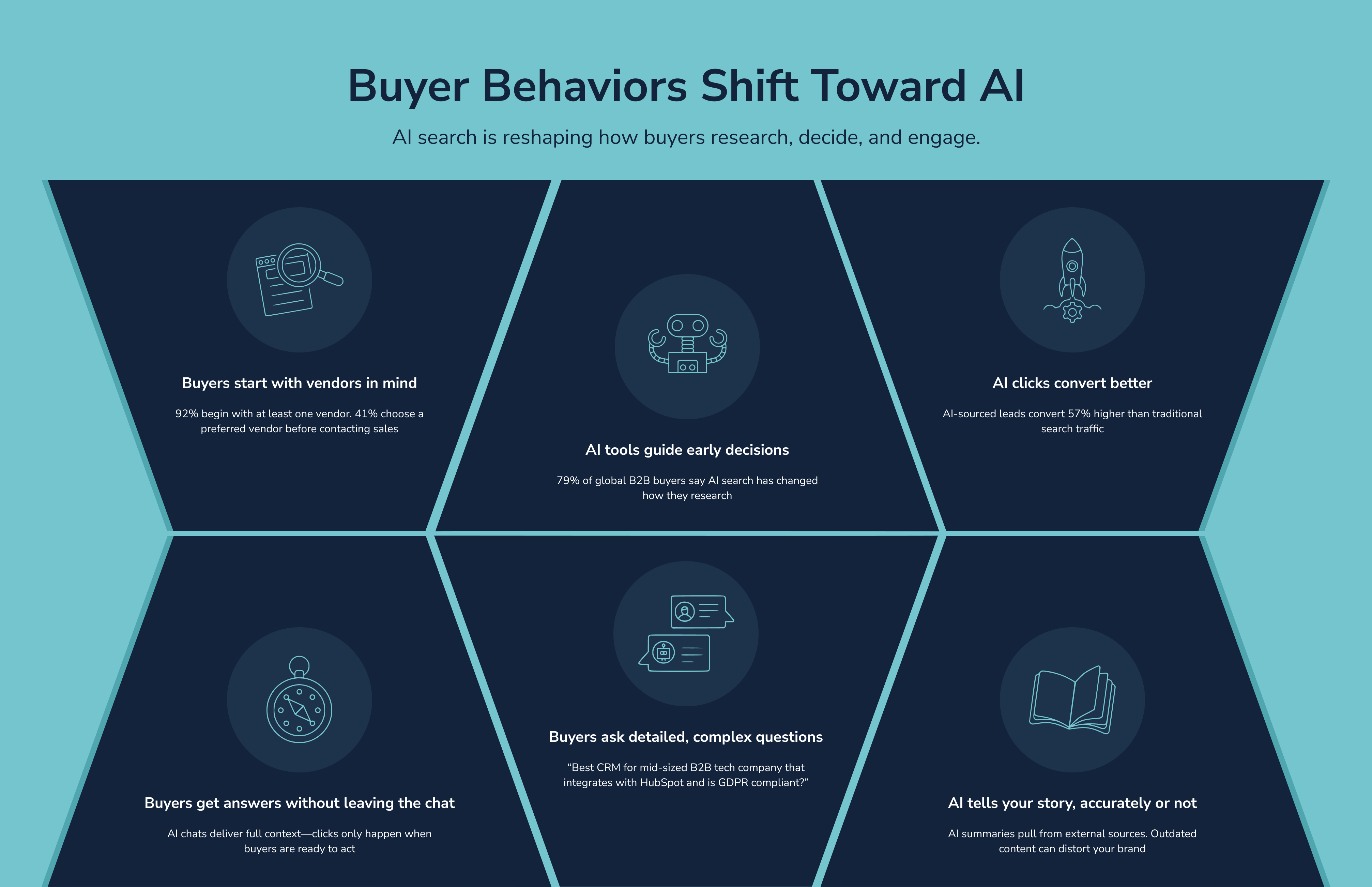
Decision-makers now start their vendor research by asking questions in AI-driven answer engines like ChatGPT, Google’s AI results, Bing Chat, Perplexity, or Claude. Nearly 8 in 10 B2B buyers say AI search has already changed how they research solutions, and almost 30% report they now begin research with an AI chatbot more often than on traditional search engines.
Being absent from AI answers means being absent from the buyer’s shortlist.
B2B buyers conduct more self-directed research than ever, often without human contact until late in the process. One study found 54% of millennial B2B buyers prefer a sales process with no human interaction, and 95% anticipate using generative AI to support their purchase decisions in the next year.
Buyers trust these tools to give fast, unbiased recommendations and use them to narrow options quietly.
The message is clear: if your brand isn’t appearing when buyers ask AI assistants for recommendations, you might as well not exist..
Those big dogs in AI have reshaped how users discover content. Digitally fluent businesses produce and optimize content that ranks in traditional Google results and earns visibility in AI. It’s fundamental.
The same efforts that improve your Google search rankings will help AI platforms understand and cite your content.
That’s just the beginning, though.
The remainder of this guide is the essential playbook for getting your business to appear in AI search results. Let’s get to work.
Producing Content That Shows Up in AI Search Results
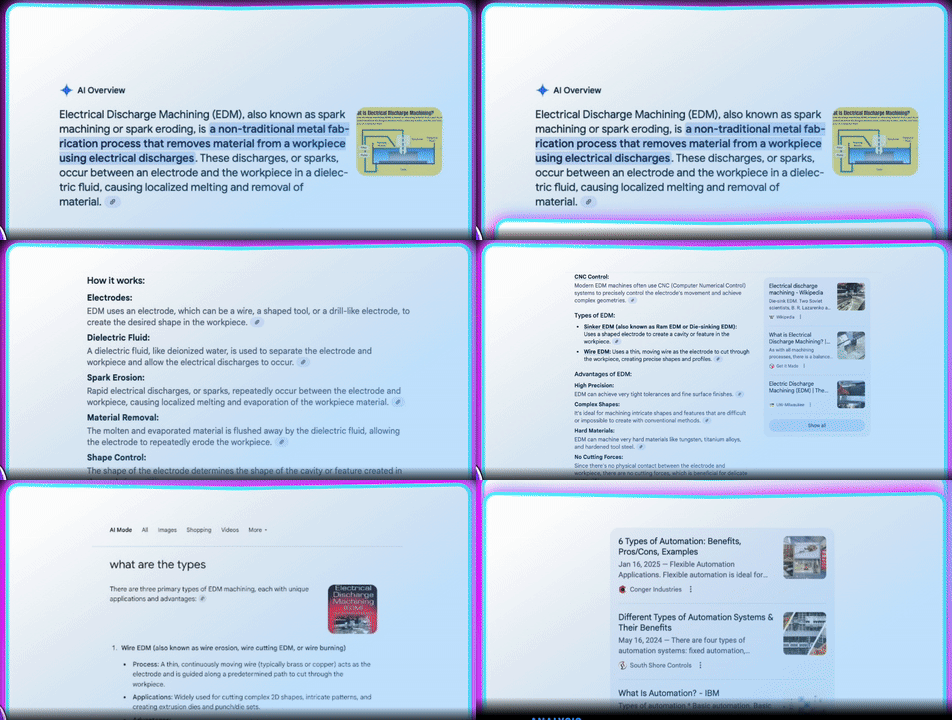
To earn visibility in AI-generated answers, you need more than keywords. You need structure, clarity, and technical precision.
AI doesn’t skim. It chews. It breaks your content down into bite-sized pieces. If the structure’s off, it chokes and moves on. Here’s what makes content delectable.
Content Structure and Format
Structure your content to make it easy for AI models to digest and quote. AI answer engines love content that directly answers questions clearly and concisely.
Incorporate FAQ-style Content
Publish FAQ pages or Q&A sections that address common buyer questions in your industry. These morsels map well to the way users pose queries to AI.

It’s kind of lazy that way.
Aligning content to your buyers' questions ensures you’re providing the exact answers AI tools seek.
Use Schema Markup
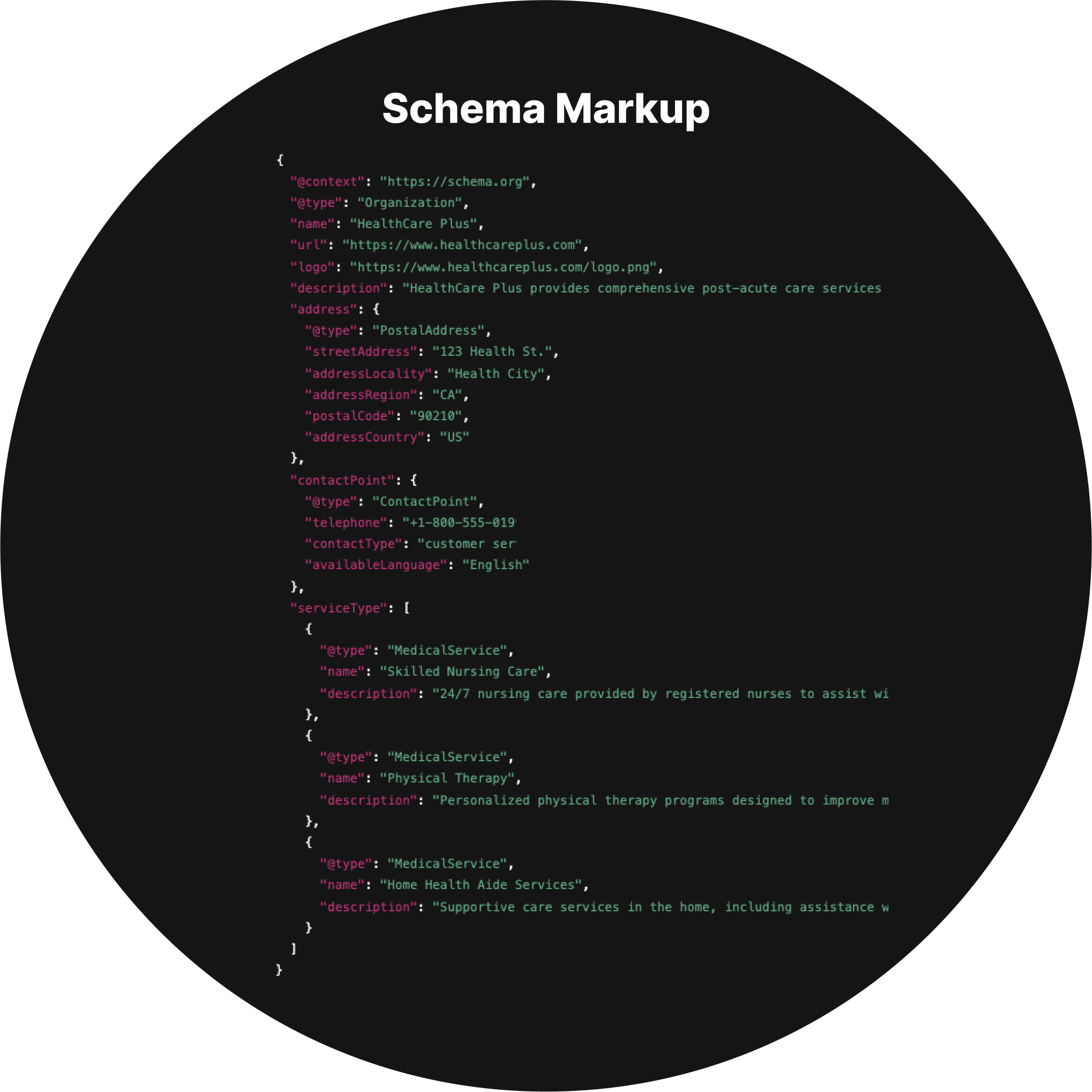 Implement structured data such as FAQPage, HowTo, Product, List, and Organization schema. Schema markup provides context that can make your answers more visible and credible.
This approach, sometimes called AI search optimization (AEO), complements traditional SEO.
Write in a Conversational, Intent-Focused Tone
AI models generate answers based on natural language. Content written in a straightforward, conversational tone is more compatible with AI summarization.
 Use the language your customers use.
- Aim for active voice and clarity.
- Avoid jargon or overly formal language
- Zero in on user intention
For example, an article might focus on a buyer’s problem definition, introduce solutions, and describe outcomes. Structuring content around the typical problem → solution → outcome journey makes it easier for an AI to grab the relevant piece needed to address a user’s question.
Employ Clear Headings, Lists, and Tables
Well-structured formatting isn’t just for human readers. It helps AI.
- Use descriptive headings and subheadings tagged for hierarchy
- Break up text with bullet points or numbered lists (like you see here).
- Consider a simple table for data.
 These elements stand out when an AI scans content.
For instance, an AI engine might quote a bulleted list of product benefits or a step-by-step process from your page because it’s delineated.
Clarity in formatting leads to quote-worthy content that an AI can easily lift and present to users.
Make Your Content “Quote-Worthy”
Craft impactful sentences that summarize important points or insights.
 I platforms often extract one or two sentences verbatim as a quote if they cleanly answer the question.
Think of these as the pull-quotes or sound bites of your article. It can be a concise statistic or a bold claim backed by evidence, or a straightforward definition. Long-winded or fluffy paragraphs get ignored.
Make sure each content section has at least one gem of a sentence that could stand alone as a direct answer or insight (like this one you just read).
This often means boiling complex ideas down into plain, memorable statements.
Tailor Content to Specific Buyer Roles
Remember to read the room. An engineer, a procurement officer, and a CEO will have different questions.
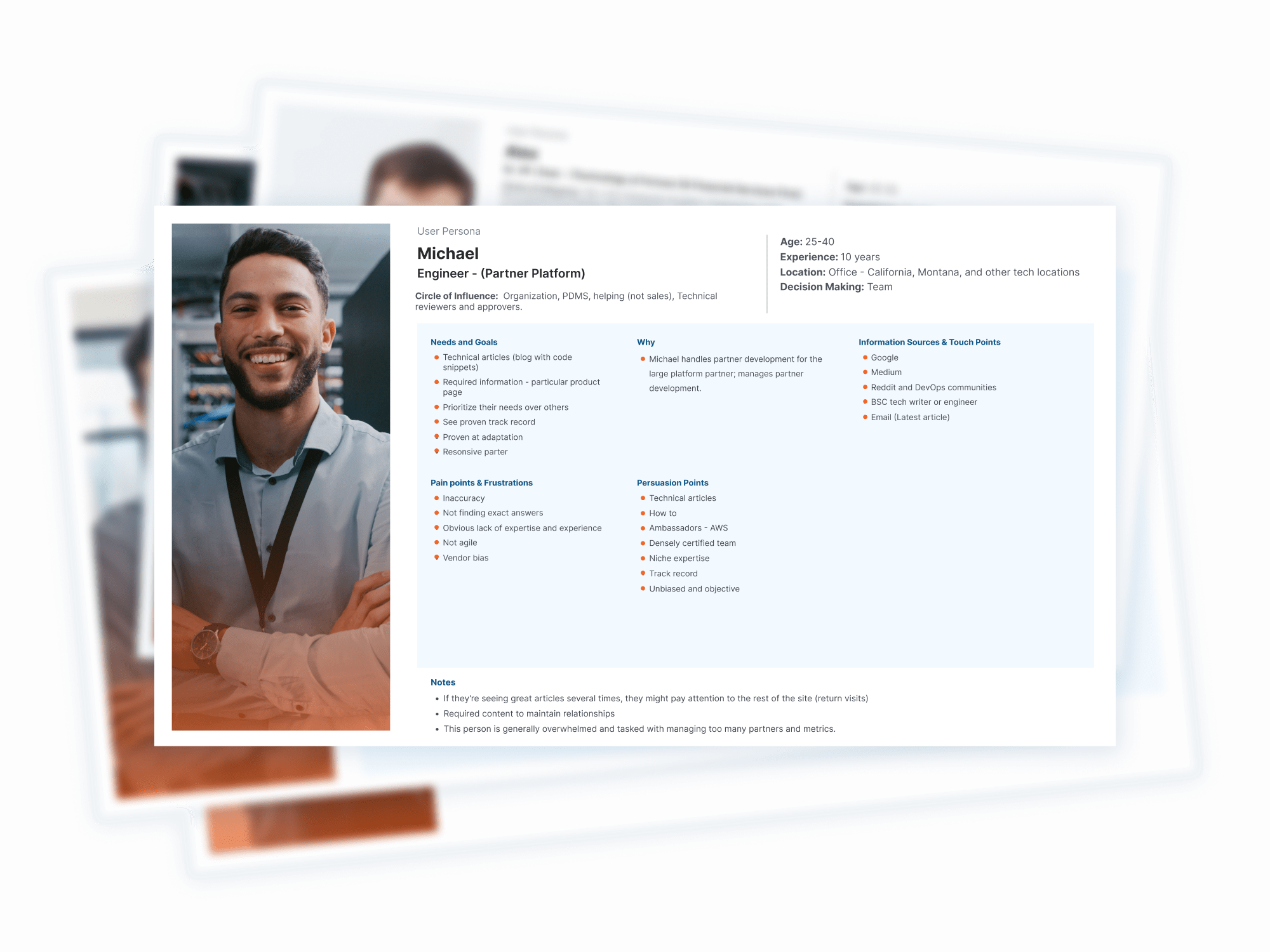 Consider creating role-specific content or at least sections within content that speak to these perspectives. If an operations manager typically asks, “How does this improve efficiency on the factory floor?,, address that directly. If a CFO cares about ROI, answer “What’s the cost benefit over 5 years?”.
AI tools provide contextually relevant info. If your content covers multiple angles, you increase the chances of matching the angle the user is asking about.
Bottom line: Cover the who, what, and why for each type of stakeholder in your target audience.
Address Comparisons and Objections
Buyers often ask AI tools comparative questions or express concerns, such as “Product X vs Product Y” or “Is Solution Z compliant with new regulations?”
 Don’t shy away from these topics on your own site. Create comparison pages, “versus” blog posts, and troubleshooting guides openly discussing alternatives and common objections.
If you provide a balanced, informative comparison, the AI is more likely to use your content when those comparison queries arise.
Similarly, if you know buyers worry about certain risks or costs, have content that directly answers those objections.
By being a credible source of truth on questions and doubts, you position your brand as a go-to resource that AI will turn to for the answer.
Designing Website Infrastructure AI Can’t Resist
The technical health of your website underpins your content efforts. Regardless of your content quality, if your site is slow or not seen as trustworthy, you’re playing a losing hand.
Fast, secure, and crawlable websites give AI engines a reason to bet on you.
Optimize Load Times
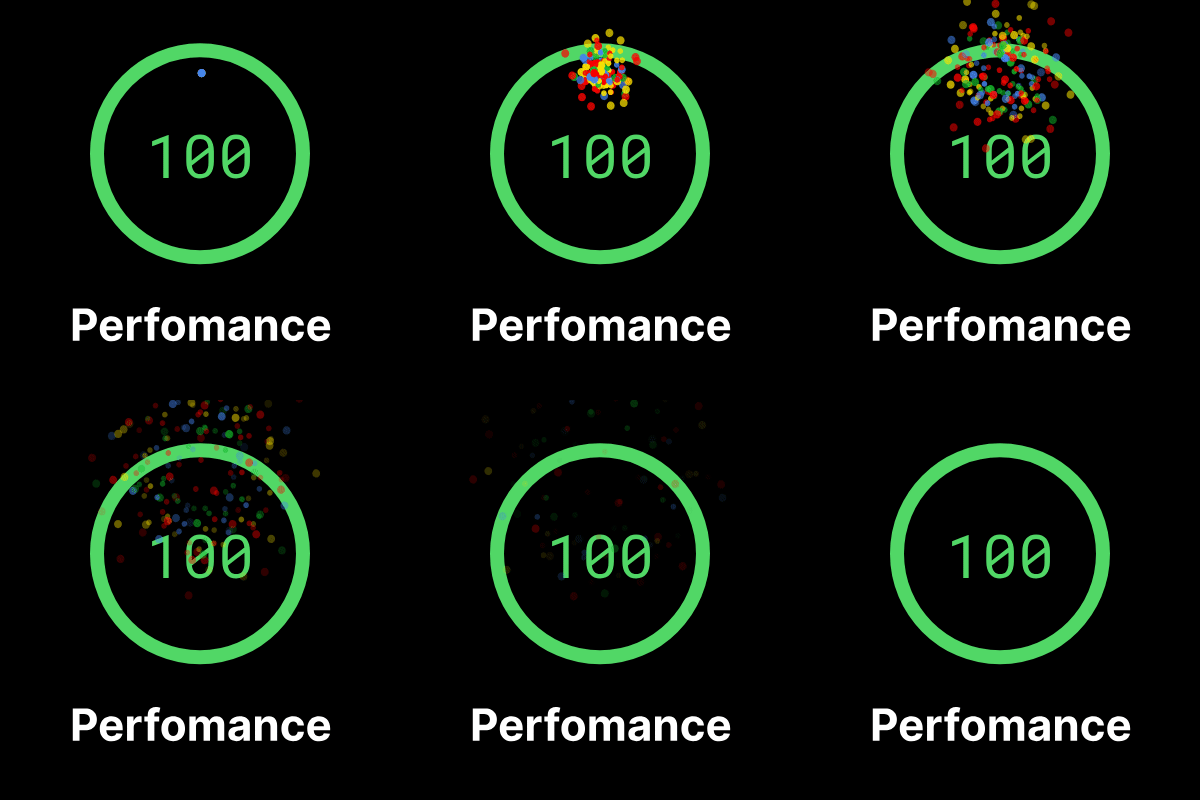 Ensure your pages load quickly, especially on mobile devices. Google’s core web vitals are good metrics to watch. A snappy site improves your SEO rankings and, by extension, makes it more likely your content is noticed and featured in AI platforms.
Use modern techniques like image compression, efficient code, and caching to speed things up. Remember, AI engines often rely on up-to-date crawl data.
If your site performance is poor, crawlers may not retrieve your latest content easily.
Ensure Strong Site Security and Best Practices
Use HTTPS, keep your site free of broken links or errors, and follow SEO best practices in your code. Platforms like Google’s Lighthouse audit can score your site on Performance, Accessibility, Best Practices, and SEO.
 Aim for high scores across the board. If search engines see your site as technically solid and user-friendly, its content is more likely to be considered reliable.
Being secure and technically clean is part of being a trusted source in the eyes of AI.
For example, a website that meets Google’s best practice criteria will be viewed as authoritative and is more likely to appear in search snippets and in generative AI results.
Mobile-Friendly and Accessible Design
 Many AI queries happen on mobile devices or with voice search.
Ensure your website is mobile-responsive and that content is easy to navigate on a small screen.
Accessibility and good UX go hand in hand with explicit content. An AI that “reads” your site benefits from the same clarity that helps human users.
A well-structured, accessible site is easier for AI crawlers to parse and index.
Technical SEO Hygiene
Maintain a logical site structure with clear navigation and updated sitemaps so crawlers can find all your essential content.
 Fix crawl errors and avoid duplicate content that can confuse algorithms.
Repetition creates déjà vu for AI, which can confuse algorithms, dilute authority, and bury your best material.
If your content is hidden behind heavy scripts or not internally linked, it may not exist from an AI perspective.
Good internal linking can help establish context and authority on those topics.
Contact us for help optimizing your website to improve visibility.
Amplifying Content That Deserves the Spotlight
Don’t silo your content. Help it soar. AI answer engines pull information from all over the web. So your brand needs to have a broad, positive footprint online. Expand your presence where AI tools are looking and listening.
Publish on Platforms that AI Indexes
Based on recent analyses, AI systems rely heavily on community and social content when formulating answers.
 For example, Google’s generative AI overviews draw significantly from Reddit, about 21% of top-source citations and about 13% on LinkedIn.
The takeaway: Be active where the conversations are happening. Contribute thoughtful answers to relevant Q&A forums like Reddit and Quora.
Leverage Industry Review Sites and Directories
B2B buyers often ask AI tools for “the best software for X” or “top Y service providers.” AI will frequently reference B2B review platforms like G2, Capterra, or TrustRadius for such answers, since these sites contain consolidated customer feedback and rankings.
 Make sure your business is listed and your profile is robust on these platforms.
Encourage satisfied clients to leave detailed reviews describing your use cases and benefits. Those review snippets can be quoted.
If your category has analyst reports or directories, ensure you appear there as well. Third-party sources carry weight with AI because they’re seen as more neutral. For example, LinkedIn and G2 content both appear in the top-cited sources for ChatGPT.
Syndicate and Share Your Content
Don’t just leave a strong piece of content on your blog. Share it on LinkedIn, tweet about it, post a summary in relevant forums, maybe even republish excerpts on Medium or industry sites. This creates multiple entry points for AI to find your insights.
 Many AI engines index social media posts and third-party blogs more than we may realize. A LinkedIn article by your CEO might get picked up by Copilot, which is owned by Microsoft.
A snippet from your Medium post could answer a question on Perplexity.
Every external touchpoint casts another line into the AI ocean.
Credibility Signals for AI
Modern AI systems try to emulate what a well-researched human would do. They look for credible, authoritative sources to construct an answer. Your brand must demonstrate credibility and authority online to earn a place in an AI-generated answer. Consider boosting these trust signals:
Earned Media and Thought Leadership
When industry publications or reputable news outlets mention your business or quote your experts, it elevates your authority.
 Mentions often appear in search results and are ingested by AI models during training or real-time crawling.
Aim to get featured in industry blogs, news articles, and reports. A mention in Forbes or an industry journal brings you human traffic and might lead an AI to cite “According to Forbes, [Your Company] is a leading provider of X.” Even being included in “Top 10” list articles or buyer’s guides can help.
The more third-party validation you have, the more comfortable AI will include you as part of an answer.
Consistent Branding Across Channels
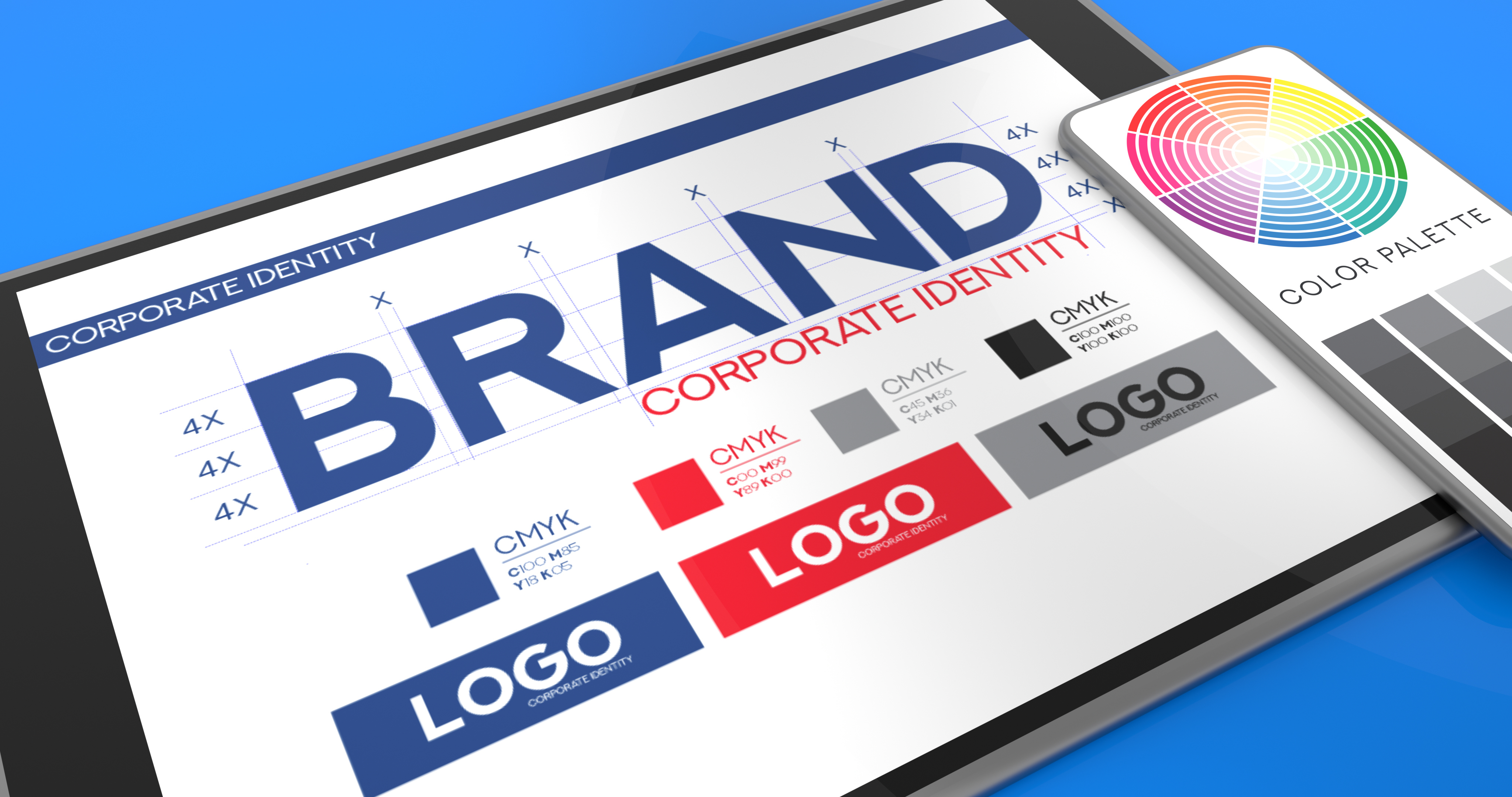 As you expand to these channels, keep your messaging consistent. Use the same company name, product terminology, and value statements so that an AI isn’t confused by varying descriptions.
If your LinkedIn says one thing and your website another, the AI might not connect them or present a muddled summary.
A cohesive presence makes it easier for the AI to aggregate information about you and present it accurately.
Quality Backlinks and References
Backlinks have long been an SEO staple and remain a valuable proxy for authority in the AI context. While an AI doesn’t “click” links the way a user does, those links are evidence that others consider your site valuable.
 High-quality backlinks from respected domains signal that your content is trustworthy. These signals influence search rankings and likely shape how AI systems choose sources.
If your content is frequently referenced across the web, AI is more likely to treat it as trustworthy. Backlinks should come from great content and smart digital PR, not spammy tactics. When people naturally link to your resources in forums or Q&As, that’s gold for AI visibility.
Messaging Discipline for AI Optimization

What AI Search Optimization Is Really About
As buyer behavior shifts toward AI-assisted research, your content strategy must adapt. The goal isn’t just visibility—it’s influence. To win in AI-generated discovery, businesses should aim for six key outcomes.
Aim for 5 Key Outcomes
- Be Present in AI Answers: Show up when buyers ask AI tools about your category. Mentions and quoted facts put you in the consideration set early.
- Shape Buyer Perception: Ensure AI summarizes your brand accurately and positively. Your messaging trains the algorithm.
- Capture High-Intent Traffic: Clicks from AI answers tend to convert better. These buyers are already informed and interested.
- Build Semantic Authority: Become the brand AI associates with your niche. Consistent coverage signals expertise.
- Accelerate the Sales Cycle: AI-informed buyers may skip early-stage calls. Visibility shortens the path to decision.
- Own Share of Voice: Aim to be mentioned in most relevant AI answers—just like ranking in Google’s top results used to be.
Why AI Visibility Deserves Attention
B2B buyers now turn to AI first. Businesses optimize for AI answers to show up early, show up well, and stay in control, not just to future-proof. Here’s why businesses are investing now.
Why Business are Investing Now
- AI Is the New Front Door: Buyers start with AI, not Google. If your brand isn’t surfaced early, you may never be considered.
- Early Movers Win Share of Voice: Companies optimizing now are gaining mentions and recommendations. The window for advantage is open.
- Maximize Existing Content ROI: Repurpose what you’ve already built. AI is a new distribution channel for content you’ve paid for.
- Future-Proof Your Search Strategy: AI-driven search is growing fast. Acting now avoids playing catch-up later—just like the mobile shift.
- Meet Buyer Expectations: Buyers want instant answers, not PDFs or sales calls. AI is where they’re doing late-night research.
- Control the Narrative: If you don’t shape your story, AI might pull outdated or off-brand info. Visibility protects perception.
What’s Blocking Your AI Visibility
AI search visibility isn’t plug-and-play. Businesses face real hurdles, including technical, editorial, and organizational. Here’s
AI search visibility isn’t plug-and-play.
Businesses face real hurdles, including technical, editorial, and organizational.
- No Clear Feedback Loop: AI answer engines are black boxes. You can’t see what content was used or why.
- Unpredictable Selection: Even great content might be skipped or blended without attribution. You lose control over how answers are built.
- Messaging Misalignment: Flowery copy and thought-leadership formats often miss the mark. AI favors clear, Q&A-style content.
- Lack of External Validation: Brands with limited third-party presence get missed. AI favors sources with broad digital signals like PR, media mentions, and external links matter.
- Measurement Gaps: AI referrals are hard to track. Without attribution tools, marketers struggle to prove impact or justify spend.
- Outdated Info Risk: AI may surface old messaging if it pulls from stale sources. Rebrands and product updates can be misrepresented.
- Skill and Resource Gaps: Most teams aren’t AI-ready. SEO and content roles need new tools, training, and cross-functional support.
Tracking Results: KPIs to Measure AI Search Performance
Given the challenges in measurement we discussed, it’s important to set some KPIs and use both quantitative and qualitative methods to gauge your AI visibility progress. You’ll likely need to track a mix of new metrics and adapt some traditional ones. Here’s
What to monitor | Visibility and Engagement Metrics
These indicators show whether your presence in AI answers is increasing and how users are interacting at that discovery stage.
Quote or Content Usage Frequency
Beyond just name mentions, track how often specific pieces of your content are cited. For example, is your particular blog post frequently cited by Bing’s AI or quoted in Perplexity answers? If you publish a new FAQ, does it start showing up in ChatGPT plugins or other tools? This might require some detective work, like using AI with web browsing enabled to see sources, or checking referral traffic spikes on specific pages that might indicate they were featured somewhere.
AI-Referred Traffic
While tricky to capture perfectly, you can still estimate traffic from AI sources. Some AI tools, like Perplexity, provide direct links with UTM parameters or referrers. If so, set up an analytics segment for those. For others, consider indirect measures: for example, a sudden increase in direct traffic to a deep page could mean it was shared via an AI answer. Or if you suspect ChatGPT is recommending you for a query, you can run a quick survey or ask new leads if any have used AI to find solutions.
Semantic Topic Coverage
This is a more qualitative or heuristic metric. It asks: how comprehensively have we covered the key questions or topics in our space, and are we being cited for them? You could create a matrix of essential buyer questions vs. whether you have content for it, and whether AI is picking up that content. The goal is to achieve 100% coverage of your domain’s questions with quality answers.
You might track something like “number of priority questions for which we appear in AI results.” For instance, if you’ve identified 50 high-intent questions buyers ask, and currently you appear in AI answers for 10 of them, that’s 20%. Aim to push that higher quarter by quarter. This is similar to content gap analysis in SEO, extended to AI context.
Conversion and Influence Metrics
These KPIs tie the AI visibility back to business outcomes and brand perception.
Leads or MQLs Attributed to AI
Work with sales and marketing departments to identify if leads can be tied to AI sources. If someone schedules a demo and says, “I saw you on ChatGPT” or if your web form includes that option, count those. It might still be a small number, but it is trending upward.
On-Site Engagement of AI-Referred Visitors
Once you can identify some visitors from AI, compare their behavior to regular organic or direct visitors. Do they view more pages? Spend longer on site? Download more assets? Early indications from the industry are that AI-referred visitors often have longer dwell times and deeper engagement because they come with clear intent. Use metrics like average time on page, pages per session, or scroll depth for these users.
Conversion Rates and Pipeline Velocity
Track whether the leads that come in through AI convert to opportunities or closed deals at a higher rate. Do they move faster from MQL to SQL to proposal? If AI-influenced leads close in 2 months instead of 4, that’s a clear business advantage.
Brand Sentiment in AI Contexts
While AI doesn’t have emotions, it does reflect the sentiment present in the content it was trained on or retrieving. Monitor how the AI talks about your brand. Is the tone positive, neutral, or is any negative press seeping in? You might do periodic checks: ask an AI, “What do users say about [Your Company]?” or “What is [Your Company] known for?” and see the output. If you find it highlighting an old issue or missing your newest value prop, that’s a red flag. Similarly, check if it accurately lists your product features or differentiators when asked.
Share of Voice vs. Competitors
Marketing teams often measure this on social or search; you can attempt a version for AI. Out of a set of typical industry questions, what percentage of time does your brand appear versus competitors? For example, you can see where you stand if you appear out of 10 key queries in 4 and competitor A in 6, and competitor B in 3, etc.. Maybe even weighted by prominence.
Traffic to AI Training Sources
Another indirect metric is to track visits or engagement on external platforms specifically for content you seeded there for AI visibility. If your YouTube “How-to” video gets a spike in views after you suspect an AI is showing it, that’s a sign.
Show Up Where Decisions Start
AI answer visibility isn’t a matter of luck or “set it and forget it” SEO.
It must be actively engineered and maintained. The companies succeeding treat AEO as a strategic initiative: they audit their content footprint across AI-indexable platforms, align their messaging for clarity and impact, and aggressively distribute their expertise where AI can find it.
In the end, it’s about meeting your customers where they are searching. If more and more of them are turning to AI-powered assistants for guidance, then that’s where you need to shine.
The playbook for visibility is changing, but it’s a change that rewards proactive and customer-focused people. Engineer your visibility now, so that when a prospect asks an AI in six months, “Who should I consider for this?” your business is right there in the answer. That’s the new competitive advantage, and it’s yours to build.
Related Posts