
5 Key Web Design Strategies for B2B E-Commerce
A roadmap for diagnosing catalog complexity, uncovering UX gaps, and applying design approaches to make buying faster, clearer, and more reliable.
 5 Min Read

Managers of B2B e-commerce at manufacturing and distribution firms face a mandate. They must turn complex product catalogs into usable self-service storefronts. Many existing platforms fall short, creating friction for buyers and inefficiencies for internal teams.
Achieving effective self-service requires more than visual redesign. It requires web design strategies built for complex products, negotiated pricing, and repeat purchasing workflows. This article outlines five design approaches used by high-performing B2B platforms.
Challenges in Building B2B Online Stores
 Building an effective B2B online store differs from launching a consumer e-commerce site.
Complex product data, negotiated pricing, and multi-step purchasing workflows introduce technical and operational constraints.
Without deliberate design that reflects these realities, both buyers and internal teams encounter friction that limits adoption.
External Challenges
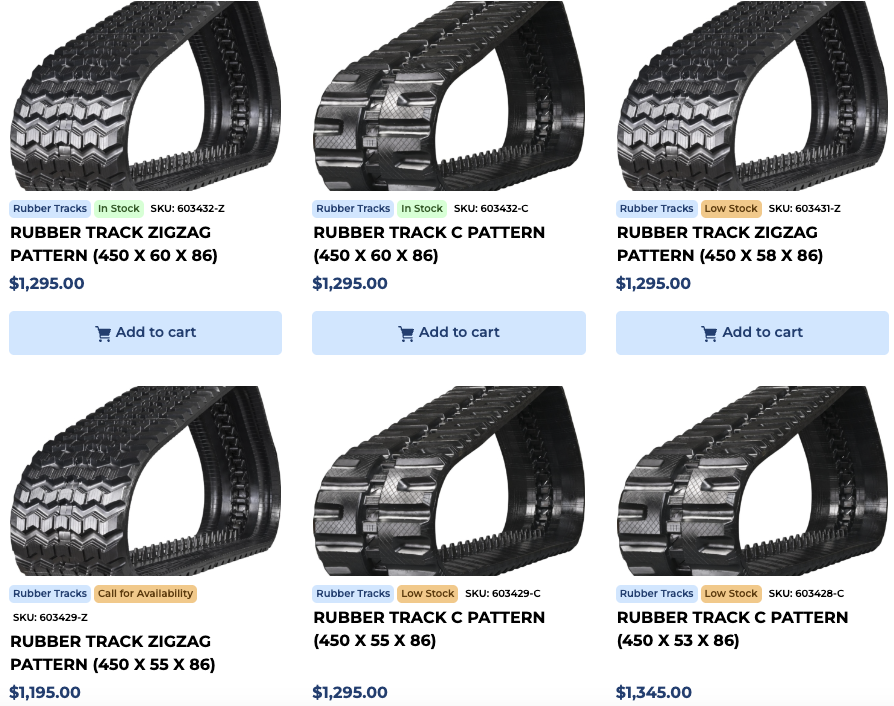
Despite significant investment in digital platforms, many B2B organizations create friction during product discovery and purchasing. Industrial catalogs and account-based pricing often expose weaknesses in search, navigation, and configuration tools.
When these elements underperform, buyers abandon self-service and revert to manual channels.
- Ineffective search for part numbers and technical specifications
- Limited faceted filtering
- Hidden pricing, minimum order quantities, and lead times
- Poorly designed or unvalidated configurators
- Reliance on phone or email to complete orders
Internal Challenges
Internally, even visually updated B2B sites often create inefficiencies. Orders submitted online still require manual review and re-entry. This undermines automation and makes teams skeptical of redesign efforts, especially when the investment yields only surface changes rather than operational improvements.
Philosophical Gap
Many B2B sites remain misaligned with buyer expectations. Buyers expect self-service experiences that support research, configuration, and purchasing complexity. Instead, many sites mirror simplified B2C models, treating professional buyers as casual shoppers rather than decision-makers managing high-risk purchases.
Identify what’s slowing down your platform with a focused digital audit.
Five Strategies to Enable Self-Service Success
High-performing B2B e-commerce platforms are engineered around complex purchasing behavior. They prioritize structured data, workflow alignment, and system integration over surface-level aesthetics.
Organizations that follow this approach outperform peers in digital adoption and revenue contribution.

Complex Product Discovery and Task-Driven Navigation
 B2B buyers arrive with specific goals. Effective sites guide users by the tasks they need to complete.
Faceted filters allow products to be narrowed by industry, application, or technical specification. Part-number lookup tools are essential. Features like saved lists and account-specific catalogs reduce the time spent finding the correct item and enable repeat purchases.
Pricing and Account Clarity Through Transparency
 Effective platforms show authorized buyers their negotiated pricing and terms immediately after login. Volume discounts, minimum order quantities, availability, and lead times appear early in the process.
Providing this information upfront reduces friction during checkout and lowers order abandonment. Even quote requests should follow a straightforward workflow. When information is reliable and easy to access, confidence increases, and conversion follows.
Guided Configuration and Structured Data
 Many B2B products include extensive options and technical constraints. Guided configurators lead buyers through valid selections step by step, applying engineering rules and validation as choices are made.
Immediate feedback prevents invalid configurations before orders are placed. Inline guidance reduces errors and lowers support volume. Organizations that implement rule-based configurators report fewer customer queries and reduced work.
Self-Service Portals and Automation-Ready Workflows
 Repeat purchasing and multiple-user accounts are common in B2B. Self-service portals help these needs through account dashboards that enable reordering, role management, document access, and approval tracking.
When portals connect directly to back-end systems, orders move to fulfillment without manual handling. Automating routine workflows reduces internal load and makes repeat business easier for customers.
Connect your catalog, pricing, and workflows with integrations built for B2B complexity.
Performance, Consistency, and Risk Reduction
 B2B buyers still look for reliability signals in digital purchasing. Product pages should present specifications, certifications, and supporting material in consistent layouts so buyers know where to find critical information.
Performance is important. Pages must load quickly and reliably. Delays increase abandonment, particularly on mobile. Ensuring fast, responsive experiences across devices improves completion rates.
Trust is reinforced through customer evidence like reviews, testimonials, and case studies. Combined, performance and consistency reduce uncertainty and perceived risk during purchasing.
Case Studies
The following projects demonstrate how modern B2B web design drives results through clearer navigation, stronger search performance, and digital infrastructure that supports both sales teams and end users.
Blue Diamond Attachments
The Blue Diamond Attachments project focused on redesigning the company’s digital platform to support dealers and end users.
DBS Interactive improved user experience, navigation, and technical SEO while implementing custom e-commerce functionality and a secure dealer portal.
The result is a scalable B2B platform that simplifies transactions and improves dealer support.
Kentucky Equine Research
The Kentucky Equine Research (KER) redesign centered on a globally responsive platform. Content and product availability adjust by location.
The site includes multilayered search and geo-responsive delivery.
A streamlined CMS enables localization while managing complex product and research content for international audiences.
Expert Guidance for Implementation
Many B2B redesigns boost traffic without improving order completion. Sales teams continue correcting errors manually.
Avoid this outcome
- Audit a single buyer journey end-to-end, like configuring and reordering a product
- Prototype improved workflows and test them with real users
- Measure outcomes, including order completion, error rates, and support volume
Avoiding Common Pitfalls
Applying these strategies reduces several common issues. Better discovery prevents cart abandonment of shopping carts due to frustration or confusion. Functional prioritization avoids cosmetic redesigns with limited return. Automation reduces manual order handling and internal fatigue.
A Scalable Outcome
When these principles are applied together, buyers complete complex orders independently. Internal teams spend less time correcting issues and more time on growth activity. Organisations report reduced ordering errors and lower support demand following these changes.
B2B e-commerce becomes a dependable revenue channel when designed around buyer workflows and operational reality.
Let's discuss your goals
Build a B2B e‑commerce platform designed for complex products
Related Posts